
If you grew up in South Africa, watching The Lion King can feel strangely familiar. While the landscapes are fictional, the animals speak English and Pride Rock does not appear on any South African map, the film contains some unmistakable connections to this part of the world.
In fact, the lion king and South Africa are connected in ways that go far beyond the film's African setting.
Originally produced in 1994, the animated film by Walt Disney Animation Studios was not intended to represent one specific African country. Yet South African musician Lebo M became one of the defining creative voices behind its sound, while the opening words of “Circle of Life” are sung in isiZulu.
So, is the lion king based on Africa? Yes, in its broad visual and cultural inspiration, but it is not a story about one particular African country. And if you have ever searched what African language is used in the lion king, the answer is more interesting than you might expect.
Let's look at the South African connections that make the film worthwatching with fresh eyes.


What African Language is Used in the Lion King?
The first words you hear in The Lion King are not English and they are not Swahili. They are isiZulu.
The famous opening begins with:
“Nants ingonyama bagithi Baba.” In English, this means, "Here comes a lion, Father."
For a South African viewer, hearing isiZulu immediately creates a significant connection. As one of South Africa's eleven official languages, isiZulu is spoken widely in KwaZulu-Natal and other parts of the country.
If you want to explore that distinction in more detail, our guide to Swahili vs isiZulu within the film explains how the two languages are often confused.
The Voice Behind the Opening Came from Soweto
The man whose voice you hear at the beginning of “Circle of Life” is South African musician Lebohang “Lebo M” Morake. One of the most important connections between The Lion King and South Africa.
The film may have been made in Hollywood, but one of its most recognisable musical voices came from Johannesburg.
Born in Soweto, Johannesburg, Lebo M became one of the most important African musical contributors to The Lion King. His work extended far beyond the famous opening, including vocal and choir arrangements for the film and stage productions.
Lebo M's involvement also demonstrates why African culture lion king discussions should not focus only on the animated landscapes. Real African musicians helped shape what audiences hear.
The Famous Chant Opening Chant Was Spontaneous
One of the most remarkable stories behind the opening is that the famous chant was created spontaneously.
Lebo M was working with composer Hans Zimmer on a demonstration recording when he saw an image associated with the film. In an extraordinary moment of inspiration, he asked for the microphone to be switched back on and sang the opening chant. The moment became part of the musical identity of The Lion King.
Remember who you are.
Mufasa, The Lion King (1994)
Remember, some of the most memorable moments in film music are not necessarily the result of a long, carefully planned process. If the meaning of Nants Ingonyama sounds intriguing, we agree, which is why we have dedicated a whole article to it.
The Soundtrack Goes Beyond One Language
The question is the lion king based on Africabecomes more complicated when you listen to its soundtrack.
The music combines African influences with Western orchestral and popular music traditions. Hans Zimmer composed the score, while Elton John and Tim Rice wrote songs including “Can You Feel the Love Tonight” and “Hakuna Matata”.
Lebo M contributed vocals and choral arrangements. Disney confirms that his vocal and choir arrangements can be heard in important moments of both the 1994 film and the later version.
It's worth noting that the soundtrack does not simply insert one African song into an otherwise Western musical. Rather, it is the African voices and musical ideas that help establish the sound of the fictional world from its opening moments.
That makes the film an interesting example of cultural collaboration, even though it should not be treated as a musical representation of Africa as a whole.
There is an isiZulu Connection Beyond the Opening
South African audiences have another reason to pay attention to the film's language. An official isiZulu version of The Lion King has been made available for audiences, allowing South African viewers to experience the story in one of the country's own languages.
That makes the film useful in educational settings too. A familiar story can provide an accessible way for children to think about translation, pronunciation and how languages communicate the same ideas differently.
So, if a learner asks what African language is used in the lion king, you can explain that isiZulu has a significant role, particularly in the famous opening, while the film also draws on other African languages and names. This is more accurate than simply saying "Swahili".
“Ingonyama” Carries More Than One Meaning
There is another fascinating detail hiding inside the opening words.Ingonyama means “lion” in isiZulu. The related form ngonyama is also associated with a royal title in Zulu and Swazi contexts. That gives the word additional resonance in a story about kingship.
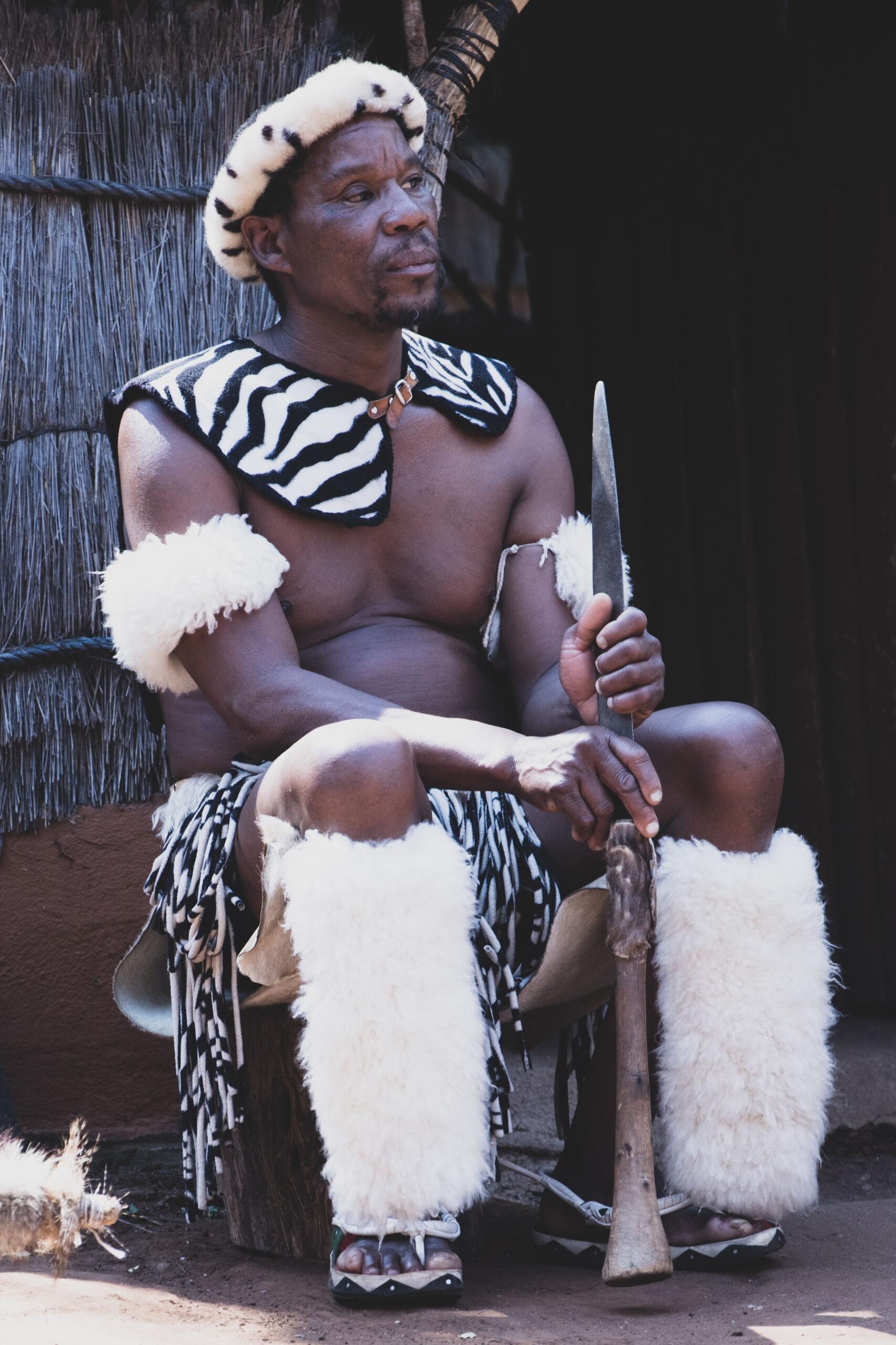
Simba is not a Zulu king, and Pride Rock is not a representation of a real Southern African kingdom. However, using a word associated with both lions and royalty adds an interesting linguistic layer to the opening.
It is one reason African culture lion king connections can be explored without claiming that the fictional story belongs to one real African culture. Remember that sometimes a single word can tell you more about a culture than a whole paragraph of explanation.
And if you're interested in leadership, ancestry and royal themes, our article exploring African kingship and why it resonates with stories such as The Lion King takes that idea further.
South Africans Have Helped Bring the Story to the Stage
The South African connection did not end when the 1994 film finished production. Lebo M became closely associated with the stage musical as well. The International Broadway Database credits him with additional music and lyrics, vocal arrangements and choral direction for The Lion King.
South African performers have also appeared in productions of the musical around the world which makes the Lion King and South Africa a story about performance as well as film.
South African voices have carried the music from recording studios to theatres in cities around the world, and for audiences who know South African music, language and performance traditions, that adds another layer to the experience.
Swahili and isiZulu Are Different Languages
Here is where things can get confusing. Some of The Lion King's most recognisable names and phrases are associated with Swahili. “Simba”, for example, means “lion” in Swahili. But of course, isiZulu and Swahili are not the same language.
Both belong to the wider Bantu language family, but they developed in different parts of Africa and have their own histories, structures and vocabulary.
| Language | Connection to the Lion King |
|---|---|
| isiZulu | Famous opening chant and South African musical contribution |
| Swahili | Names and expressions used throughout the franchise |
| English | Main language of the original film |
| Other Influences | African and international musical traditions |
So, if you are wondering what African language is used in The Lion King, the best answer is: more than one linguistic tradition is represented.
That is why any study on "African culture Lion King" comparisons can be useful when they are made carefully, rather than treating Africa as one single culture.
The South African Connection is Bigger Than One Film
For South African viewers, there is something special about recognising a language or voice in a global film. A child watching The Lion King in Johannesburg, Durban or Cape Town might hear the opening chant without knowing exactly what it means.
Years later, they may discover that the words are isiZulu. They may learn that the voice belongs to a musician from Soweto. They may discover that ingonyama carries both a literal and royal association.
Suddenly, a childhood film contains a piece of South African linguistic and musical history.
And if you're interested in the wider question of representation, our article on African languages in Hollywood looks at how filmmakers use African languages and cultural references on screen.
The Lion King Through South African Eyes
So, what African language is used in The Lion King?
The famous opening is isiZulu. Other words and names draw from other African languages, particularly Swahili. The soundtrack incorporates African musical influences, and South African artists have played a major role in creating and performing the music.
That is a much richer answer than simply labelling the film “African”. It also explains the many other facts surrounding The Lion King, and South Africa that make it such a worthwhile subject.
Ultimately, the film is American. Its story is fictional. Its Pride Lands are not on the map of South Africa, but its soundtrack carries genuine South African voices.
And that gives South African audiences a reason to listen a little more carefully.
Summarise with AI:
Enjoyed this article? Leave a rating!

 Loading...