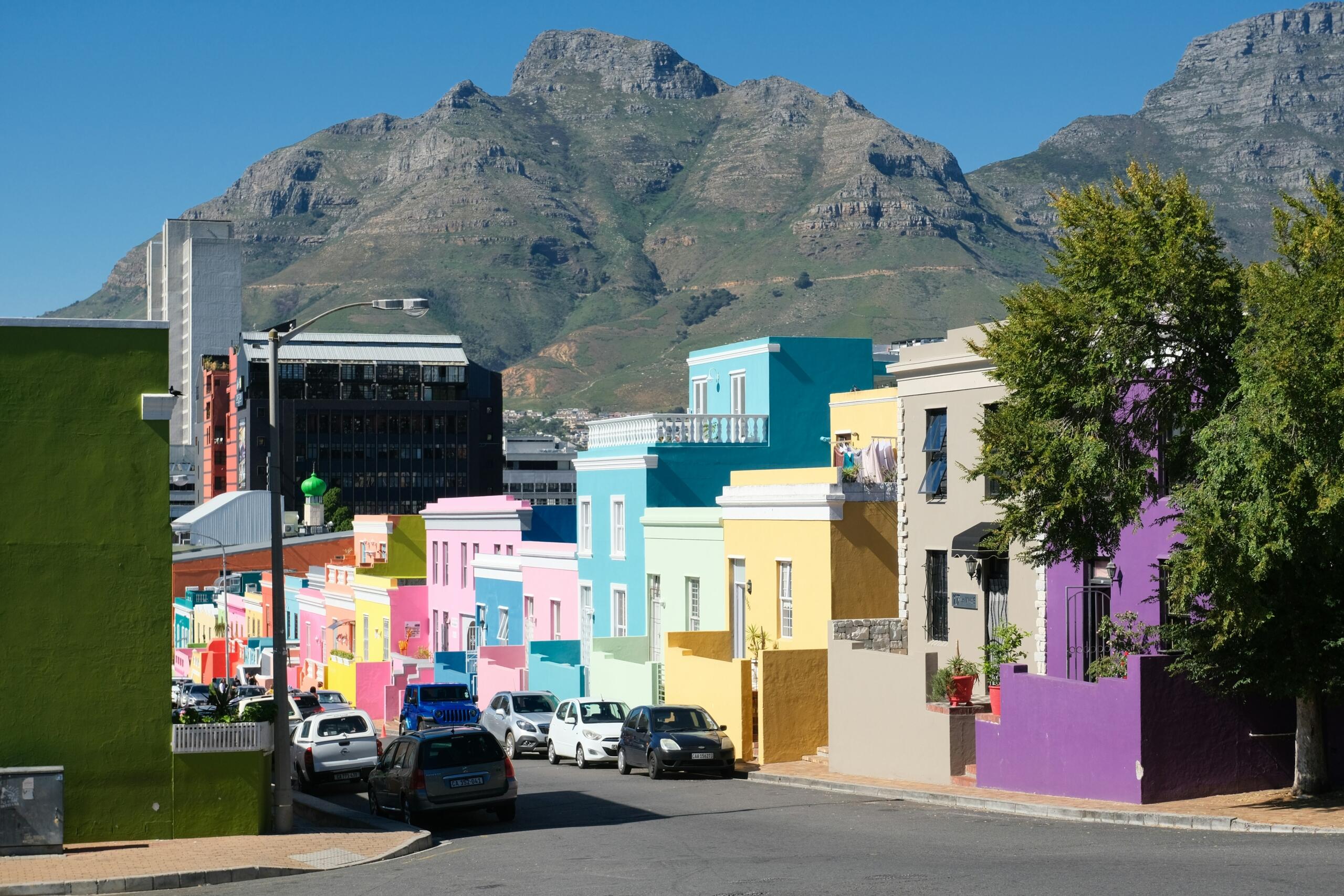

Afrikaans is one of South Africa’s most widely spoken and beloved languages. Used across provinces from the Western Cape to the Northern Cape and even into Namibia, it makes sense that there are many different Afrikaans dialects shaped by culture, history, and geography. So, while you may first encounter it in a classroom or textbook, remember that it may sound different depending on where you are.
Language variation is not a weakness; it is a reflection of human diversity.
Languages aren't just made of words. They're modes of looking at the world. They're keys to civilisations.
R. F. Kuang
If you listen closely, especially in everyday environments like schools, taxi ranks, or local cafés, you will notice how people adapt the language to their surroundings. For instance, Afrikaans in Cape Town will sound a bit different to the conversations heard in Upington or Gqeberha.
Understanding this diversity is not only interesting, in many ways it is essential because it is how you will connect more authentically to speakers while you also experience the richness of the language. These varieties of Afrikaans are not separate languages, but living expressions of shared history.


Historical Development of Afrikaans Dialects
Origins and Evolution
To understand different dialects, we have to go back to the 1600s when Afrikaans developed from Dutch spoken by settlers. Interestingly that’s not where it ended. The language also evolved by absorbing influences from Malay slaves, indigenous Khoisan communities, and later interactions with Bantu language speakers. This blend is what created early varieties of the language that were already diverse in sound and structure.
As communities grew across the country, these language variations became more pronounced. Ultimately, remote farming regions, port cities, and mission settlements all contributed to shaping dialects region by region, over time.
If this sounds fascinating, don’t miss our article on how the development of Afrikaans shapes identity which will give you valuable insight into how these early influences still shape modern speech.
Standardisation and Its Impact
During the early 20th century, Afrikaans was standardised to support governance, education, and literature. Schools in areas like Paarl and Stellenbosch played a significant role in promoting a more uniform version of the language, which also contributed to establishing it as an official language.
In the meantime, there were varieties of Afrikaans that were overlooked in formal settings, even though they were widely spoken. Today, however, there is a renewed appreciation for different Afrikaans dialects, with both educators and linguists recognising their historical and cultural importance.
Major Dialects of Afrikaans
Kaaps (Cape Afrikaans)
Kaaps, is without doubt, one of the most vibrant and widely recognised versions of Afrikaans. You can hear it daily in communities across the Cape Flats, including areas like Mitchells Plain, Hanover Park, and Bonteheuwel. It is also the widely heard version of Afrikaans in Cape Town, where language reflects the city’s multicultural diversity.
This variety stands out for its strong multilingual influences, particularly from Malay, Khoisan, and English. As a result, it often includes loanwords and frequent code-switching with English, especially in urban areas.
In terms of pronunciation, Kaapse Afrikaans can differ noticeably from Standard Afrikaans. For instance, certain consonants may be pronounced more forcefully, and speakers may insert additional sounds within words.
Grammatically, it may also simplify verb forms or deviate slightly from standard structures, making it sound more informal and conversational.
If you have heard it, you’ll know: it is expressive, rhythmic, and deeply connected to community life.
• Strong presence in urban Western Cape communities
• Influenced by multiple languages and cultures
• Rich use of Kaapse Afrikaans slang in everyday speech
Oranjerivier Afrikaans
Prominent in the Northern Cape and spoken in settlements along the Orange River, this dialect reflects the Afrikaans language’s historical interaction with Khoekhoe communities and is one of the more distinctive varieties of Afrikaans.
• Spoken along the Orange River in the Northern Cape
• Influenced by Khoekhoe languages and early settler interaction
• Notable for distinct pronunciation patterns and grammatical structures
• Reflects rural community life and long-standing regional traditions
This dialect shows strong influence from Khoekhoe languages, which affects both vocabulary and grammatical constructions.
For example, plural forms and possessive structures may differ from Standard Afrikaans, and certain sounds, such as the pronunciation of “r”, can vary noticeably. These features give the dialect a distinct rhythm and identity compared to both Kaapse Afrikaans and Oosgrensafrikaans.
Although less prolific in mainstream media, this dialect is an important example of how language variations within Afrikaans developed in semi-isolated and rural regions of the country. If you want to explore the language more practically, you can also look for lessons in Afrikaans across South Africa.
Oosgrens Afrikaans
Oosgrens Afrikaans emerged, as the name suggests, in the Eastern Cape, and was influenced by contact with the region’s Xhosa speakers. At the time, it played a key role in shaping what later became standard Afrikaans.
• Originated in the Eastern Cape frontier regions
• Influenced by interaction with Xhosa-speaking communities
• Played a key role in shaping what became standard Afrikaans
• Known for balanced, structured speech patterns with historical roots
Among the varieties of Afrikaans, this dialect is a perfect example of how language dynamically evolves through cultural interaction, especially in areas where multiple languages coexist.
In towns like Grahamstown, now called Makhanda, and surrounding farming communities, it is possible to still hear traces of this dialect in everyday speech. Though subtle, these differences remind us that language is constantly influenced by human contact, movement, and shared experiences.
Linguistic Features and Variations
Phonetic Differences
When it comes to linguistics, the way certain sounds are formed can differ significantly between regions and this is one of the most noticeable aspects in Afrikaans variations. For example, speech patterns in rural areas usually sound slower and more deliberate compared to the fast paced style of typical Afrikaans in Cape Town.
By listening carefully, you could identify these differences and understand how different Afrikaans dialects function in real conversations.
Vocabulary and Slang

Vocabulary is also where noticeable differences stand out. In the Western Cape for instance, you will frequently hear Kaapse Afrikaans slang, especially among the younger population of speakers and in informal settings.
More than just casual language, these expressions are an important reflection of social context and humour. Having as much vocabulary as possible can help you engage more naturally with other speakers and better understand the varieties of Afrikaans used across the country.
If this topic interests you, you’ll find practical examples in the article on Afrikaans slang and everyday speech which is a helpful resource for understanding how these expressions are used in daily life.
Sociolinguistic Perspectives
Perceptions and Stigmatisation
Throughout history, certain Afrikaans variations were considered less formal or even incorrect. These perceptions were often influenced by political and social factors rather than for their linguistic accuracy.
Today, there is a growing recognition and appreciation of dialects that represent cultural richness, which is widely seen in literature, music, and education. For structured support while learning, many learners also benefit from online Afrikaans classes.
The Evolution of Afrikaans and Its Dialects
1652
Dutch Settlement at the Cape
Dutch settlers arrive at the Cape, bringing the foundation of what would later become Afrikaans. Early communication begins to shift as different groups interact.
1700s
Language Mixing Begins
Afrikaans starts developing through contact with enslaved people from Southeast Asia, indigenous Khoisan communities, and other groups. This leads to early variation in Afrikaans.
1800s
Regional Spread
Afrikaans begins to be recognised as distinct from Dutch. Early written forms reflect some of the emerging varieties of Afrikaans.
1925
Afrikaans Becomes Official Language
Afrikaans is standardised and recognised officially in South Africa. This promotes a unified form, although regional speech continues to thrive.
Late 1900s
Cultural Reclaiming
Communities begin to celebrate dialects such as Kaaps. The value of Afrikaans in Cape Town and other local forms becomes more widely recognised.
2000s
Preservation and Media Growth
Film, music, and digital platforms highlight dialect diversity. Kaapse Afrikaans slang and other regional forms gain visibility and cultural importance.
Preservation and Revitalisation Efforts
Throughout the country, efforts to preserve dialects continue to gain momentum especially as projects documenting Kaapse Afrikaans slang and other regional forms are helping to maintain linguistic diversity.
Unsurprisingly, the media plays a key role in this process as television, film, and digital platforms showcase lifestyles around the regions of South Africa that highlight authentic speech patterns. If this sounds interesting, you won’t want to miss our article on Afrikaans movies for language learning, which shows how media can support your progress.
Why Recognising Afrikaans Dialects Matters
Whether you are interested in linguistics, or simply want to learn Afrikaans as best you can, understanding different Afrikaans dialects, so that you can recognise subtle differences in meaning, tone and context, will enable you to communicate more effectively across South Africa.
For instance, when you hear Afrikaans in Cape Town, you are experiencing a unique blend of history and culture, but exactly the same applies to the versions which have also been moulded by environment and community.
Why It Matters
For broader context, our article on why Afrikaans is still important in modern South Africa explores how the language continues to evolve and remain relevant today.
Variation in Afrikaans and Real World Exposure
To fully appreciate variation in Afrikaans, it needs to be experienced in real life settings. This could be through community interaction, travel, or even listening to local radio stations.
By spending time in different neighbourhoods, whether they are in Cape Town, Kimberley, or the Eastern Cape, you will hear how different Afrikaans dialects shift depending on the environment. Take note and remember that these experiences deepen your understanding of the language in ways that textbooks cannot.
Pay attention to how kaapse Afrikaans slang is used in informal conversations. Notice how tone, humour, and rhythm differ from more formal speech. These details bring the language to life.
Insight through People and Places

Ultimately, Afrikaans is not a single, uniform language system, but rather a collection of voices shaped by community, history, and geography. If you are looking for support beyond reading about dialects, you can consider Afrikaans lessons to build confidence through guided practice.
By learning about different Afrikaans dialects, more than language knowledge is gained as valuable insight about the people who speak it, is revealed. This is exactly how identity, culture and communication intersect.
Whether you are exploring Afrikaans in Cape Town or engaging with other varieties of Afrikaans in other parts of the country, each experience adds depth to your language learning journey. If you prefer in-person learning, you can also find afrikaans lessons in Pietermaritzburg.
Summarise with AI:
Enjoyed this article? Leave a rating!

 Loading...