

There are so many hard English words to pronounce because, over the centuries, it has borrowed words from different languages and applied English pronunciation rules to them. However, those words often contain silent letters, and they're spelt in ways that don't match the way they sound. Here, we present thirty such words with explanations for why they sound that way, and tips for how to master them.


Aisle (aɪl)
This word is challenging because it has so many silent letters. It means 'a path between rows of seats or shelves'. It sounds like EYE-el, but it's often mispronounced: EYE-zel or AIL-ee.
The word 'isle', meaning 'a small island', sounds the same as 'aisle'.
The word 'aisle' comes from Old French, originally meaning 'wing'.
Arctic (ɑːʳktɪk)
This word, from the Greek arktos for 'bear', has a clunky pronunciation. Fourteenth-century French speakers tried to smooth it out by dropping the middle 'C', but the effort didn't stick. Today's English speakers are giving that effort another go; they'll likely meet with the same success the old French did.
The Bear constellation we call Ursa Major is the defining northernmost point. In Greek, 'arktikos' generally means 'of the north'. It's a nod to the Bear constellation.
Only the most foolhardy would deny a bear its due! Therefore, you must pronounce this word ARK-tic, not AR-tic, as many do.
Buoy (bɔɪ)
Much of the confusion over how to pronounce this word revolves around what type of English you speak. In fact, it is a homophone for an English word used to describe a male child.
British English
pronounced the same as 'boy' (bɔɪ)
American English
pronounced 'boo-ey' (buːi)
Note how British actress Claire-Hope Ashitey pronounces 'buoy' in the dramatic conclusion of Alfonso Cuarón's excellent 'Children of Men'.
Chaos (keɪɒs)
The ‘ch’ combination is confusing, even for native English speakers.

We pronounce both of them in ‘church’ but turn the one in ‘echo’ into ‘K’.
The same thing happens with this word. Rather than pronouncing it 'TCHA-os', say 'kah-os'. You may pronounce the adjective form the same way, but with the stress on the last syllable: 'kah-o-TIC'.
Clothes (kloʊðz)
We all know what clothes are, and the word itself isn't that hard to pronounce. However, it's tricky because this word has no singular form; it's always plural. You might want an article of clothing but you will never find a 'clo'. Which highlights one of this word's unique properties.
And, as though that weren't enough to qualify it among the difficult words to pronounce in English, the 'th' sound, immediately followed with the 's' sound, makes it nearly impossible to say! That's why so many people just say 'close', instead of 'clothes'.
Colonel (kɜːʳnə)
This word is a treat for historians of all types, but not so much for people who want to speak English correctly. It, along with another military term, causes English speakers tons of headaches.
Colonel
- pronounced 'kernel'
- someone who commands a column of troops
- word origin: colonne - column in French.
Lieutenant
- pronounced 'leftenənt'
- literally 'place holder'
- means deputy or substitute
The transformation from 'colonel' to 'ker-nel' is somewhat a tribute to the original word, 'coronell'. We're hard-pressed to explain how the 'F' got into 'lieutenant'.
Comfortable (kʌmftəbəl)
Yes, this word comes from 'comfort'. However, that doesn't mean one can simply add '-able' to kʌmfəʳt (comfort) to make a valid word.
The whole pronunciation changes: 'KUMF-ta-ble', not 'kum-FORT-ah-ble', as some are wont to say.
This word comes to us from Latin via French, a language that has no silent letters or unspoken syllables. If this were a French lesson, we would urge you to say every syllable.

Conscience (kɒnʃəns)
Full disclosure: this wordsmith remembers how to spell 'conscience' by saying 'con-science' as I type. However, this word sounds nothing like 'science', 'con' or no 'con'.
It appears to have four syllables (con-sci-en-ce) but it only has three (con-shee-ens).
Its spelling often fools English learners into thinking it's about science.
Cupboard (kʌbəʳd)
In the olden days, a cupboard was literally a board upon which to store cups. Today, it’s an enclosed space to keep all manner of dishes. As such, we no longer define it with cups. Instead, we drop the ‘P’ to smooth the sound out: cubberd, instead of cup-board.

Draught (drɑːft)
This is one of the hard English words to pronounce for two reasons: its two letter pairs. First, the paired vowels, 'au', give the 'a' a very long sound - something close to 'awww'. Second, the consonant pair, 'gh', does not follow the usual pattern.
'aught', 'daughter', 'might', 'bright', 'fight', 'right' and others.
By contrast, the 'gh' in 'draught' makes 'f' sound, as it does in 'laugh', 'rough', and 'enough'.
Epitome (ɪpɪtəmi)
This word ranks among tricky English words because it's among English pronunciation exceptions.
What it means
The best example or representation of something.
Sample sentence
She's the epitome of efficiency!
Meaning
She's the most efficient person!
Why it's difficult
It's not 'EPI-tome'
It's 'ih-PIT-omi'.
Gnome (noʊm)
These creatures populate folk tales around the world. They often go by other names but, in English, we call them gnomes. Not 'g-nomes', as many like to say, but 'no-ums'.

Words that start with the 'gn' pairing are difficult words to pronounce in English, especially for beginners. The easiest way to remember how to say words like 'gnaw', 'gnash', 'gnarled', 'gnat' and 'gnome' is to ignore the 'g'.
Hierarchy (haɪərɑːʳki)
Hierarchy means an order of people within an organisation. This word ranks among the words in English that are hard to pronounce for three reasons.
- Speaking the syllables: 'hi-ar-ki' is not correct; 'hi-er-ar-ki' is.
- Pronouncing two 'r's, close together can be a challenge.
- The 'chy' sound: in this instance, it is 'ki' rather than 'tchi'.
We might add a fourth challenge: at first glance, the 'r' + 'ch' combination seems impossible to pronounce.
Isthmus (ɪsməs)
This tricky word describes a finger of land that separates two bodies of water. This narrow strip joins two landmasses, as this picture shows.
The 'th' sound is a challenge for many to pronounce. However, that letter pair is silent in this word. Simply say 'IS-mus', don't try to tie your tongue into knots.
Granted, few people use 'isthmus' in general conversation. However, if you're studying engineering, geology or other sciences, you'll use it often. So, it's best to pronounce it correctly.

Jamb (dʒæm)
The frames that hold doors and windows in place are jambs. The silent 'b' is a leftover from its French-Latin roots. Many people mistakenly make two syllables out of this one-syllable word by saying 'jam-buh'.
Comb (koʊm), womb (wuːm), limb (lɪm), lamb (læm), numb (nʌm), bomb (bɒm) and others.
Jostle (dʒɒsəl)
When you jostle someone, it means you bump into them, likely making they annoyed with you. Like 'jamb', this word has a silent letter that make it tricky to pronounce. And worse: several other words follow this pattern, keeping their 't' silent.
- bustle
- rustle
- castle
- bristle
- apostle
- hustle
- whistle
- wrestle
- nestle
Keep in mind that you should never 'JOS-tel' anyone on purpose, but you may 'JOS-l' them by accident. When you do, be sure to apologise!
Knee (niː)
We might argue that the most difficult words to pronounce in English language are those with silent letters. The 'k' in 'knee' is an example of such. This word comes to English from German. German speakers still use this word, and they pronounce the 'k'.
Many English words begin with a silent 'k':
'know', 'knife', 'knuckle', 'knight', 'knit', 'knot', 'knock', and many others.
Liaison (lieɪzɒn)
This French word, meaning 'binding' or 'union', is pronounced the same whether in English or French. The three-vowel combination 'iai' makes it look tricky, but it's only a challenge if you don't know the rule.
Pronunciation Tips and Tricks
Now, back to 'liaison'. First, we define the syllables: li+ai+son. Next, the letter-pair 'ai' - simply say the letter 'a'. Now, add the final syllable. Congratulations! You've pronounced this tricky word correctly!

Nauseous (nɔːziəs)
Nauseous, from 'nausea', is a tricky word because it has three vowels, as well as a vowel pair. If you're speaking British English, the way you pronounce this word is very different from the way American English speakers say it.
British English
pronounced naw-zeh-ous
American English
pronounced naw-shus
This word is especially challenging because it's root word, nausea, has three syllables: naw-zhi-ah. American English speakers typically say 'naw-zhi-ous', instead of its acceptable pronunciation.
Often (ɒfən)
How fitting that this word is frequently mispronounced. The ‘T’ is silent, making its sound ‘OFF-en’, rather than ‘OFT-ten’. So, why is there a ‘T’?
Like many English words, ‘often’ comes from German. English speakers borrowed the German ‘oft’, slapped an ‘-en’ on it and called it theirs. This is why knowing the origin of words pays off. It helps explain all these weird English words with seemingly useless letters!
Phlegm (flem)
This word describes the green, gooey stuff you cough up when you have a cold.

The question is: why is it spelt with 'ph' and 'gm' when it sounds like 'flem'? We can thank Late Latin for this tricky spelling.
The 'ph' pair is likely more familiar to English speakers, thanks to words like 'elephant', 'phase', and 'phenomenon'.
The '-gm' ending is perhaps less familiar. Still, if you know words like 'paradigm' and 'diaphragm', you know that the 'g' is silent.
Rural (rʊərəl)
The English 'r' is difficult to pronounce for English language students and native English speakers alike. Having two of them so close together makes this two-syllable word one of the most challenging words to say.
Rhotacism is a speech condition that makes it hard to pronounce the letter R.
For people with this condition, pronouncing 'rural' is a nightmare!
Rhotacism aside, try these tips to pronounce this word correctly. 1. Space the syllables out: ruh (pause) ral. If that's too awkward, you can try muting the second 'r' - 'ru-al'.
And once you've mastered this word, have a listen to a BBC presenter, Dr Lucy Worsley. She is perhaps one of the most famous presenters with rhotacism. For her and others with this condition, words like 'rural' are torture!
Salmon (sæmən)
Why does 'salmon' even have an 'L' in it? We must thank our Latin ancestors, particularly Pliny and Ausonius, who described a 'leaping fish' they saw (salire = to leap). Salmons still leap, but we've moved far past this fish's Latin description.
Don't say SAL-mon.
Do say SAH-mon.
Sandwich (sænwɪdʒ)
Anyone who's enjoyed a picnic at the beach knows the frustration of trying to keep the sand out of their food. As that's the case, it's a wonder so many people still pronounce this treat 'sand-witch' instead of its correct pronunciation: 'san-wich'.
Like many English words, the legendary earl's name gives English speakers quite a fit with its silent letters and odd pronunciation.
Sixth (sɪksθ)
This is one of those hard English words to pronounce. The 'th' sound is hard enough for many English learners and native speakers; combining it with the 'x' sound makes it harder still.
There is a simple trick for easy pronunciation. Say 'six', noting your tongue's position as you make the 'x' sound (towards the front of your mouth). From there, you only need to dart your tongue forward until the tip just passes through your teeth.

Squirrel (skwɪrəl)
Who knew such a cute rodent could have such a hard name to pronounce? We can credit Old French for this tricky word. 'Squirrel' is the anglicisation of 'escurueil'. They don't look the same but they sound almost exactly alike.
Saying this word properly means all the action is at the back of your mouth. Few tricks exist to help master it, save for practice and more practice. You might start with 'sk'+'whirl', bringing the sounds closer together as you progress.
Subtle (sʌtəl)
If you're subtle, you operate in ways that aren't immediately noticeable.
Kind of like the silent 'b' in 'subtle'. It had a purpose in Old French; it was a part of the prefix 'sub-', meaning 'under'. The original word gave today's 'subtle' its definition. But you can just ignore the 'b' and say 'suh-tel'; no need to twist your tongue to pronounce it.

Wednesday (wenzdeɪ)
Did you know that the days of the week were all named after gods? Except for Sunday and Monday, which honour the sun and moon, respectively.
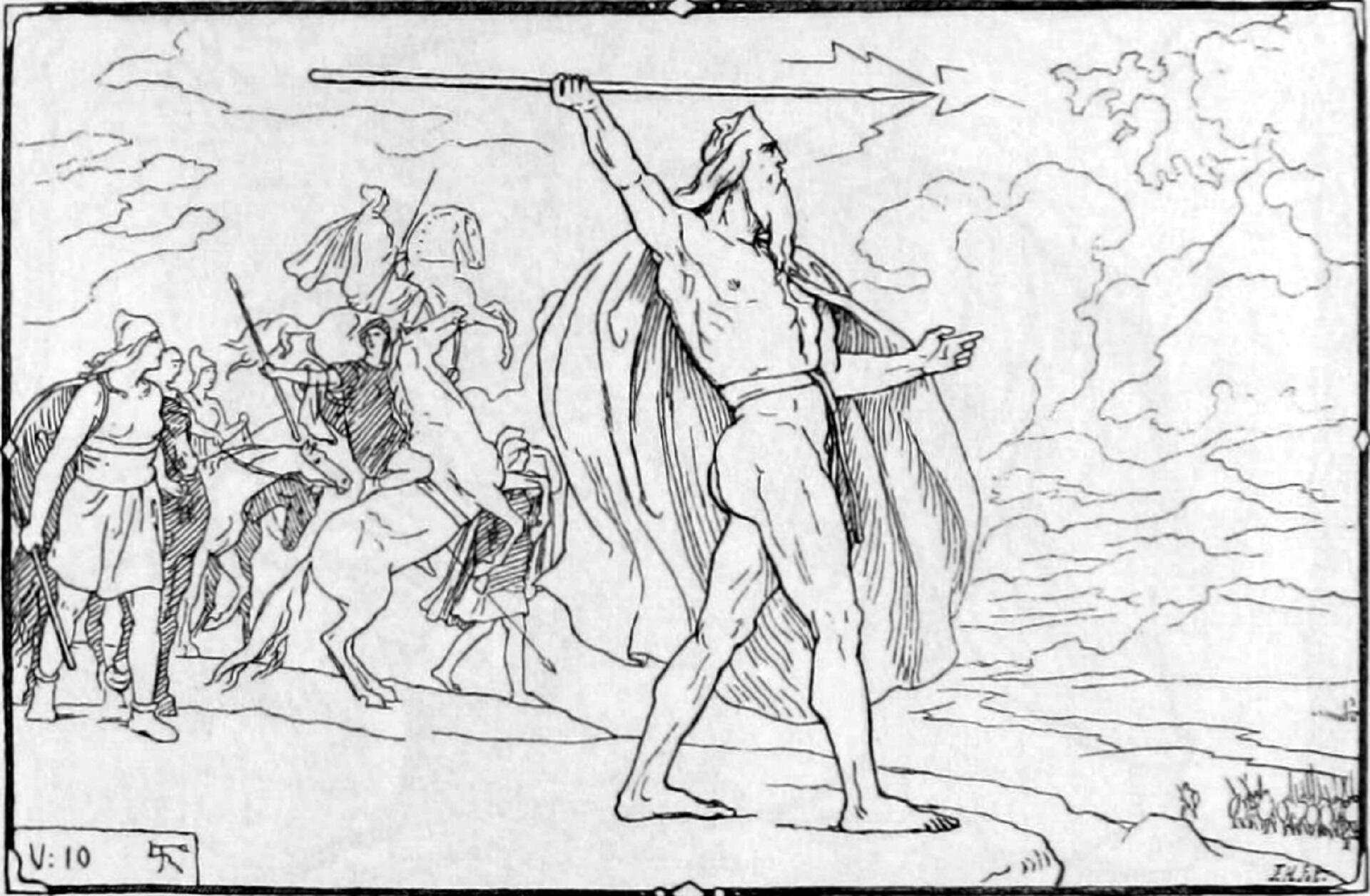
Wednesday honours the Norse god Woden; it is, in fact, Woden's day. With this bit of word history (etymology), you can understand why Wednesday is spelt the way it is.
We've long stopped believing in Odin (Wodin) so we can take a shortcut on pronouncing his day: WENz-day.
Wheel (hwiːl)
Why does English have so many 'wh-' words? For the most part, they come from Old and Middle English, a time when Germanic and Anglo languages were merging. Linguists believe the h-sound helped distinguish words from that period from similar-sounding words with different meanings.
- wheel -----> weel (whirlpool)
- whey ------> way
- when ------> wen (lump, tumor)
- why --------> wye (a river's name)
To say all these 'wh' words properly, make sure you put a slight 'h' sound before the 'w'.
Worcestershire (ˈwʊstəˌʃɪə)
It is rather ironic that the UK has towns that are the most mispronounced words in British English!
South Africa Has Its Own English Pronunciation Exceptions
Britain isn't the only country with place names that leave visitors scratching their heads! South Africa has plenty of English pronunciation exceptions, especially when it comes to names borrowed from isiXhosa, isiZulu, Sesotho, Afrikaans, and other local languages. If you've just arrived, don't be surprised if your confident attempt is met with a polite smile. Take Gqeberha, for example. It sounds more like "Keh-BEH-rah" than anything its spelling might suggest.

Then there's uMhlanga ("oom-HLANG-ah"), Tshwane ("TSHWAH-neh"), and Ga-Rankuwa ("Kha-ran-KOO-wah"). They're beautiful names with rich histories, but they can catch newcomers off guard.
South Africans also have a few other favourite words that regularly trip us up. Thanks to American films, social media, and the wonderfully unpredictable nature of English, words like epitome, genre, colonel, cache, quinoa, gauge, awry, and entrepreneur are often pronounced differently from the way they're written.
That's one of the reasons English pronunciation exceptions can be so challenging.
The good news? When it comes to hard English words to pronounce, nobody gets them all right the first time. If tricky words leave you with more English language questions, don't be afraid to ask, listen carefully, and practise. Even lifelong English speakers occasionally stumble over a difficult pronunciation, proving that learning English is a journey, not a race.
Summarise with AI:
Enjoyed this article? Leave a rating!

 Loading...