
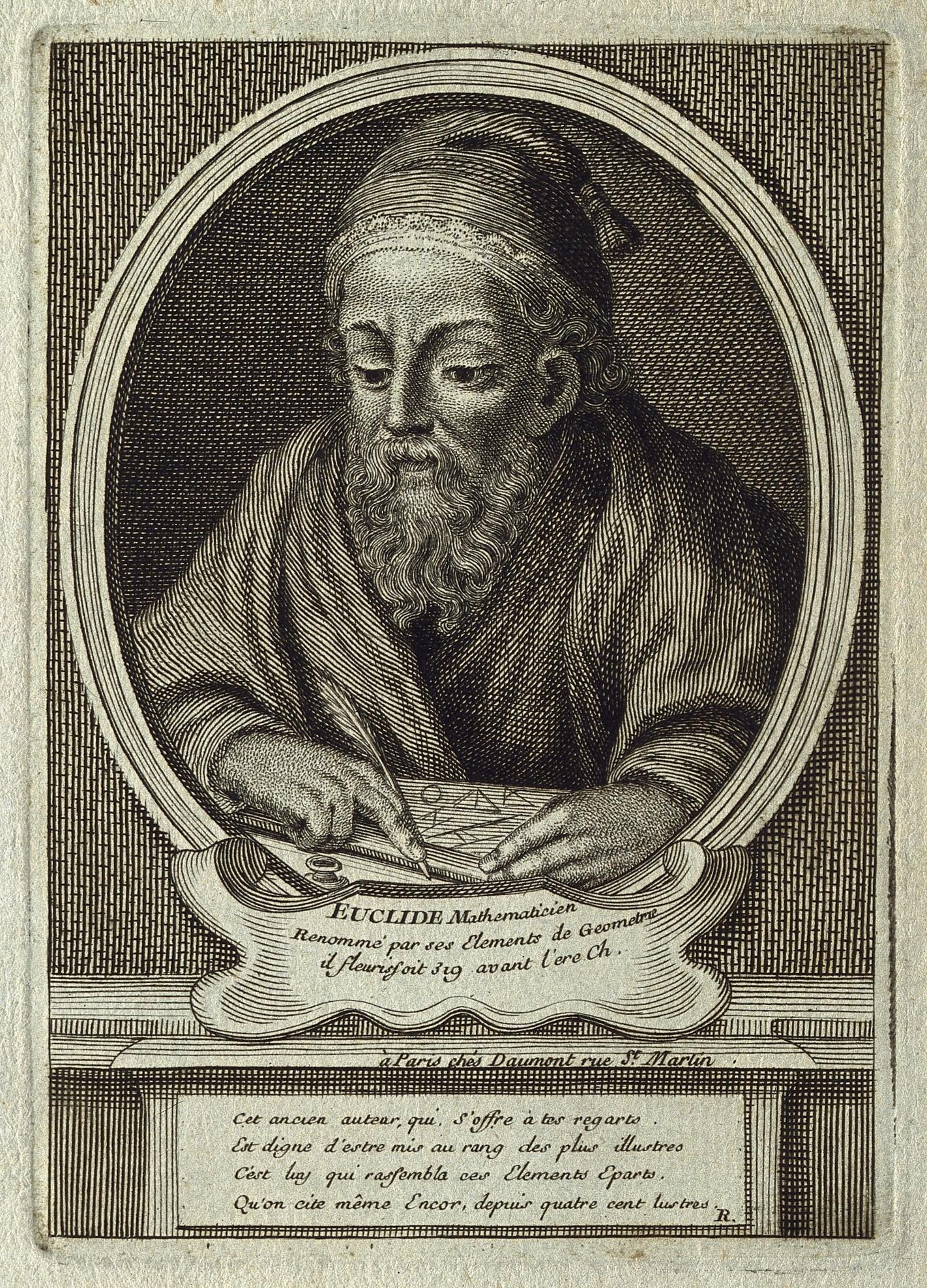

Euclid’s Elements is by far the most famous mathematical work of classical antiquity and also has the distinction of being the world’s oldest continuously used mathematical textbook. Richard Fitzpatrick
The passing of time has seen many great minds rise to prominence: Archimedes, Newton, Pythagoras and Thales, for instance. Today, we take a look at another great mind, Euclid. This genius of old, revolutionised and encapsulated all of the known information of his era, in his seminal publication, Elements. In this work, he creates the foundation for mathematics, as we know it today.
Not much is known of Euclid’s life and almost all of the information we have emanates from the philosophers Pappus of Alexandria and Proclus.
In the Elements, Euclid used a small set of axioms and deduced several theorems from them. He also produced works on conic sections, mathematical rigour, perspective, number theory and spherical geometry. Additionally, he also composed works in the field of optics – called Optics – and texts which are not widely-known, Phaenomena and Data. It is believed that he also authored many lost works.
Today’s article will answer the question: What is Euclid’s geometry?





Euclid’s Life and Mathematics
Much like his predecessors, Thales and Pythagoras, Euclid’s life-story is not well documented. Very few written records of his life have ever been uncovered and it is from these few surviving documents, that an idea of the life and work of this great mathematical mind, has been put together.
Euclid, who worked under Ptolemy I in Alexandria, saw the light of day around 300 BC, before Archimedes and after Plato. It has been said that Euclid was the bridge between the Platonic tradition and the tradition of which arose later in Alexandria. In this important centre of knowledge, he spent many days in the Museum of Alexandria.
Unlike many of the great Maths minds who preceded him, Euclid, did not establish a mathematics school of his own. He did, however, have a group of ardent students and supporters who rallied around him, followed his teachings closely and participated in a good many of his experiments. Legend has it that, when a student enquired from Euclid as to how he was benefitting from his mathematical research, he handed him a small amount of change. With this he implied that he was not after money, but, rather the search for mathematical truths and answers to many of life’s interesting phenomena.
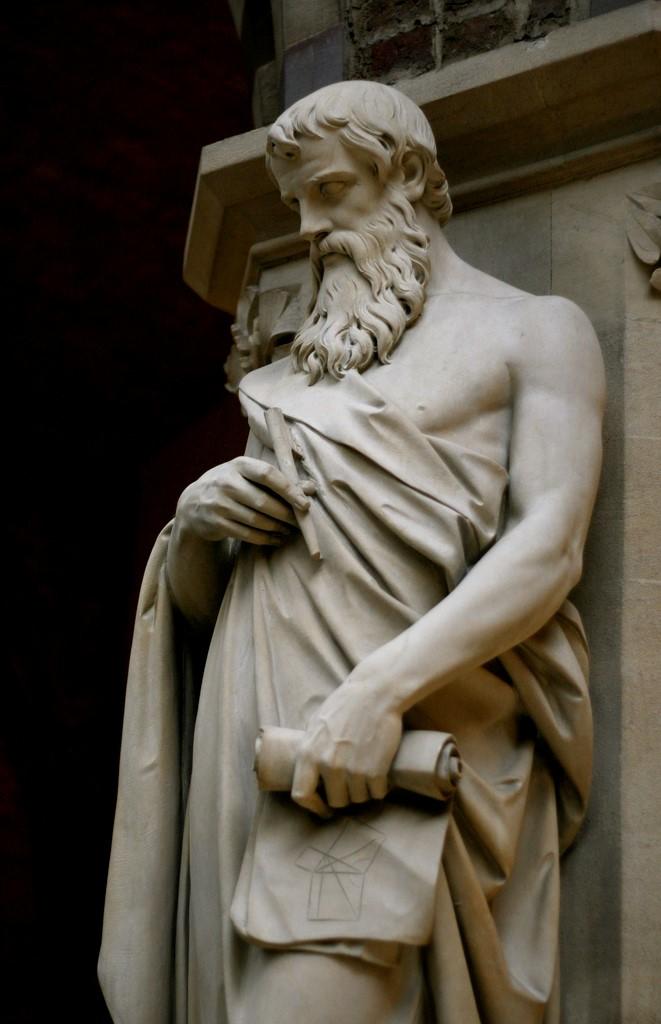
Most people know Euclid for and through his seminal work, Elements, which following the Bible, became the most printed book at the time when the printing press was invented. The thirteen books, that it’s divided into, are, in essence, dedicated to arithmetic and plane geometry.
In Elements, Euclid touches on numerous mathematical concepts including circles, parallel lines and triangles; also proving a number of theorems (including Pythagoras’s theorem), introducing the concepts of greatest common divisor (GCD) and repeated, successive subtraction, which became known as Euclidian division. These concepts can be seen as the precursor to what Isaac Newton later created: calculus! The knowledge, that Euclid had gained, was based on the knowledge gleaned from the great mathematicians of antiquity. In that epoch, science was being spread throughout Greece and many nascent scientists became influenced by the spread of this knowledge. The discoveries of Euclid and his peers, continued to inspire the sciences for many, many years after his death in 265 BCE.
Elements – Euclid’s Ground-breaking Work
Although a writer of other very important works, Elements is still considered to be Euclid’s most significant work. In it, he catalogues proofs of all the geometric knowledge of his age. The initial six books in Elements deal with elements of the geometric plane. Here, Euclid explains parallel lines, triangles, planes, the properties of a circle (in the presence of figures in a circle), the Pythagorean theorem, the construction of the Pentagon and the relationships between its sides – the essence of what some call Euclid geometry.
These first books formed the basics of geometry and details the characteristics of figures and their applications. Later, this laid the foundation for the establishment of analytic geometry by Rene Descartes.
The three books, which follow, deal with arithmetic, not geometry. Here, he discusses the construction of perfect numbers, the construction of the GCD two or more integers, numbers in geometric progression and prime numbers. In the first set of chapters in Elements, Euclid introduces the concept of repeated, successive division now known as Euclidian division.
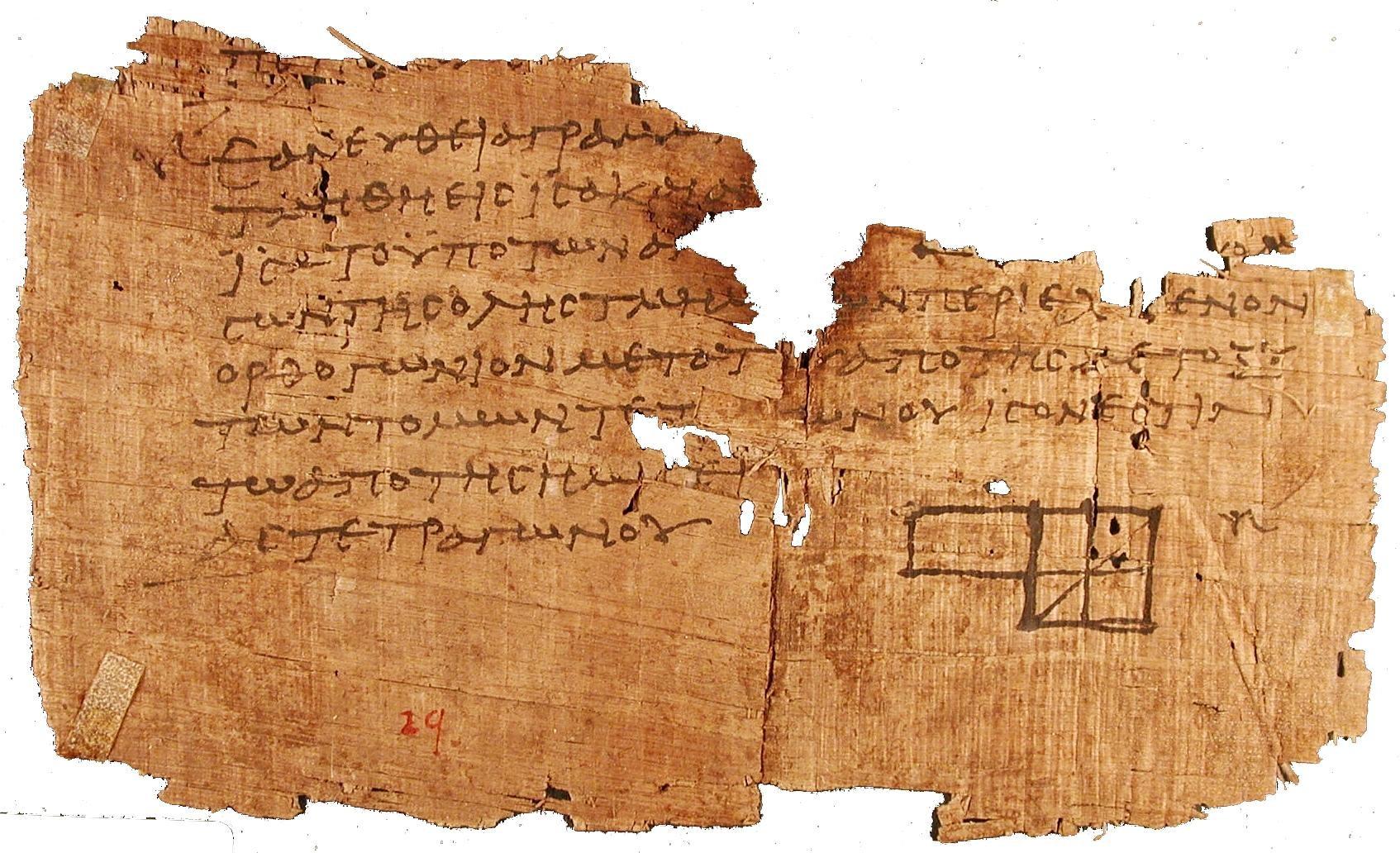
Irrational quantities are the topic of the second book. It consists of the three last books that are related to geometry in space.
This covers the construction of objects like regular solids, the sphere, the cube, the pyramid, the dodecahedron, the icosahedron, the octahedron, etc. other mathematicians have piggy-backed their work on Elements over many centuries, adding onto and further teasing out some chapters in Euclid’s historic work.
Elements and these further works form the basis for today’s Mathematics’ curricula in many parts of the globe. Arithmetic, geometry in space and the geometric plane all form part of mathematics taught at primary school level, all the way up to varsity, which firmly underscores why Elements is regarded as the ‘Bible for mathematics!’ This ground-breaking work has long been considered compulsory reading (or reference), before re-invoking interest on a grand scale in modern times. The information, provided by Elements can be seen as a photographic representation of the physical world of Euclid’s time.
Euclidian Division Explained
A remnant of antiquity, Euclidian division is still a mathematical skill which is taught today.
So, what is Euclidian Division?
It, basically, is the division most of us were taught in primary school, not that we all understood it very well, sadly. It is also called whole division, and consists of an operation where one whole number (the divisor) is divided into another (the dividend). The resultant answer is called the quotient and, in some cases, the remainder.
Performing Euclidian division of a whole number (A) by another whole number (B), allows us to calculate a whole quotient. If there is a number left over, after the process of division is completed, it is called the remainder. This is what is left over at the end of the process and is a number which is smaller than the divisor, and can, thus, not be divided by it any further.
By way of explanation, here is an example: with a divisor of 4 and a dividend of 25, the quotient is 6, as 4 x 6= 24. The remainder (the number left after the subtraction of the 24) is 1. To perform this type of division, the dividend is commonly written to the right of the divisor, with the quotient appearing below the dividend (in short division) or above it (in long division). The remainder is then written below the dividend, in long division, and next to the quotient in the shorter version.
To check that you have completed the entire calculation, ensure that the divisor cannot divide into the remaining value at all. Of necessity, the remainder will be smaller than the divisor. If there is no remainder, it means that A is a multiple of B. while Euclidian division is taught at primary school level, it does become quite a bit complicated when, for instance, decimals are added into the operation.
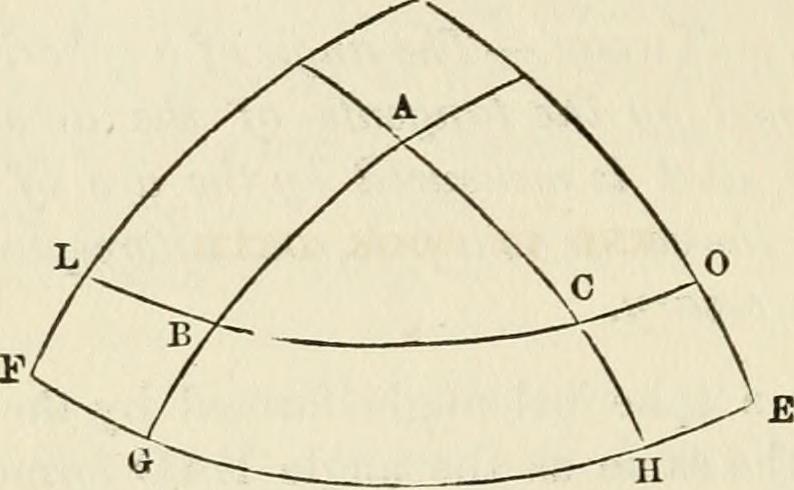
The mathematical Axioms of Euclid
Euclid set out many axioms, in his works Elements, which are mathematical proposals which are regarded as self-evident or undeniable. Euclid provided five of these axioms in his work. Mathworld.wolfram.com describes them as below:
- “A straight line segment can be drawn joining any two points.
- “Any straight line segment can be extended indefinitely in a straight line.
- “Given any straight line segment, a circle can be drawn having the segment as radius and one endpoint as centre.
- “All right angles are congruent.
- If two lines are drawn which intersect a third in such a way that the sum of the inner angles on one side is less than the two right angles, then the two lines inevitably must intersect each other on that side if extended far enough. This postulate is equivalent to what is known as the parallel postulate.
So, if you want to know what is Euclid’s geometry or want to help someone with the division of large numbers, contact a math tutor to set you on the right path.
What is the Greatest Common Divisor?
Among the many important concepts taught in mathematics courses, the Euclidian algorithm computes the greatest common divisor (GCD) of two natural numbers. This number represents the largest natural number which divides into both numbers without leaving a remainder.
This is also regarded as part of simple arithmetic nowadays. In South African schools, this is referred to as the HCF (highest common factor) and can be found by constructing a list of all the divisors of both numbers, as a first step. Take for example the numbers 12 and 26:
- Factors of 12: 1,2,3,4,6,12
- Factors of 26: 1,2,4,9,13;26
In this example, the greatest common divisor is 4. Euclid’s algorithm avoids the need to find all the possible divisors by way of repeated Euclidian division. This method allows one to simply divide the larger number by the smaller one. One proceeds to divide until the remainder equals zero.
Book seven of Elements expands on the Euclidian algorithm. The master mathematician presents his research, first, as a geometric problem. This algorithm has numerous important applications, including reducing fractions to their simplest forms. Far more complex applications include using the algorithm to secure Internet communications and in methods which break these cryptosystems by factorising large composite numbers (Wikipedia).
Given the importance of a strong foundation in mathematics for academic and future career success, it might be beneficial to hire an online maths tutor. An experienced tutor can offer personalized instruction, tailored to individual learning styles and needs, which can greatly enhance understanding of complex concepts, improve problem-solving skills, and boost overall confidence in the subject. This tailored support can make a significant difference in achieving academic goals and building a solid math foundation.
Summarise with AI:
Enjoyed this article? Leave a rating!

 Loading...
