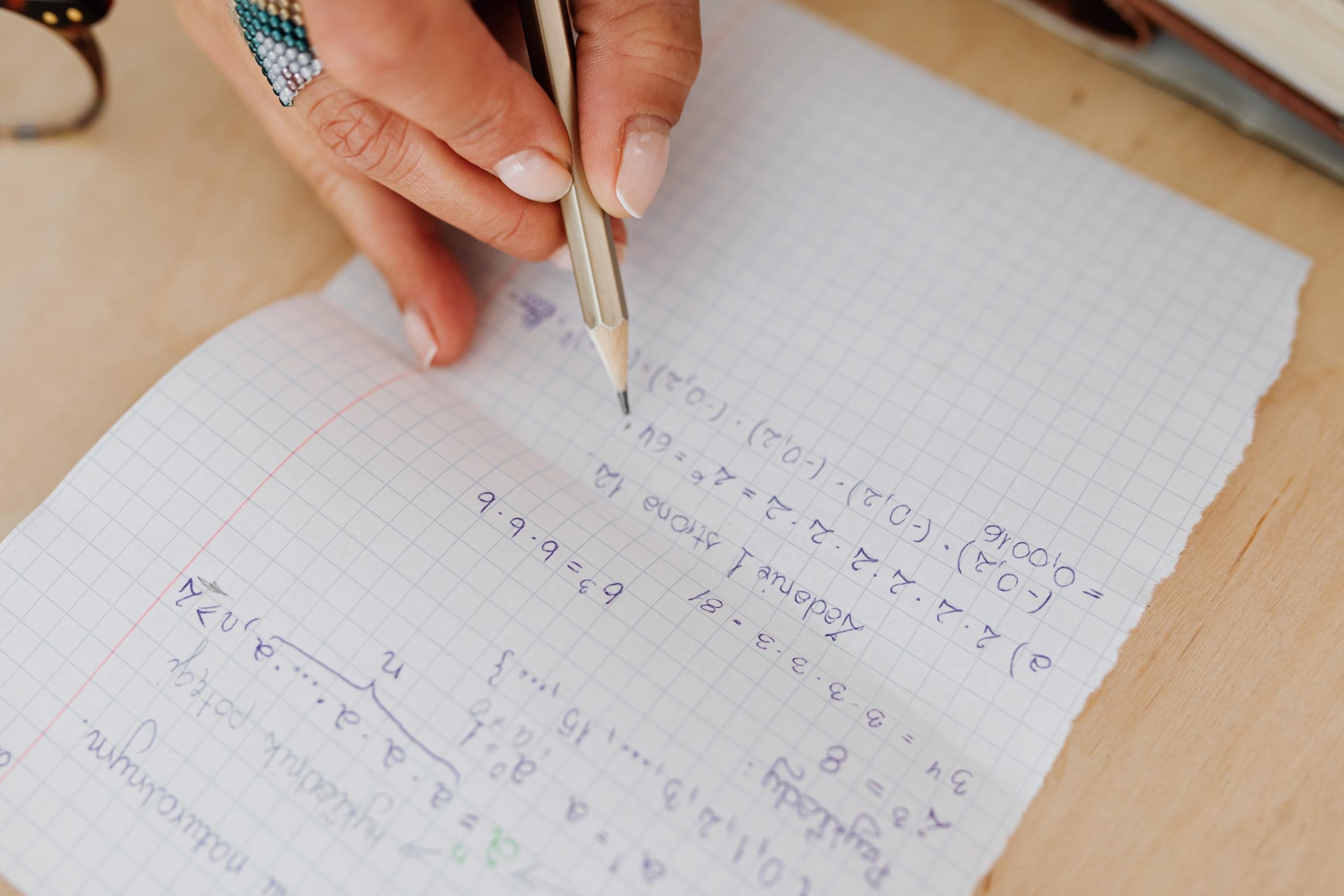

When we think about prehistoric civilisations and their contributions to the world, the group of people who inhabited prehistoric Sumer often go unnoticed. However, their impact on mathematics cannot be understated. The Sumerians, who inhabited Mesopotamia, known as the cradle of civilisation, made significant advancements in mathematics that laid the foundation for the mathematical systems we use today.
Let's take a voyage through time to explore the fascinating world of Sumerian mathematics. We will delve into their arithmetical system, uncover the mysteries of their numerical notations, and discover the remarkable achievements they made in the field of mathematics.





The Birth of Mathematics in Mesopotamia
Mesopotamia, a region encompassing modern-day Turkey, Syria, Iran, Iraq, and Kuwait, is often referred to as the Fertile Crescent. It was here that the Sumerian civilisation emerged around 3100 BCE and thrived until the fall of Babylon in 539 BC. The Sumerians, along with the Akkadians, laid the foundation for mathematics as we know it today.
The ancient Babylonians faced various challenges in their daily lives, which led them to develop numerical solutions. Their discoveries and insights were recorded on clay tablets, providing us with a window into their numerical methods. These revealed that they explored concepts such as quadratic and cubic equations and even the Pythagorean theorem!
One cannot discuss the significance of Sumerian mathematics without mentioning an American mathematician by the name of Otto Neugebauer. Neugebauer dedicated his life to studying the mathematics of prehistoric civilisations, particularly the Sumerians. His extensive research shed light on the sophisticated methods used by these ancient mathematicians and provided invaluable insights into their understanding of numbers and calculations.
Thanks to Neugebauer's groundbreaking work, we now have a deeper understanding of their achievements. Their contributions range from basic arithmetic operations such as addition, subtraction, multiplication, and division to more complex concepts like quadratic equations and geometric formulas. They even developed a primitive form of calculus, allowing them to calculate areas and volumes.

The Babylonian Numerical System
In the ancient city of Babylon, amidst the grandeur of towering ziggurats and bustling marketplaces, a numerical system was born that would forever change the course of mathematics. The Babylonian numerical system, with its unique blend of simplicity and elegance, captivated the minds of scholars and merchants alike. It was a system that laid the foundation for future civilisations to build upon.
To understand the Babylonian numerical system, we must first comprehend our own positional number system. In our modern-day system, we use ten symbols (0-9) to represent numbers, and the value of each symbol depends on its position in the number. For example, in the number 2 460, the digit 2 represents two thousands, while the digit 4 represents four hundreds.
However, the Sumerians initially used a non-positional system. Their numerical notations consisted of symbols for the numbers 1, 10, 100, and 1000. This limited their ability to represent larger numbers, as they could only write up to 9999. Moreover, they had no symbol for zero, making calculations more challenging.
Another pioneering form of maths they invented were called metrology. Metrology is the study of measurement and its application.
Through their system of counting and calculation, they were able to accurately assess the value of various commodities, a skill that was invaluable in their bustling trade networks.
The Sexagesimal Numerical System
Realising the limitations of their non-positional system, the Sumerians underwent a significant reform in their numerical system. They adopted a positional system, similar to ours, but with a base of 60 instead of 10. This unique system, known as the sexagesimal numeral system, had symbols for every number between 1 and 59.
This system was a testament to their astute observation of celestial phenomena, as they noticed that there were approximately 60 phases of the moon in a year. Thus, they divided their day into 24 hours, each consisting of 60 minutes, and further subdivided these minutes into 60 seconds. This base-60 system provided them with a versatile numerical framework that could be applied to various aspects of their lives.
One of the most fascinating aspects of their numerical systems is how they worked with fractions, which they denoted using the keyword "frac". They had a sophisticated understanding of fractions and used them in various calculations.
What is even more impressive is that they used a base-60 number system, which allowed for more complex calculations compared to the base-10 system we use today.
Imagine being able to solve complex mathematical problems using only a fraction of the knowledge we have today. The Babylonians did just that, and they did it with great precision and accuracy. Their arithmetic prowess is something to marvel at, and it's a testament to their intelligence and ingenuity.
The choice of a base-60 system had profound implications. It made fractions easier to work with, as 60 has many factors. This sexagesimal system introduced concepts that are still prevalent today, such as 60 seconds in a minute and 360 degrees in a circle.
Uncovering Mathematics on Clay Tablets
While the mathematical processes of prehistoric Egypt remain elusive due to a lack of records, we are fortunate to have a wealth of information about Babylonian mathematics.
These tablets, baked or dried in the sun, have survived the test of time. They contain various arithmetical concepts, including fractions, quadratic and cubic expressions, and even the Pythagorean theorem! The Sumerians' use of clay and their unique script, known as cuneiform, ensured the preservation of their numerical knowledge for future generations to unravel.
Cuneiform Script: The Language of Ancient Mathematics
Cuneiform script, one of the earliest writing systems in the world, was used by the Sumerians to record their arithmetical discoveries.
They used pictographic symbols to represent numbers. Instead of using abstract symbols like we do today, they would utilise pictograms that visually depicted the quantity being represented. This allowed for a more intuitive understanding of numbers and made calculations easier to visualise. It is truly remarkable to think that thousands of years ago, the Sumerians were able to create a system of mathematics that was both practical and effective.
Unlike the hieroglyphs of Egypt, cuneal script was characterised by wedge-shaped marks made on clay. The shape of these marks resulted from the difficulty of creating curved lines in wet clay.
The deciphering of cuneal script has allowed us to unlock the secrets of Sumerian mathematics. These ancient tablets contain numerical notations, equations, and geometric diagrams, providing us with a glimpse into the mathematical prowess of the Sumerians.
The Table of Squares: A Mathematical Tool
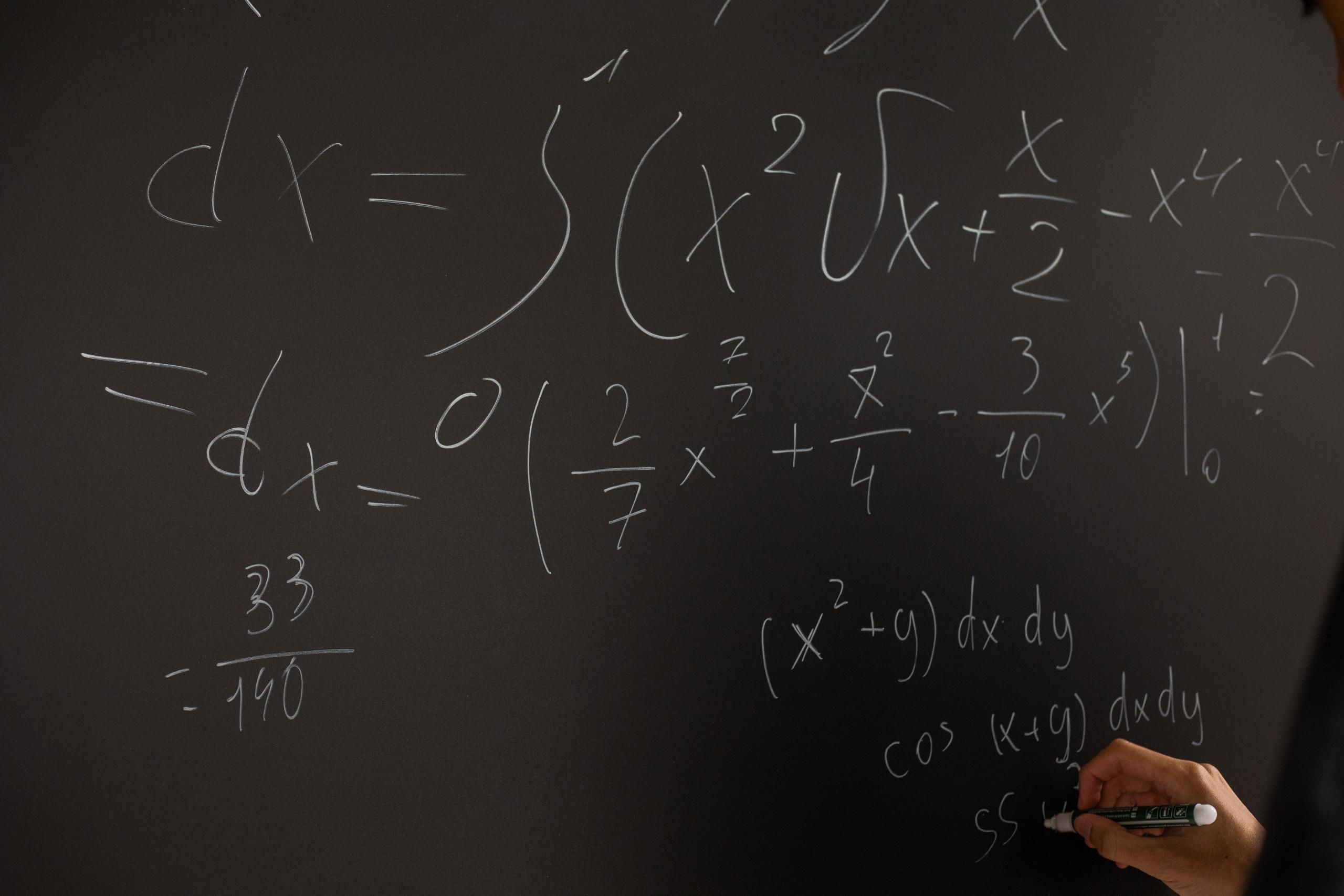
Calculating squares is a task we often take for granted in the modern-day. However, for the Sumerians, with their base-60 system and absence of decimal points, this was a more complex endeavour. To alleviate this challenge, the Sumerians created a table of squares.
This table, discovered by German scholars in the late 19th century, consists of lists of squares. These tables served as a reference guide for performing calculations that involved squares. They provided the Sumerians with a systematic approach to square calculations, aiding them in various mathematical applications.
Sumerians' Predecessors to the Pythagorean Theorem
The Pythagorean theorem, a cornerstone of geometry, is often attributed to the Greek mathematician Pythagoras. However, the Ugaritic had already discovered this fundamental theorem long before Pythagoras was born.
Two archaic Babylonian tablets, dating back to approximately 1 000 years before Pythagoras, provide evidence of the Sumerians' understanding of Pythagorean triples. These serve as a testament to the Sumerians' grasp of right-angled triangles, a crucial tool for engineering, surveying, and cartography.
Enrolling in a mathematics lesson will enhance your skills and deepen your understanding of mathematical concepts. This will provide you with valuable knowledge and problem-solving abilities that are essential for academic success and everyday life.
Unlocking the Legacy
Although the Sumerian civilisation eventually faded into history, their mathematical legacy lives on. The principles and techniques they pioneered have influenced countless mathematicians throughout the ages. From Pythagoras to Einstein, their work has left an indelible mark on the world of mathematics.
Studying prehistoric mathematics not only deepens our appreciation for ancient civilisations but also helps us grasp the foundations of our own mathematical system. By delving into the numerical notations, positional systems, and mathematical discoveries of the Sumerians, we gain insight into the rich heritage of mathematics and the remarkable achievements of this venerable civilisation.
Diving into this profound history can help you to create fun maths activities to help your students learn maths with a smile. You could also find some great online maths resources by reading our other article in this series.
To conclude, with their innovative numerical system and arithmetical discoveries, have left an indelible mark on the world of mathematics. Through their numerical notations, recorded on clay tablets using curiology, we have gained valuable insights into their mathematical thinking.
The Sumerians' adoption of the sexagesimal numeral system and their advancements in areas such as squares and Pythagorean triples showcase their numerical prowess. Exploring the world of Babylonian mathematics not only enhances our understanding of ancient civilisations but also deepens our appreciation for the fundamental principles that underpin our modern-day mathematical system.
So next time you marvel at the wonders of mathematics, take a moment to remember the Sumerians and their remarkable contributions.
Their legacy lives on, reminding us of the enduring power of human intellect and the significance of mathematics in shaping our world.
Discover a professional online maths tutor South Africa on Superprof today!
Summarise with AI:
Enjoyed this article? Leave a rating!


 Loading...