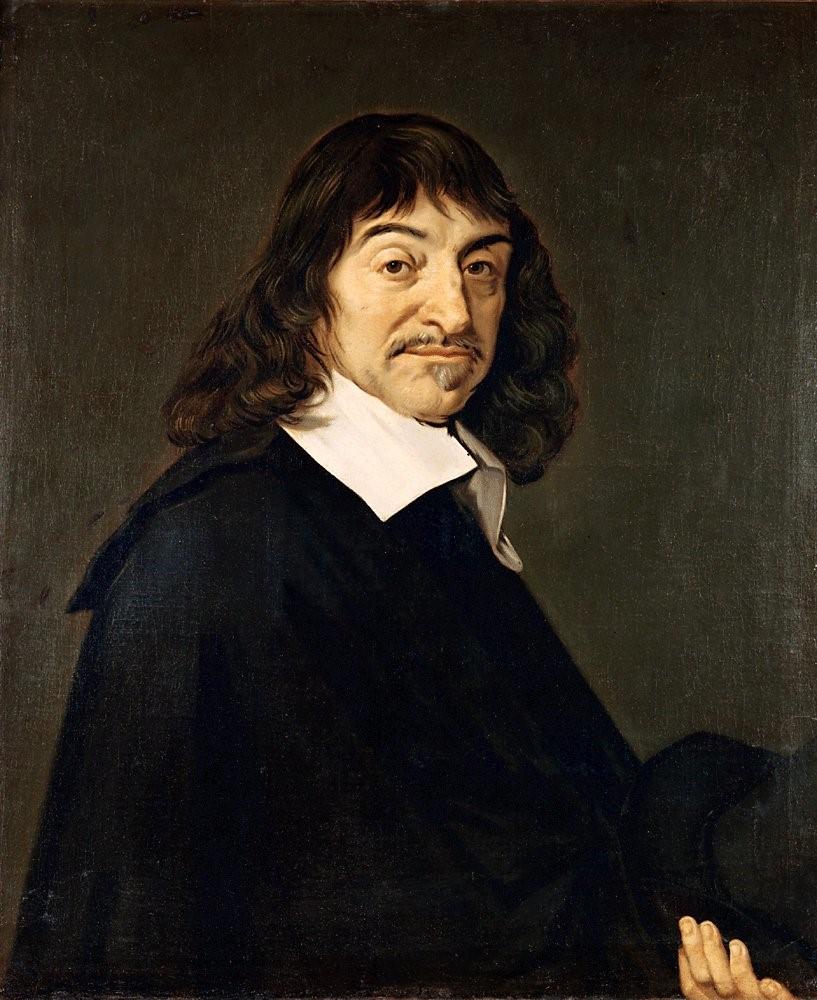

When considering the history of mathematics, it virtually impossible to gloss over Rene Descartes contribution to mathematics. As one of the great scientists of the 17th century, Descartes made an indelible mark on the era, through concepts of analytical geometry and his innovations in the notation of geometry. Descartes, creator of the famous phrase “I think, therefore I am” (cogito ergo sum). The theory of Rene Descartes, his research and discoveries, has influenced curricula around the world for centuries.
If the likes of Aristotle, Kant, Pythagoras, and Spinoza interest you and intuition, metaphysical foundations, philosophical thought, reasoning and rational thinking are your forte, you will surely love the life story of the mathematician and philosopher Rene Descartes.





The Life of Rene Descartes
Born in 1596, in the French village of Haye (later renamed Descartes), Rene was one of the country’s most eminent scholars. He was raised, in a middle-class home, by his grandmother and his father, who was an advisor to the Parliament of Brittany. He started his education, in the town of Fleche, at a Jesuit college, an institution known for its heavy course load and strict rules. Established by Henri IV, the school provided a platform for Rene to develop his scientific interests and mathematical sense. His education differed substantially from those of other mathematicians and, while not much is known about the early careers of many early mathematicians, a lot is known about the schools that they started.
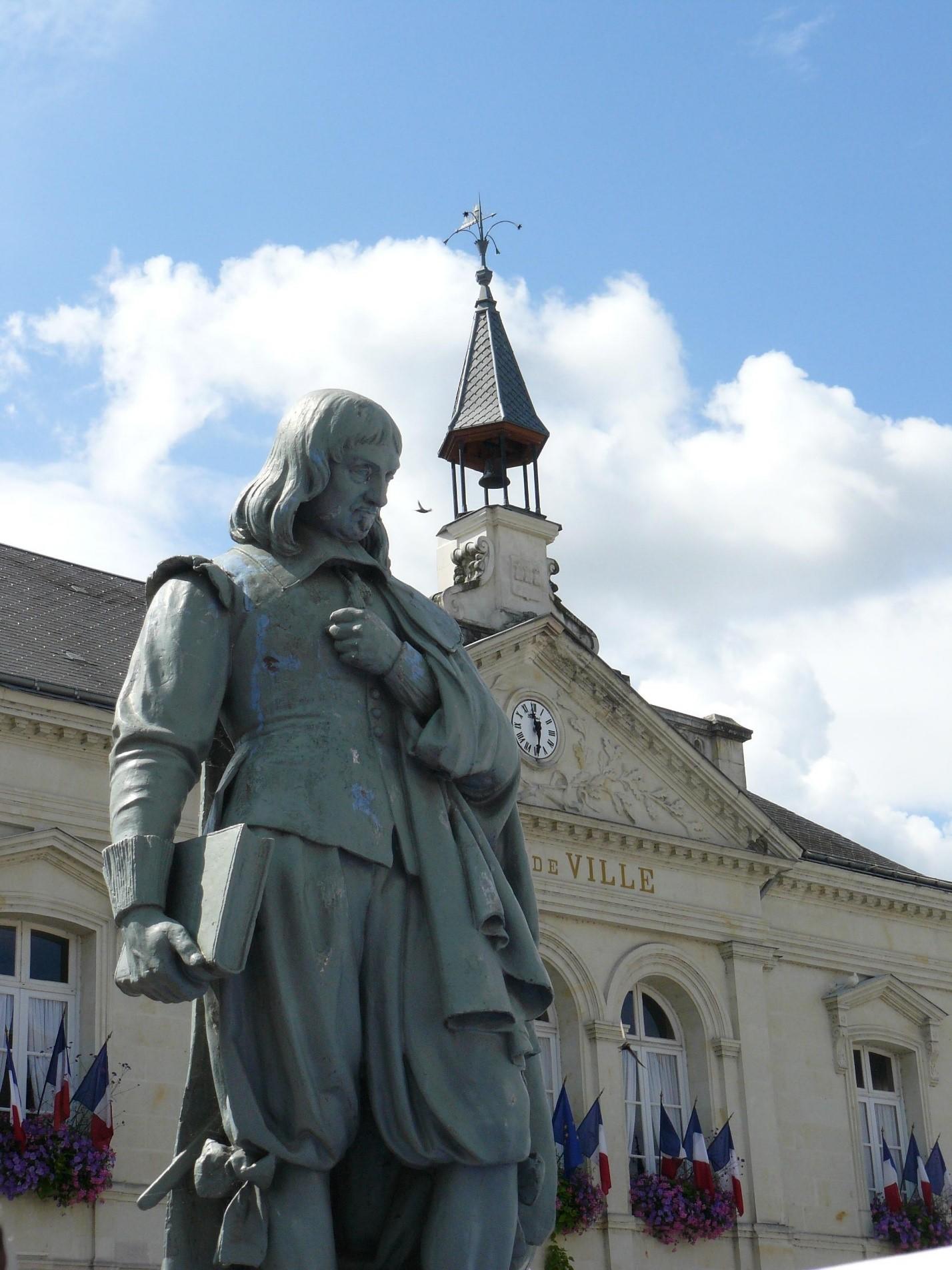
Descartes continued to further his education and obtained a bachelor’s degree in law from the University of Poitiers. He did, however, never work in law or politics, instead enlisting in the Bavarois army (the European Army) and made use of the opportunity to learn more about other European countries. He decided to move to the Netherlands in 1682, where he put together a work of science called Treatise on Light or The World. In this body of work, Descartes described several physical phenomena that explained how the world functioned. Most importantly, he explained, in keeping with the data of Galilea and Copernicus, that the earth revolved around the sun. he delayed the publishing of his book on physics and cosmology, for several years, when he learned of the Inquisition’s criticism of Galileo.
After completing this text, he authored his seminal work, Discourse on Method, also known as Discourse on the Method of Rightly Conducting One’s Reason and of Seeking Truth in the Sciences. Still used as a reference work world-wide, this authorative text saw the light of day in 1637. Very peculiar about this text is that it was written in French and not in Latin, something his peers greatly respected, as was the generally accepted scientific practice at the time.
This work was published alongside three essays on geometric optics (dioptics or the laws of refraction), on meteorology and meteors and the final one on geometry. In the last essay, he described the relationship between algebra and geometry. While we may take this relationship for granted nowadays, it was not so at the time and Descartes was the person who first described it as analytic geometry, the term used today.
Numerous other publications marked his career and covered a wide range of principles and topics: from philosophy to mathematics to the history of philosophy and metaphysics. Included in these works are Principles of Philosophy (1644) and The Passions of the Soul (1649).
Rene Descartes passed away on 11 February 1650, from pneumonia, brought on by being exposed to the cold, early morning winter temperatures in Stockholm, where he was assisting Queen Christina set up an academy of science. He was 53 years old.
Descartes and Algebra
On completion of his Discourse on the Method in the late 1600s, Descartes decided on several things that challenged his peers and marked algebra practice from that point forward. Most importantly, he started the use of letters to denote unknown truths and values. This may be common practice today, this was not so in his time.
Many historians did, in fact, pore over the text of numerous mathematical texts to try to make sense of them. It was actually Descartes’ mathematical peer, Francois Viète, who first introduced letters into algebraic formulae. However, it was Descartes who expanded on it and applied it to mathematical notation in his most famous work, Discourse on the Method: the essay in geometry. It is in this essay that he designated the letters x. y and z to unknown values in equations and the letters a, b and c used to denote values which were already known. He also applied this method to the notation of exponents and brought about a change in the way that powers were expressed, e.g. from xxxx to x4. At the time, the equal sign was not yet known and subtraction was indicted by two negative signs. Descartes did not touch on the expression of the square.
Consider hiring a mathematics teacher to learn more about René Descartes and his significant contributions to mathematics, particularly in the development of Cartesian geometry.

In algebra, Descartes presented the idea of “imaginary numbers” to refer to imaginary numbers, where “an imaginary number is the product of ai, for any ai where a signifies a real number and i an imaginary one.”
Above all else, Descartes is acclaimed for the connection of mathematical calculations with geometry related to planes. He called this analytic geometry and used it to express the relationship between geometric shapes through the use of equations, using both graphic representations and co-ordinates.
Descartes' System of Coordinates
While the names of numerous scientists, mathematicians and philosophers may not be well known to many people, Descartes is, in all probability, one name that you will have heard bandied about, inside, as well as outside, the classroom.
What is the reason that history, philosophy and maths don’t gloss over Rene Descartes’ contribution to mathematics? It is because he was the first person to prove the relationship between curves and lines through mathematical equations. Analytic geometry came about through Descartes and is said to be:
“The established correspondence between algebraic equations and geometric shapes, also known as co-ordinate geometry.”
The breakthrough in what became known as analytic geometry can be crystallised in one central principle – a system of co-ordinates. “The Cartesian coordinate system in a plane is a coordinate system that specifies each point uniquely by a pair of numerical coordinates, which are the signed distances to the point from two fixed perpendicular oriented lines, measured in the same unit of length.” – Wikipedia.
According to legend, Descartes was lying in bed, watching a fly on his ceiling. He thought about how best to describe the fly’s position and decided to use one of the ceiling’s corners as a reference point. Using a piece of paper, you would be able to pinpoint the fly’s location by measuring a particular horizontal distance from the left bottom corner and then measuring how far you need to go vertically. These two numbers would then indicate the fly’s co-ordinates. Every pair of co-ordinates specifies a particular point on the ceiling and, so, every point on the ceiling would have a unique pair of co-ordinates.
While Descartes learned a great deal from ancient mathematical greats, Cartesian co-ordinates were his gift to the world of mathematics. While Leonardo da Vinci first invented the system of co-ordinates, Descartes was the first person to utilise lines and curves in mathematical calculations. The parabolic curve owes its discovery to the mathematician and philosopher Rene Descartes.

The only difference, between the modern-day system of co-ordinates and that of Descartes, is that Rene only took positive co-ordinates into account. The points (co-ordinates) would represent the precise segments (parts) of a geometric shape, where the vales have to be positive.
A system of equations was also named after him. The Cartesian equation could be given as the shape of a curve and took the following form:
ax + by + cz + d = 0 with (a,b,c) = / = (0,0,0)
For example: a line passing through A (1,3), starting at -4. The Cartesian equation would be y = 7x – 4. In the instance of a plane passing through A (1,1,2), B (1,0,1) and C (0,2,1), the Cartesian equation would be: 2x + y – z = 1.
Given the importance of a strong foundation in mathematics for academic and future career success, it might be beneficial to hire an online maths tutor. An experienced tutor can offer personalized instruction, tailored to individual learning styles and needs, which can greatly enhance understanding of complex concepts, improve problem-solving skills, and boost overall confidence in the subject. This tailored support can make a significant difference in achieving academic goals and building a solid math foundation
Rene Descartes Contribution to Mathematics
Today’s maths courses are littered with discoveries which can be attributed to Rene Descartes – algebraic reasoning, equations, fractions, trigonometry, logarithms. In any study of mathematics, his image looms large. Almost all equations make use of the system of letters to denote unknown values, a system which is introduced to children at primary school and follows them all the way to high school and college or varsity.
Because of the work of Descartes, notations we use today are recognisable and we can write shortened forms of such as x2 and y3. Very importantly, he set out a way for geometric problems to be transformed into numerical ones. This analytical geometry now forms a part of curricula across the globe. He is also known for Cartesianism or Cartesian thought, which is a school of thought which deals with rationalism and metaphysicality.
This theory of Rene Descartes, Cartesian dualism (mind-body dualism) has, over time, gone on to influence later Western philosophies. While this separation of body and mind may be a bit difficult to wrap you head around, Cartesian thought inspired folks like Gottfried Wilhelm Liebniz and Sir Isaac Newton, who both, independently, went on to develop calculus.
Summarise with AI:
Enjoyed this article? Leave a rating!


 Loading...