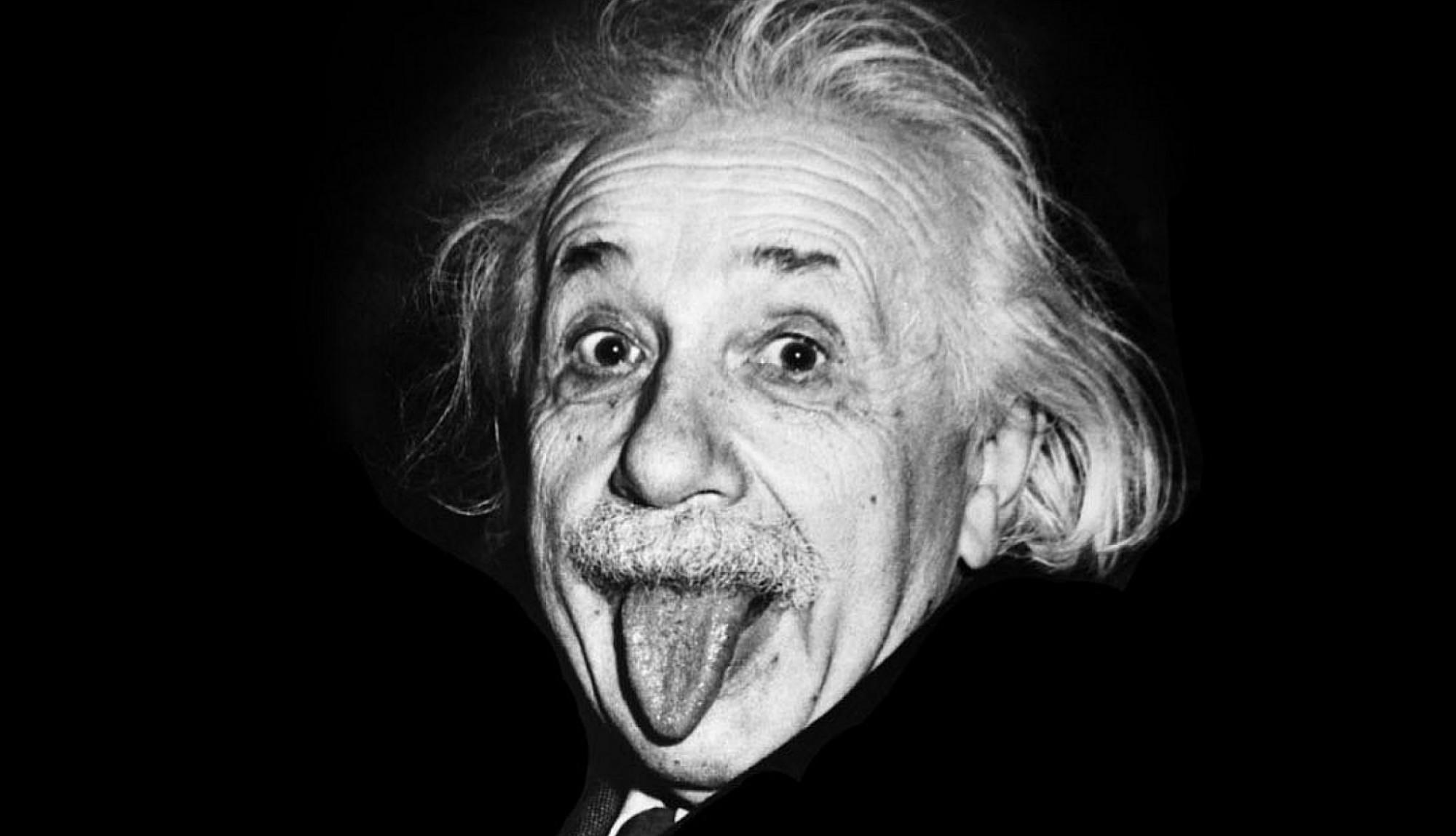

Albert Einstein, born in 1879 in Württemberg, Germany, and passing away in 1955 in Princeton, New Jersey, unquestionably stands as one of the most prominent scientific figures the world has ever known. He achieved fame for his groundbreaking theses, notably his acclaimed Einstein Theory of Relativity.
So, what is Albert Einstein for?
Amongst other things, in recognition of his exceptional contributions, he was awarded the Nobel Prize in Physics in 1921. Einstein's intellectual prowess encompassed numerous disciplines, including cosmology, mechanics, and quantum physics, where his insights propelled significant advancements.
Einstein was far more than just a brilliant scientist and was even named by Time magazine as the Personality of the 20th Century!
In this article, you will find out about more than the Einstein Theory of Relativity or the concept called Einstein Compound Interest.
There’s no doubt, along the timeline of maths history, the work and contributions of Einstein are some of the most fascinating.
Want to give private lessons?
Join the Superprof community and share your knowledge with inquiring and motivated students.
Albert Einstein: Nature Lover
It is the human, free and creative person who shapes the beautiful and the sublime, while the masses remain entangled in an infernal round of imbecility and stupidity. Albert Einstein
The young Albert Einstein was a genius and known to be as precocious as he was talented.
First in his math class at school, he adored learning mathematics and maths revision.
As a consequence, he refused to learn what he deemed unnecessary subjects. At university, he befriended mathematician Marcel Grossman who ended up helping him to prove one of his greatest theories.
Albert Einstein was a nature enthusiast and was wholeheartedly driven by the pursuit of understanding how it worked. During his formative years, he firmly believed that comprehending the mechanisms of nature was only attainable through the study of physics. It was in this domain that the Einstein theory of relativity was born.
Einstein held the conviction that mathematics, in its connection to reality, could not provide absolute certainty. This belief laid the foundation for his remarkable theories of special and general relativity.
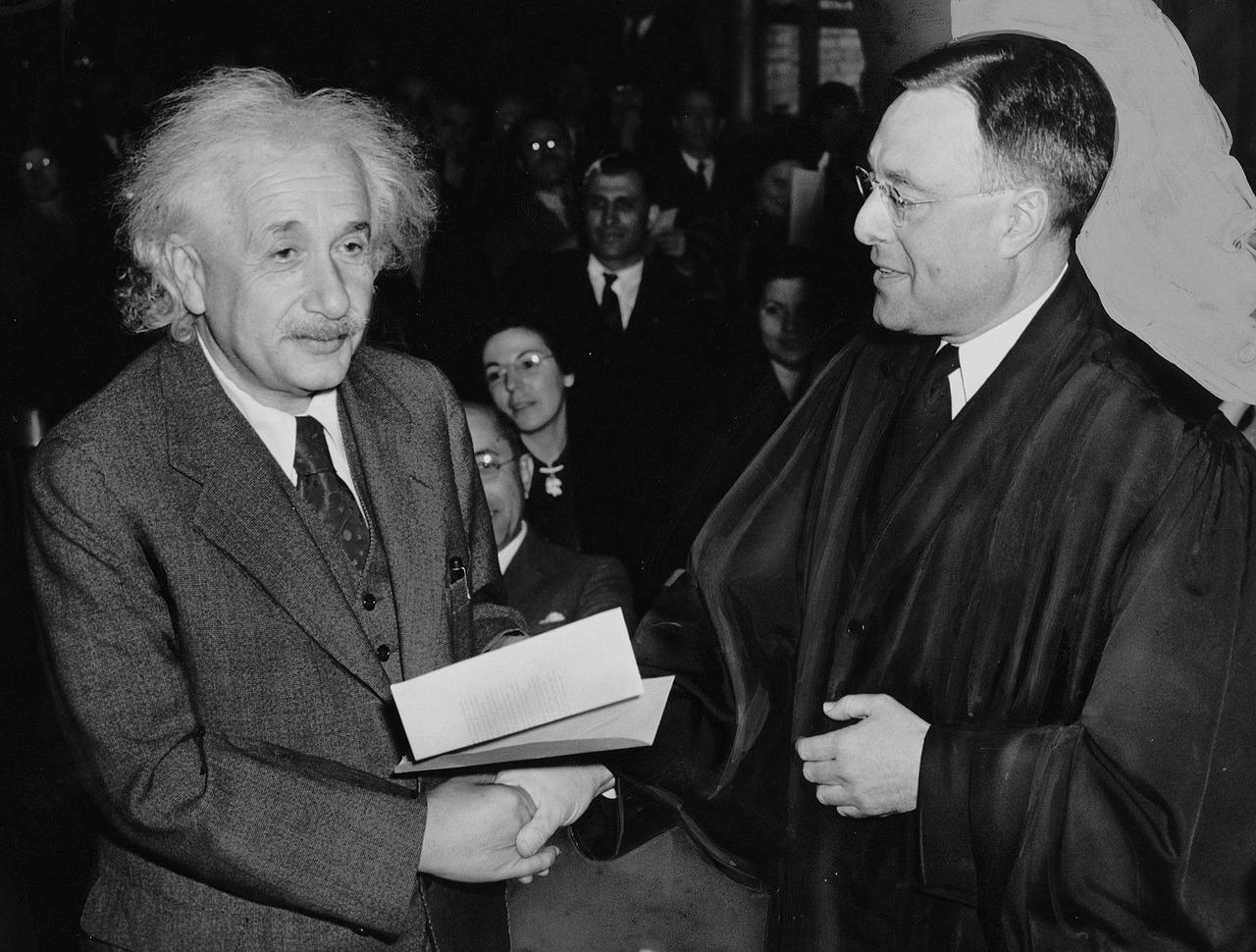
Furthermore, an examination of Einstein's life after his passing revealed peculiar qualities that offer insights into his ascent as one of the greatest scientific prodigies ever to grace the world.
Einstein’s Vocabulary in Maths: The Theory of Special Relativity
In answering the question of what Albert Einstein is famous for, the moment in 1905 when he first voiced his famous formula E = MC² must be amongst the most important.
Indeed, the equation in question explains the relationship between mass (M) and the square of the speed of light (C²), resulting in the generation of a specific amount of energy (E) known as mass-energy.
In a nutshell, it implies that as an object accelerates and moves at higher speeds, it releases an increasing amount of energy.
However, this groundbreaking notion did not materialise instantaneously for Einstein. It involved a comprehensive and intricate thought process for him to formulate this equation, which eventually became a fundamental component of special relativity.
Since the beginning of mathematics, there has been the assumption that objects in motion have a velocity which matches normal velocity but also that as seen by the external observer.
Einstein's work unveiled that motion could alter time. For instance, space travellers moving at light speed would return to Earth after a year, yet find that Earth had aged significantly more. In simpler terms, 1 second for them equated to roughly 1 minute for a stationary observer.
Einstein's brilliance extended beyond the human scale. While the earthly motion was too slow to perceive temporal variations, he explored relativity based on the speed of light, challenging the absolute nature of space and time.
From this premise, he inferred that even minuscule matter moving swiftly could inflict substantial damage (expressed by the famous equation E = MC²). This realisation was swiftly seized upon by military and nuclear scientists, leading to the creation of the atomic bomb. Presently, we have harnessed this breakthrough for the development of nuclear energy.

The formula changed the world for both good and bad.
Ask About the Theory of General Relativity in Your Maths Lessons
In 1915, Einstein introduced general relativity, departing from Newton's law of gravitation. Instead of gravitational force, he proposed that movement is determined by space-time configuration. The sun, for example, distorts space-time, causing Earth to orbit it. Visualise a sheet twisted by a stone: a marble rolling in a straight line will curve around the stone's dip, akin to a star's trajectory.
Einstein's hypothesis states that objects move in straight lines in space-time, but deviate when encountering a space-time anomaly. He devised mathematical equations to calculate this curvature accurately. Understanding such an intricate system requires extensive research, given the complexity of galaxies and the infinite stars within.
Referring back to our original subject, we can see that his questions regarding the 5th postulate of Euclidean geometry explain that when a point is placed outside of a straight line, there is only a singular parallel to this line.
So besides the theory of relativity and compound interest, any study of Einstein will show you that his love for physics changed our understanding of the universe.
Want to give private lessons?
Join the Superprof community and share your knowledge with inquiring and motivated students.
More Interesting Vocabulary in Maths: Gravitational Waves
As predicted by Albert Einstein in 1916, gravitational waves can now be detected through the use of American instruments.
Albert Einstein: Science’s Fortune Teller
In essence, this discovery opened up fresh avenues for astronomers to explore the vast reaches of the cosmos. Astrophysicist Zoltan Haiman from Columbia University, who was not involved in the research, described it as one of the most remarkable tests of Einstein's theory. He believed that it presented a new window through which to gain new insights into the universe and ultimately led to numerous scientific advancements.
Space and Time Distortion
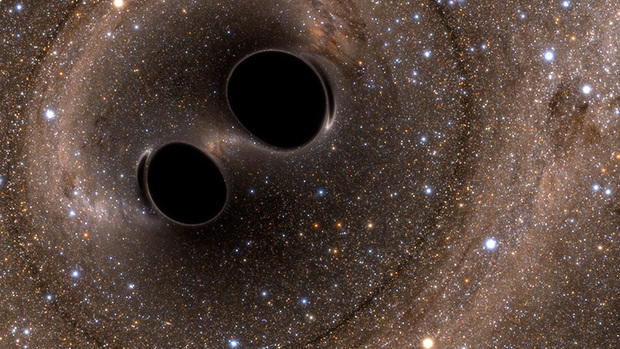
Einstein's theory states that any object with mass causes a deformation in the curvature of space and time. A helpful analogy is imagining a bowling ball bouncing on a trampoline, which alters the fabric of space and time itself. This distortion produces waves in space that propagate outward, travelling at the speed of light.

Tedious Research
The extensive research project involved over 1 000 scientists across fifteen countries. It required a substantial investment of over a billion dollars spanning three decades. These researchers successfully detected gravitational ripples emanating from spiral black holes situated approximately 1.3 billion light years away from Earth.
Albert Einstein, the Maths Tutor
From 1909 Albert Einstein accepted several teaching positions throughout Europe, however, in 1933 his citizenship was removed because he was a Jew. He moved to the USA where he offered maths lessons at Princeton University.
He was certainly embraced in the United States where the Albert Einstein Award for Science was established by the American Society of Civil Engineers in 1988 to honour exceptional accomplishments in erosion control, sedimentation, and/or navigation.
In 1947, Einstein emphasised the importance of teaching mathematics, stating, "It is the teacher's fundamental duty to ignite the pleasure of learning and discovery."
Maths Helps Us to Understand the Universe
Among Einstein's numerous mathematical publications, two notable ones stand out: his work on differential geometry and his collaboration with mathematician Marcel Grossmann on field equations. These contributions paved the way for the ground-breaking Einstein’s Theory of Relativity.
Beyond being a mathematician and physicist, Einstein's overarching objective was to deepen our comprehension of the universe. Mathematics, along with physics as its derived discipline, served as his tools to unveil fundamental theories that continue to form the foundation of these subjects to this day.
There are many other arguments in favour of mathematics and how it impacts the world around us. To find out more check out our articles:
- What Does Maths Teach You About Art?
- How Advances in Computational Mathematics Can Elevate Your Career
- When Math and Art Collide
- The Many Misconceptions in Mathematics
Put your hand on a hot stove for a minute, and it seems like an hour. Sit with a pretty girl for an hour, and it seems like a minute. That's relativity. Albert Einstein
Einstein, in short, was one of the most extraordinary figures of the 20th century who did much to contribute to the evolution of math!
Consider enrolling in a math online class to learn more about Albert Einstein's contributions to mathematics and physics, and to gain a deeper understanding of the theories and concepts he developed.
Want to give private lessons?
Join the Superprof community and share your knowledge with inquiring and motivated students.
Summarise with AI:
Enjoyed this article? Leave a rating!

 Loading...