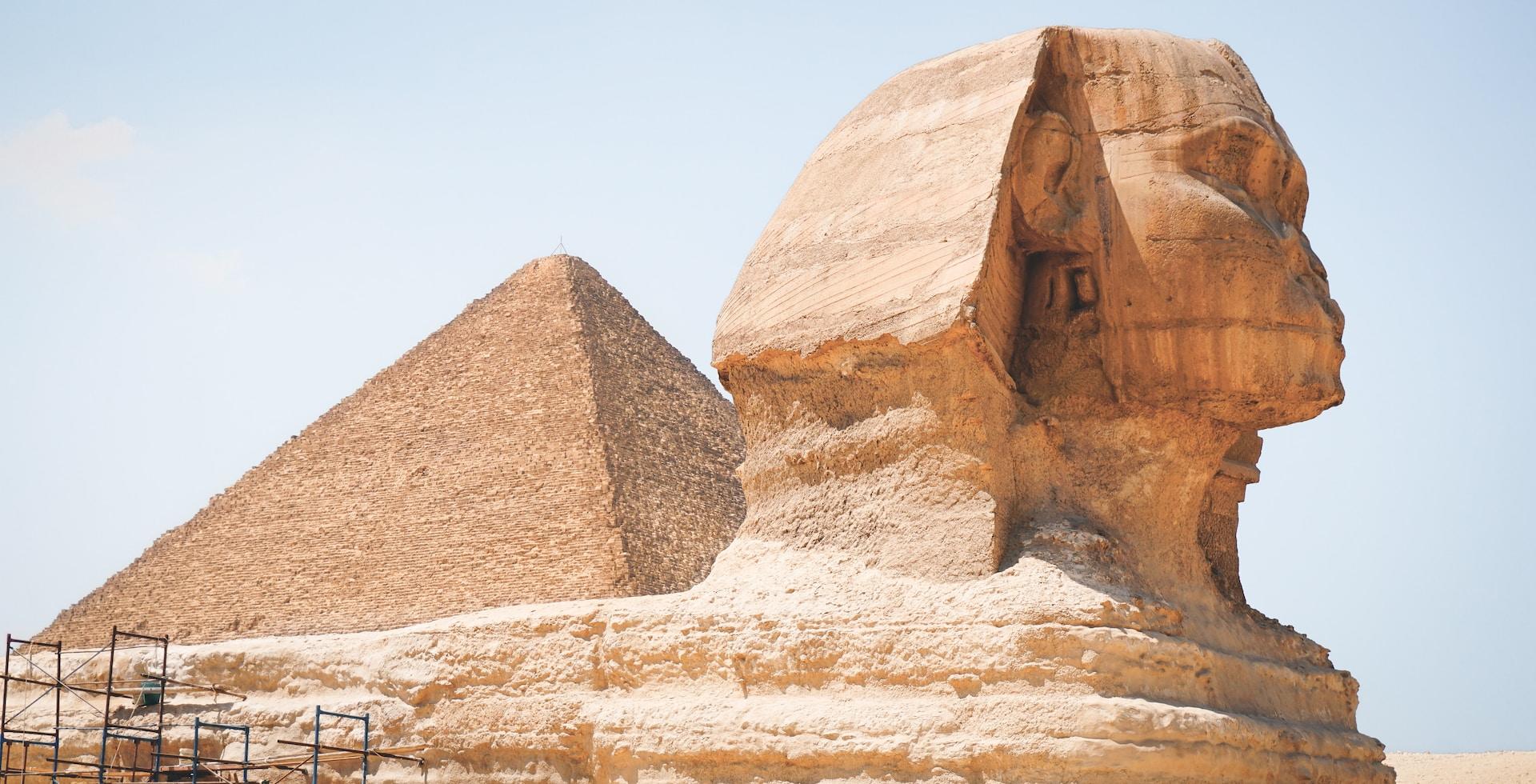

When we think of Ancient Egypt, images of majestic pyramids, pharaohs, and hieroglyphics often come to mind. However, there is another aspect of this great civilisation that is often overlooked - their incredible contributions to mathematics.
Egyptian mathematics played a crucial role in solving practical problems and shaping the foundations of the field we know today.
Today, we will take a fascinating trip through the history of Egyptian mathematics, exploring their numerals, formulas, and even their connection to the Pythagorean theorem. Join us as we uncover the enchanting world of Egyptian mathematics and discover how their knowledge continues to impact our lives.





The Birth of Egyptian Numerals
To understand the achievements of Egyptian mathematics, it's important to first grasp their arithmetic system. While we are familiar with our own Hindu-Arabic numerals, the Egyptians had their own unique symbols for numbers. These hieroglyphic numbers may appear complex at first, but they were simply different representations of quantities. Let's take a closer look at some of these symbols:
| Number | Egyptian Symbol |
|---|---|
| 1 | One line: | |
| 10 | An upside-down U |
| 100 | A coiled rope |
| 1 000 | A lotus plant |
| 10 000 | A bent finger |
| 100 000 | A tadpole |
The Egyptians utilised a decimal system like our own, with a base of 10. However, their symbols differed from our familiar numerals. Despite these differences, the Egyptians were able to perform calculations and record transactions using their numerical system.
The Practical Origins of Egyptian Mathematics
The development of Egyptian mathematics was not purely theoretical. It arose from the need to solve practical problems that the ancient Egyptians encountered in their daily lives. Let's explore some of the challenges they faced and how mathematics helped them find solutions:
Flooding of the Nile
The annual flooding of the Nile was a significant challenge for Egyptian farmers. These floods were essential for the fertility of the land, but they also posed a threat to crops and land boundaries.
To tackle this problem, the Egyptians needed to develop mathematical techniques to measure and predict the flooding patterns of the Nile. By understanding the relationship between the river's behaviour and their agricultural practices, they were able to optimise their farming techniques and ensure a stable food supply.
Large Scale Administration
As a complex civilisation with a centralised administration, the ancient Egyptians had to manage intricate systems of taxes and records. This required efficient numerical systems and calculation methods to handle vast amounts of data. Their mathematical prowess allowed them to organise and unify records, facilitating the smooth operation of their bureaucratic systems.
Trade and Commerce
Egypt was a thriving hub of trade and commerce, connecting various regions through an extensive trading network. To facilitate transactions and keep accurate records, the Egyptians invented a system for counting and recording trade activities.
This system enabled them to track goods, calculate profits, and establish fair trade practices.
Their mathematical knowledge paved the way for the development of sophisticated commercial systems that were far ahead of their time.
The Rhind Papyrus: A Glimpse into Ancient Mathematics
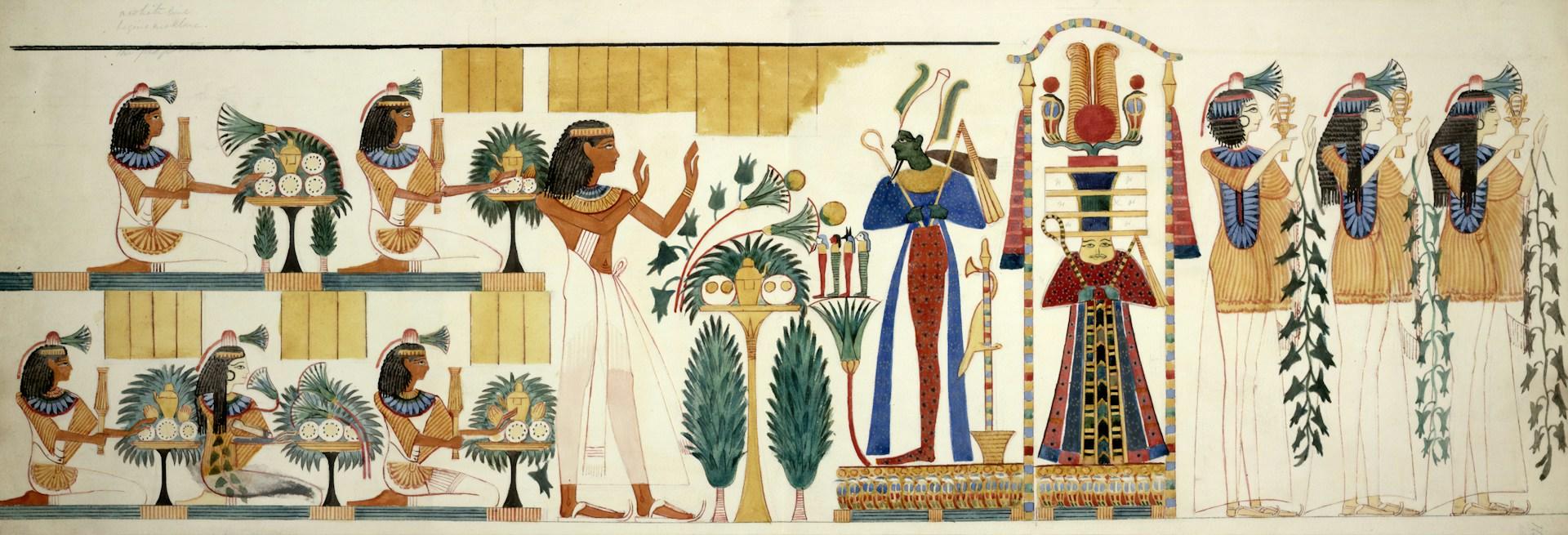
While much of the knowledge of ancient Egyptian mathematics has been lost to time, one exceptional document provides insight into their mathematical achievements. Known as the Rhind Mathematical Papyrus (RMP), this remarkable artifact was discovered in the 19th century by Scottish Egyptologist Henry Rhind, during the Second Intermediate Period. It contains a collection of mathematical texts that were used to solve various problems faced by the ancient Egyptians.
This incredible piece of ancient literature contains a wealth of mathematical knowledge, including various arithmetic operations and problem-solving techniques. It's incredible to think that these ancient Egyptians were using advanced mathematical concepts thousands of years ago! Their contributions during this period were truly groundbreaking.
The Rhind Papyrus (RMP) contains around 84-87 mathematical calculations, ranging from simple to complex. These calculations were practical in nature, aimed at assisting individuals in their everyday lives. For example, one problem involved dividing a certain number of loaves of bread among ten people. Each problem provided a solution for a specific number of loaves, such as one, two, or six. This demonstrates how the Egyptians used mathematics to tackle real-life situations and ensure equitable distribution.
The papyrus also delves into another fascinating aspect of Egyptian mathematics - fractions. The Egyptians had a unique approach to fractions, known as unit fractions. These fractions were all represented by the numerator 1 and were used extensively in their calculations. The RMP provides insights into how the ancient Egyptians manipulated and simplified fractions, enabling them to perform intricate calculations.
Hieroglyphic Fractions and Formulas
In addition to the RMP, other ancient Egyptian documents shed light on their mathematical knowledge. The Moscow Papyrus, for instance, contains valuable information on how the Egyptians calculated the volumes of pyramids and circles. It even reveals their use of a fractional value for pi, the mathematical constant that relates the circumference of a circle to its diameter.
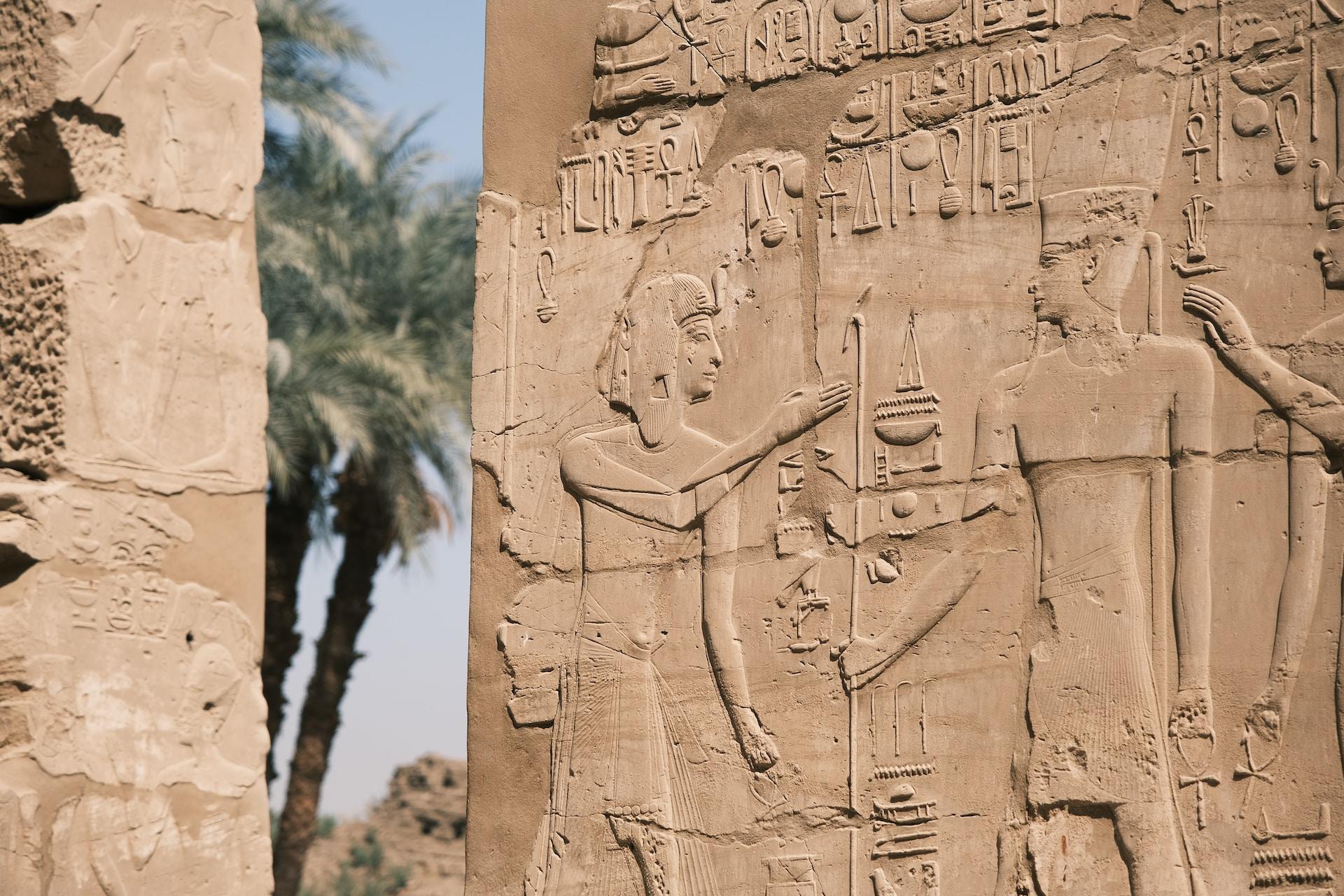
One intriguing aspect of Egyptian mathematics is the utilisation of hieroglyphic fractions and formulas. The Egyptians had different hieroglyphs and symbols to represent different fractions. For example, parts of Horus' eye were used to denote various unit fractions. Here are a few examples:
- 1/2: Right part of the eye
- 1/4: Pupil of the eye
- 1/8: Eyebrow
- 1/16: Left part of the eye
This method of representing fractions allowed the Egyptians to work with fractional values and perform calculations involving complex formulas. It showcases their advanced understanding of mathematical concepts and their ability to apply them in practical situations.
Joining maths extra classes near me provide an extensive curriculum designed to boost your analytical skills and solidify your grasp of mathematical principles. This course presents an excellent chance to deepen your knowledge and sharpen your problem-solving abilities, which are crucial across various disciplines.
The Egyptian Triangle: Predecessor to the Pythagorean Theorem
The ancient Egyptians were not only adept in practical mathematics but also had a profound understanding of geometric concepts. In fact, they were the inventors of a triangle that closely resembles what we now know as the Pythagorean theorem.
The Pythagorean theorem, which suggests that the square of the hypotenuse of a right triangle is equal to the sum of the squares of the other two sides, is commonly attributed to the Greek mathematician Pythagoras. However, the Egyptians had already discovered and utilised a similar concept known as the 3:4:5 triangle.
The 3:4:5 triangle is a right triangle with side lengths in the ratio of 3:4:5. Regardless of the units of measurement used, this ratio ensures that the triangle remains a right triangle. For example, if we consider the sides to represent metres, the lengths would be 3 metres, 4 metres, and 5 metres, respectively.
The significance of the 3:4:5 triangle lies in the fact that its side lengths are all whole numbers. This made it a practical and efficient tool for the Egyptians, who faced challenges in performing calculations using their numeral system. By relying on this special triangle, they could easily construct right angles and accurately measure distances.
Learn more about ancient mathematical concepts, online maths resources, and how maths can be fun by reading our other articles in this series.
The Enduring Legacy of Egyptian Mathematics
The contributions of Egyptian mathematics extend far beyond their ancient civilisation. Many of their techniques and concepts continue to influence modern mathematics and are still used today. Here are a few ways in which Egyptian mathematics has left its mark:
Geometry and Construction
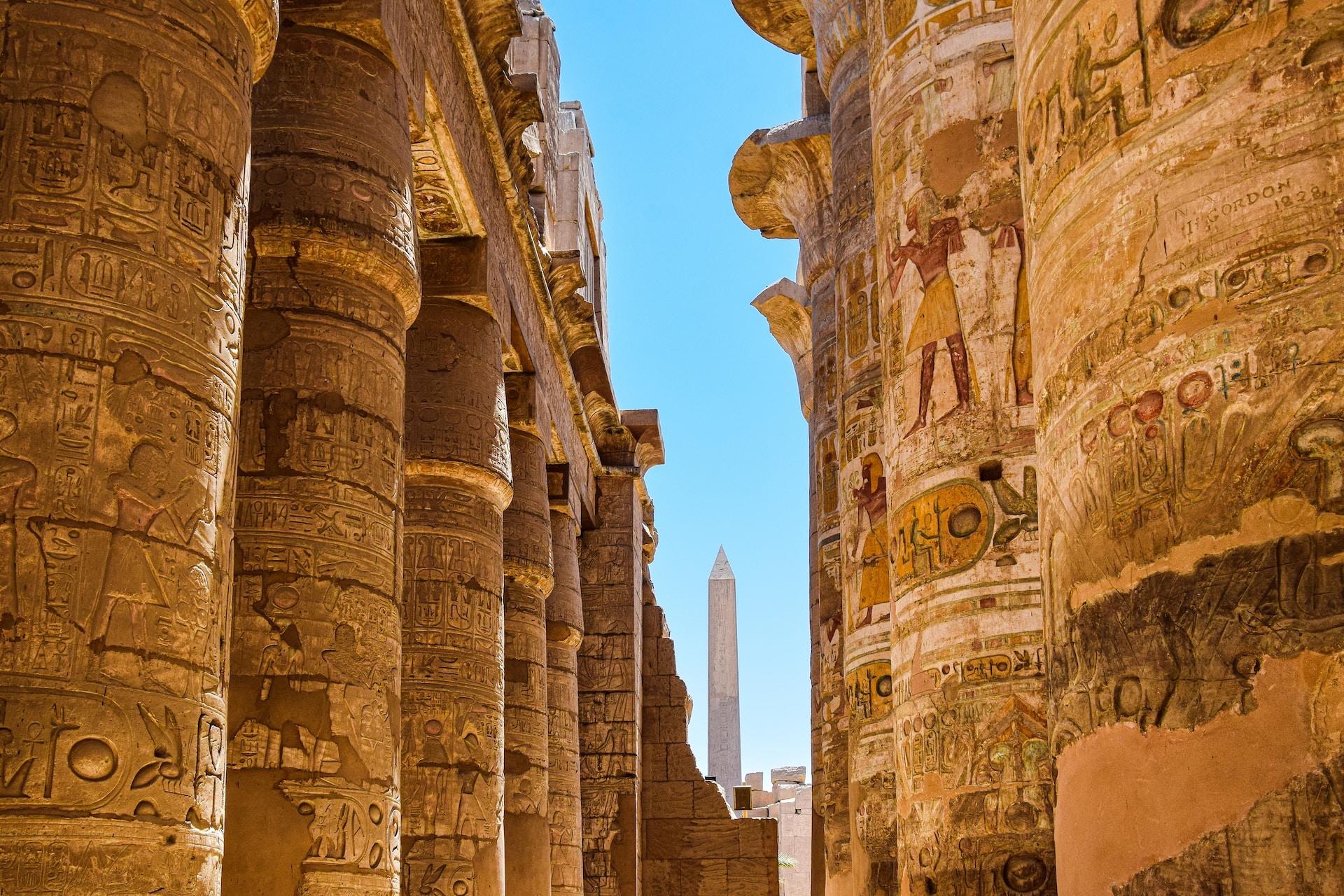
The Egyptians' expertise in geometry and construction techniques can still be seen in the magnificent structures they built, such as the pyramids. Their precise understanding of angles, shapes, and measurements enabled them to construct monumental buildings that have stood the test of time. The principles they employed have laid the foundation for modern architectural and engineering practices.
Numerical Systems and Notation
While the Egyptians' numeral system may differ from our own, their use of a decimal system and positional notation laid the groundwork for future numerical systems. The concept of place value, where the position of a digit determines its value, is a fundamental concept in modern mathematics.
Problem-Solving Approaches
The practical nature of Egyptian mathematics instilled a problem-solving mindset that has influenced generations of mathematicians. Their ability to identify and address real-life challenges using mathematical techniques paved the way for the development of algebraic and computational methods, which are now essential tools in various fields.
Historical Significance and Cultural Heritage
Studying Egyptian mathematics not only provides insights into the field itself but also offers a glimpse into the rich history and culture of the ancient civilisation. Through their mathematical achievements, we gain a deeper understanding of Egyptian society, values, and intellectual prowess.
The history of Egyptian mathematics is a testament to the ingenuity and resourcefulness of one of the world's most remarkable civilisations. From their unique numeral system to their practical problem-solving techniques, the ancient Egyptians laid the foundation for the mathematics we use today.
Their contributions continue to shape our understanding of geometry, algebra, and numerical systems. Delving into the world of Egyptian mathematics, we not only learn about the past but also gain valuable insights into the enduring power of human curiosity and intellect.
Find a professional online maths tutor South Africa easily on Superprof today!
Summarise with AI:
Enjoyed this article? Leave a rating!


 Loading...