
Some languages have been in use for thousands of years. Others evolved into something else. While it isn't easy to define exactly when a language evolves into a new language, or to determine whether it's the oldest language, we think it's fascinating and worth exploring. Let's dive back into linguistic history.
Key Takeaways
- The oldest language in the world can be defined by written records or continuous spoken use
- Sumerian is the earliest known written language, dating to around 3100 BCE
- Egyptian also developed an early writing system and later evolved into Coptic
- Tamil is often considered one of the oldest languages still spoken today
- Chinese languages trace their origins back over 3 000 years
- Hebrew is unique as a language that was revived and returned to everyday use
- Many ancient languages influenced modern languages still spoken today
- Languages survive through cultural importance, written tradition, and continued use


Defining the "Oldest Language"
It's not always easy to determine which language is the oldest. Linguists have different ways of thinking of it. Written records, historical usage, and the way languages change over time all shape how we understand the world's first language.¹ For example, at what point does a language evolve into another?
Some languages are still consciously used, while others still exist in written forms. Some languages are historically significant, while others remain part of modern communication.² Ultimately, there's no universal answer to this, so we've had to make a call. We have a set of clear criteria, which help explain why different languages appear in different lists and how we came up with ours.³
The oldest language in the world can be defined in different ways, including the earliest written records or continuous spoken use. A language may be ancient in origin but no longer spoken, while others have evolved and remain in use today. Because of this, there is no single “first language in the world” that fits every definition.
Criteria for Determination
When the language first appears in inscriptions or texts, such as Sumerian cuneiform or Egyptian hieroglyphs.
Whether the language has been spoken or used without major interruption over time.
How much the language has changed, and whether modern forms are directly linked to earlier versions.
The size of the current speaker base, which can indicate whether a language is still actively used.
The role the language has played in religion, literature, administration, or regional identity.
Top 10 Oldest Languages Still Spoken Today
Most ancient languages are no longer spoken; instead, they have evolved into modern languages. Languages are always evolving, and their various forms are the link between the earliest forms of communication and modern languages. We can use them to see how linguistic traditions can adapt over time.⁴ We've focused on languages with deep historical roots that are still spoken in some form, whether widely used or preserved in specific communities.⁵ Our list is in alphabetical order, by the way, as pinning down exactly when they were first spoken can be tricky to define.⁶
Tamil is often recognised as one of the oldest languages still spoken today, with a long and continuous literary tradition. Chinese languages also trace their roots back thousands of years, though modern forms differ from early inscriptions. Hebrew stands out as a language that was revived and returned to everyday use centuries later.
Arabic
The Arabic language developed in the Arabian Peninsula, where it quickly became used for trade, administration, and most significantly, the spread of Islam. It was also the language of science, philosophy, and literature during the medieval period. Today, it is spoken across North Africa and the Middle East, with many regional varieties in daily use.⁹ It's one of the world's most popular languages.
Armenian
Armenian developed in the Caucasus region, where it formed a distinct linguistic and cultural identity. After the creation of its alphabet around the 5th century, it developed a distinct literary tradition. It's central to Armenian identity, religion, and cultural preservation and has been for centuries. Today, it is spoken both in Armenia and across a large global diaspora.¹⁰
Aramaic
Aramaic originated in the ancient Near East and spread widely across early empires. It was a common language for administration and trade across several empires. It was used in religious texts and everyday communication. It survives today in small, often isolated communities and is considered endangered.⁶
Chinese
Early forms of Chinese emerged in ancient China and were used in some of the earliest recorded inscriptions. Examples can be found on inscriptions tied to royal and religious practices. These forms evolved into a group of related languages with a shared writing system. Chinese languages (with Chinese considered a macrolanguage) are spoken by a large portion of the global population, particularly in East Asia.⁷
Greek
Greek has been used in the Aegean region for thousands of years, with a continuous literary tradition. The language was important for philosophy, science, and literature in the classical world. It continued to develop through the Byzantine and modern periods. Today, the Greek language is spoken mostly in Greece and Cyprus.⁸ It's one of the oldest languages and one of the oldest European languages.
Hebrew
Hebrew developed in the ancient Levant and became closely tied to religious and historical texts. It was used in religious and historical contexts. Its use as a spoken language declined, but it's been revived in the modern era. Now, it's used in everyday communication and in cultural and religious contexts.⁹
Korean
Korean reflects a long-standing linguistic tradition on the Korean Peninsula. The Hangul writing system helped massively boost literacy across Korean society. Today, it's spoken in both North and South Korea, as well as among Korean communities around the world.¹⁰ With its unique writing system and very limited overlap with English, it's one of the hardest languages to learn.
Persian (Farsi)
The Persian language originated in ancient Iran, where it was an important language for administration, poetry, and culture for several historical empires. It was influential across various neighbouring regions, too. Today, it remains widely used in Iran and neighbouring regions in both formal and everyday settings.⁸
Sanskrit
Sanskrit is a language that developed in ancient India. It was a key language for religious texts and philosophy. It left its mark on many modern South Asian languages. Today, it is mainly used in ceremonial, academic, and cultural contexts rather than everyday speech.⁶
Tamil
Tamil is a language from southern India. It has one of the longest continuous literary tradition of any language. It's used in poetry, inscriptions, and everyday communication and has been for over two millennia. It is widely spoken today in South Asia and among diaspora communities worldwide.⁷
Ancient Languages with Earliest Written Records
Certain languages survive for centuries in both their written and spoken forms. Other languages fall out of use in their spoken form, but remain important written languages, especially if their writing systems are used by other languages. Linguists can use these languages to trace the origins of written communication and better understand the transition from spoken language to written systems.²
Sumerian
Sumerian was the language used in Ancient Mesopotamia. It was used for administration, trade, and record-keeping. The writing system initially used simple symbols, which later evolved into a complex system that represented sounds and ideas. Sumerian was ultimately replaced by other regional languages, though its influence remained in written traditions.¹
Sumerian is considered the oldest known written language, dating to around 3100 BCE. It is a language isolate, meaning it is not related to any other known language family. Although it later disappeared as a spoken language, it continued to be used in writing for religious and scholarly purposes.
Egyptian
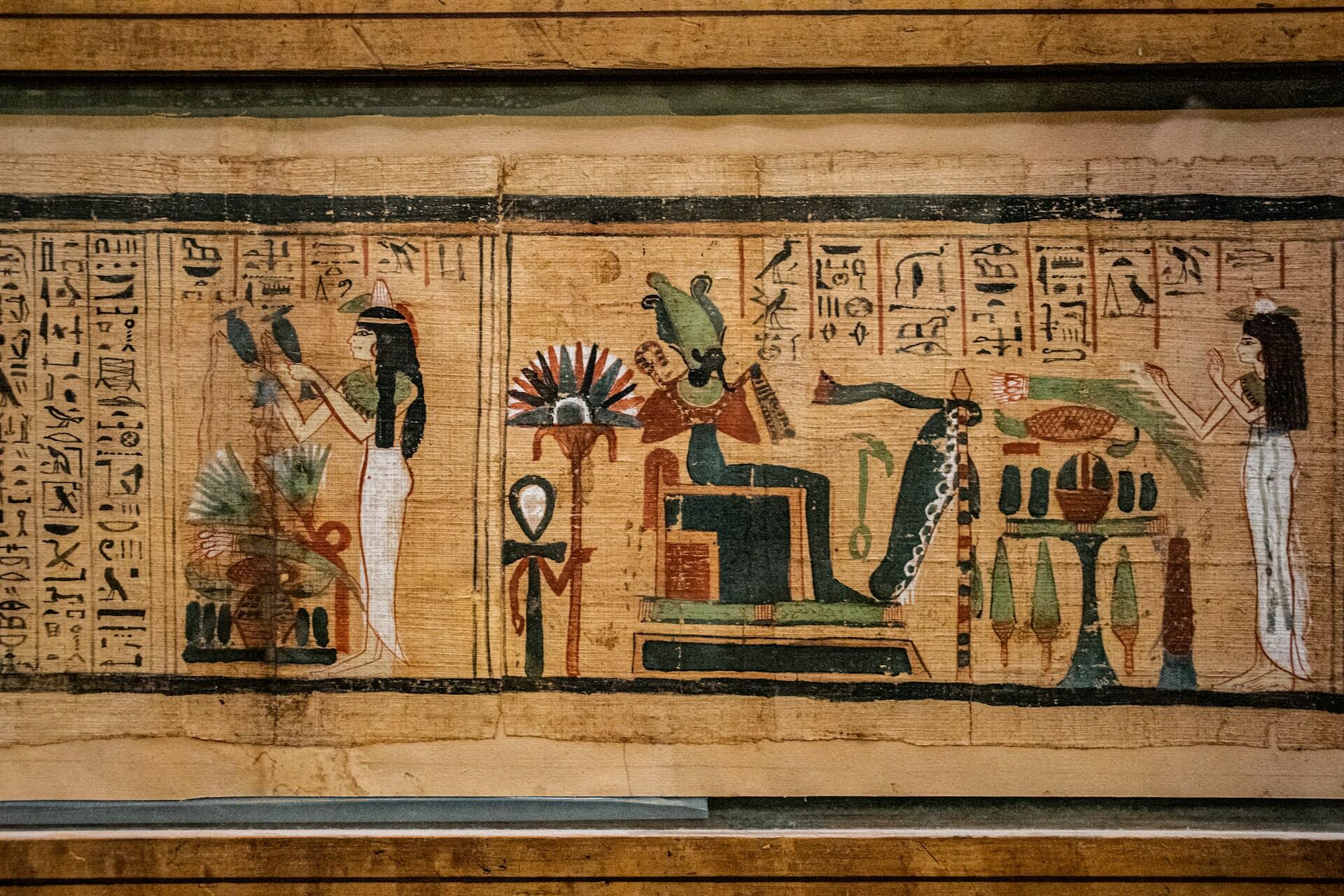
Ancient Egyptian was used for a significantly long time. It continually evolved while still being used in religious and government contexts. The writing system, particularly hieroglyphs, was found on monuments, papyrus texts, and official inscriptions. The language evolved into other forms, which led to Coptic, which is still used in religious contexts today.²
Timeline of the Oldest Languages
Let's put our ancient languages into context. Though it's hard to understand timeframes like this from a human perspective, you can see that, even though all of these languages are old, the age difference between some is astounding. Here are the key milestones in the development of some of the world's oldest languages.⁵
c. 3100 BCE
Sumerian
Sumerian is the earliest known written language, recorded in cuneiform on clay tablets in Mesopotamia. It is a language isolate with no known relatives.
c. 2600 BCE
Egyptian
Ancient Egyptian developed one of the earliest writing systems using hieroglyphs. It later evolved into Coptic, which is still used in religious contexts.
c. 1500 BCE
Sanskrit
Vedic Sanskrit emerged in ancient India and served as the foundation for many South Asian languages. It remains important in religious and scholarly traditions.
c. 1400 BCE
Greek
Mycenaean Greek is the earliest recorded form, written in Linear B script. Greek has a long and continuous literary tradition in Europe.
c. 1200 BCE
Chinese
Old Chinese appears in oracle bone inscriptions from the Shang dynasty. Modern Chinese languages have developed from these early forms.
c. 1000 BCE
Hebrew
Early Hebrew developed in the Levant and became central to religious texts. It was later revived as a modern spoken language.
c. 800 BCE
Aramaic
Aramaic spread widely across the Near East and became a key administrative language. It still survives in small communities today.
c. 500 BCE
Tamil
Tamil developed a rich literary tradition and has remained in continuous use. It is one of the oldest languages still spoken today.
c. 600 BCE
Persian
Old Persian was used in royal inscriptions of the Achaemenid Empire. It later evolved into modern Persian (Farsi).
c. 600 CE
Arabic
Classical Arabic became standardised through early texts and spread widely. It remains a major global language today.
| Language | Approximate Origin | Status Today | Region of Origin | Still Spoken? |
|---|---|---|---|---|
| Sumerian | c. 3100 BCE | Extinct (written only) | Mesopotamia | No |
| Egyptian | c. 2600 BCE | Evolved (Coptic) | Ancient Egypt | Limited (religious) |
| Sanskrit | c. 1500 BCE | Liturgical / scholarly | India | Limited |
| Greek | c. 1400 BCE | Living language | Greece | Yes |
| Chinese | c. 1200 BCE | Major global language | China | Yes |
| Hebrew | c. 1000 BCE | Revived modern language | Levant | Yes |
| Aramaic | c. 800 BCE | Endangered | Near East | Limited |
| Tamil | c. 500 BCE | Living classical language | South India / Sri Lanka | Yes |
| Persian (Farsi) | c. 600 BCE | Living language | Iran | Yes |
| Arabic | c. 600 CE | Major global language | Arabian Peninsula | Yes |
Why Do Some Languages Survive for Thousands of Years?
Languages can survive for different reasons. Ultimately, using a language is what keeps one around. A language's use can be tied to cultural traditions and use in education, religion, or administration. These factors help languages adapt while maintaining a clear connection to their earlier forms.² Conversely, languages tend to trend towards simplification in certain senses, and the oldest languages are rarely the easiest for English speakers to learn.
Languages tied to identity, literature, and tradition are more likely to be preserved.
Continued use in religious texts and ceremonies helps maintain older forms.
Strong written records allow languages to be studied, taught, and standardised.
Official recognition or state use helps languages remain relevant.
Stable populations and regions support long-term language use.
Here's Ju's take on which language is the oldest.
References
- “Oldest Language in the World: Uncovering the Truth.” Remitly Blog, https://www.remitly.com/blog/en-ae/culture/what-is-the-oldest-language-in-the-world/. Accessed 27 Apr. 2026.
- “Oldest Languages in the World & Their Modern Impact.” Laoret, 30 July 2025, https://laoret.com/blog/oldest-languages-in-the-world/. Accessed 27 Apr. 2026.
- “Top 10 Oldest Languages in the World.” Vedantu, https://www.vedantu.com/general-knowledge/list-of-oldest-languages-in-the-world. Accessed 27 Apr. 2026.
- “Top 10 Oldest Languages in the World Still Survive.” Al Sun Translation, https://alsuntranslation.com/oldest-language-in-the-world/. Accessed 27 Apr. 2026.
- “What Are the 20 Oldest Languages in the World?” Elite Asia, 16 Jan. 2026, https://www.eliteasia.co/oldest-languages-in-the-world/. Accessed 27 Apr. 2026.
- “What Are the Oldest Languages on Earth?” Taleninstituut, https://taleninstituut.nl/what-are-the-oldest-languages-on-earth/. Accessed 27 Apr. 2026.
- “What’s the Oldest Language in the World?” EF Education First, https://www.ef.com/wwen/blog/language/oldest-language-world/. Accessed 27 Apr. 2026.
- “Which Is the Oldest Language in the World?” Dynamic Language, 14 Oct. 2024, https://www.dynamiclanguage.com/which-is-the-oldest-language-in-the-world/. Accessed 27 Apr. 2026.
- “World’s Oldest Languages and Their Origins.” Times of India Travel, 30 June 2024, https://timesofindia.indiatimes.com/travel/travel-news/worlds-oldest-languages-and-their-origins/photostory/111258744.cms. Accessed 27 Apr. 2026.
- “5 Oldest Surviving Languages in the World.” Times of India, https://timesofindia.indiatimes.com/etimes/trending/5-oldest-surviving-languages-in-the-world/photostory/121391294.cms. Accessed 27 Apr. 2026.
Summarise with AI:
Enjoyed this article? Leave a rating!

 Loading...