

The right past paper can do far more than give you another set of questions. When you use Matric past papers the right way, you can test your timing, identify your knowledge gaps and become familiar with the exam process. The trick is not to simply to collect as many past Matric papers as possible, but rather to have a strategy!
If you want to find reliable papers from past Matric exams or find out how to turn past papers for Matric into effective revision, you are in the right place. Keep reading!


Where to Find Matric Past Papers
Start with official sources for reliable Matric past papers, including the DBE, provincial education departments and the IEB, with papers and marking memoranda available for download.
Where Should You Look?
| Source | Best For | What You Can Find |
|---|---|---|
| Department of Basic Education | Public NSC candidates | Recent and older NSC papers and memoranda |
| Provincial education departments | Additional provincial support | Past papers, memos and revision resources |
| Independent Examinations Board | IEB candidates | Previous five years of IEB NSC papers and marking guidelines |
Remember that official DBE and IEB papers are free, so be wary of sites that charge for documents you can access directly from official sources.
Are you searching past paper Matric? This article has the tips.
Matric Past ExamPapers, Memos and Examiner's Reports
If you are searching for past papers for Matric, it's more than just the actual exam. These three resources do different jobs.
Ask: What can I do without help?
Ask: What should the answer have looked like?
Ask: What mistakes and misconceptions should I watch for?
Using a method like this can turn your use of past papers for Matric into a feedback system rather than a collection of PDFs.
Matric Past Exam Papers: How Far Back Should You Go?
If you are searching past paper Matric, know this: more is not automatically your winning strategy! The DBE archive goes back many years, but good advice is to start with the most recent papers that match your current subject requirements. Older papers can still help you practise skills and exam wording, but very old papers may not reflect your 2026 examination.
Also, curriculum and assessment requirements can change, so check your current CAPS requirements and teacher guidance before using past matric papers as a blueprint.
When using Matric past exam papers, always start with recent papers, then work backwards if needed, checking that older questions are still relevant.
Remember papers from past Matric years are useful practice material, but they are not automatically interchangeable with your current examination.
The Past Paper Matric: How to Actually Use It
When revising with the help of papers from past Matric exams, there are a few key steps to remember.
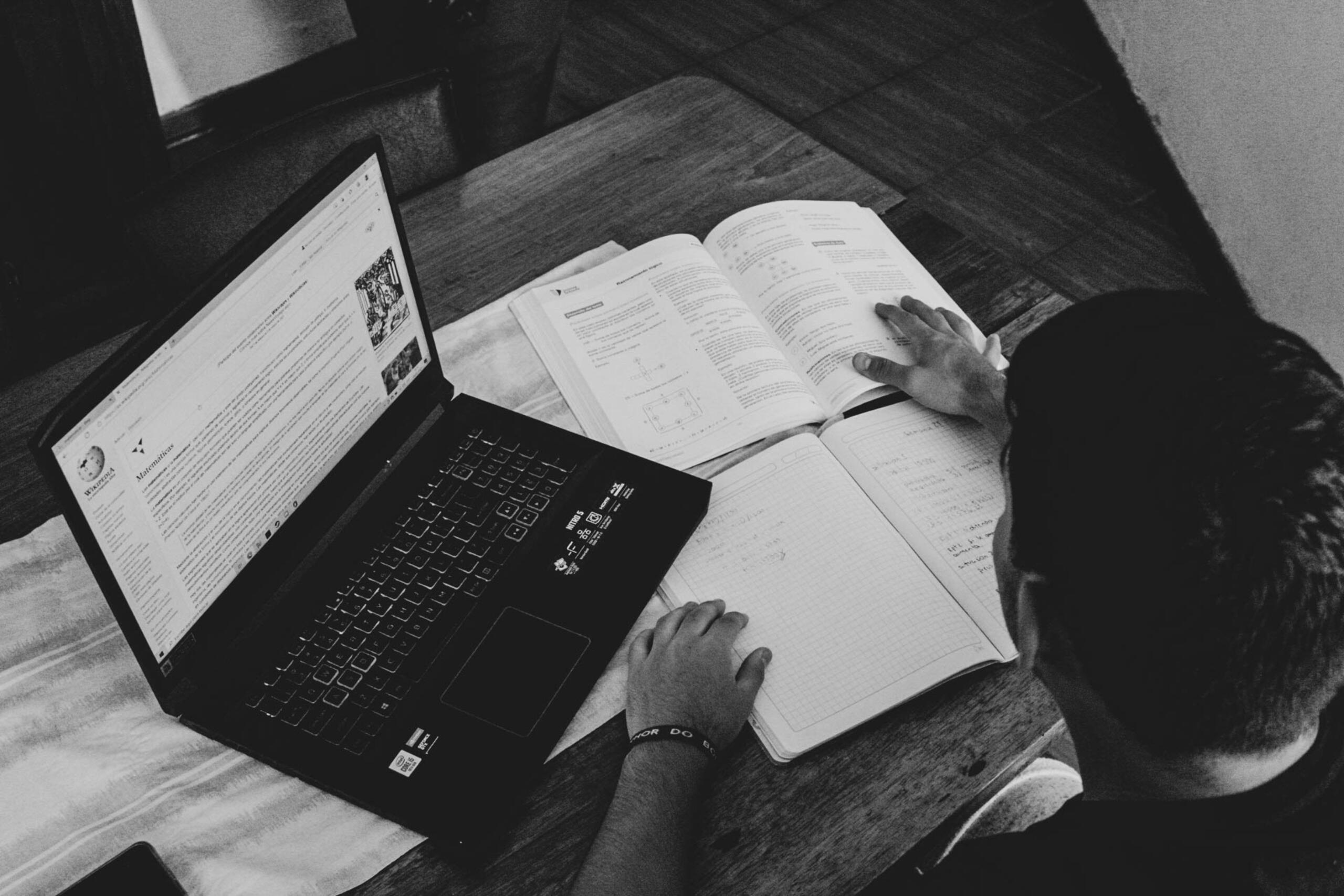
If you normally study at the kitchen table in your family home, that is fine. The important thing is to remove distractions that wouldn't be present in an examination room.
The DBE also advises learners to pay attention to question words such as analyse, compare, describe, discuss, explain and evaluate. Let's look at this in more detail.
Step 1: Write It Under Timed Conditions
Choose a quiet place. Put your phone away. Tell your family or housemates that you are doing a practice examination if you need uninterrupted time. Do not stop the clock because a question is difficult. If you get stuck, make a note and move on. You are practising the skill of managing the paper, not simply demonstrating that you know the content.
Step 2: Mark It Honestly
Now take out the memo. This is not the time to award yourself a mark because your answer was "basically right". When revising with past papers for Matric, follow the marking guidance as closely as you can. If you genuinely cannot decide whether an answer deserves a mark, ask your teacher rather than giving yourself the benefit of the doubt.
The IEB says its marking guidelines are guidelines and do not necessarily reflect the full range of acceptable and partially acceptable answers that applied during the marking session.
Step 3: Analyse Every Lost Mark
Your score is useful, but your mistakes are more useful. Put every lost mark into one of three categories:
| Error Type | What it Tells You | Your Next Move |
|---|---|---|
| Careless | You knew the work but made a preventable mistake. | Slow down and check. |
| Conceptual | You do not fully understand the idea. | Relearn the topic. |
| Unfinished | You ran out of time or could not complete the method. | Practise timing and question selection. |
Keep a simple error log in the back of your notebook. Write the question number, topic, error type and what you will do differently next time.
If you are searching past paper Matric use, you'll find that the answer is in the practice.
How Many Matric Past Exam Papers are Enough?

There is no magic number that guarantees a particular mark. For most learners, I would rather see three or four properly completed papers than ten papers rushed through with the memo beside you. The DBE encourages learners to work through past examination papers as part of preparation, but the real value comes from the learning that happens around each paper.
A good pattern for using past matric papers is:
Paper
Mark
Analyse
Revise
Practise Weak Areas
Next Paper
Remember that three or four carefully analysed past Matric papers can tell you a great deal about where you need to focus, but 10 completed without analysis may tell you surprisingly little. If your practice results are making you question whether you are on track, it is worth checkingthe marks you need for a Bachelor’s, Diploma or Higher Certificate so you know exactly what you are working towards.
Subject Specific Notes for High Pressure Subjects
Mathematics
Use Matric past papers to identify which areas repeatedly slow you down.
Do not only record whether an answer was correct. Record where your method broke down.
A calculation error and a misunderstanding of a mathematical concept require very different revision. If the same topic keeps appearing in your error log, stop and relearn it before doing another full paper.
Physical Sciences
For Physical Sciences, practise the full process rather than jumping straight to the final answer. Pay attention to formulas, units, substitutions, explanations and the steps between the question and your answer.
Here, the DBE's diagnostic reporting can be useful here because it is designed to identify recurring areas of weakness and misconceptions rather than simply providing answers.
Accounting
Do not treat an Accounting paper as a collection of isolated calculations. After marking, identify whether the problem was your understanding of the transaction, the accounting treatment, the calculation or the presentation of the answer.
The DBE's diagnostic reports can help you investigate recurring weaknesses rather than simply counting the marks you lost.
Life Sciences
Use the memo to examine the precision of your answers.

If a question asks you to describe, explain or compare, make sure your response actually does what the command word requires.
The DBE's exam preparation guidance specifically encourages learners to pay attention to question words, so this is a useful habit across your Life Sciences revision.
English
For English, your practice should include more than getting answers "right". Look carefully at how you respond to comprehension, summary, language and literature questions.
The wording of the question matters. Use the DBE guidance on command words and compare your responses carefully with the memo. When you work through Matric past exam papers, pay attention to whether your answer actually responds to what the question asked.
What to Do When Matric Past Papers Shows a Gap
Instead of yet another internet search for past paper Matric, this is the point where you stop and change strategy.
If you repeatedly lose marks on one topic, do not simply download another paper. Go back to your textbook, class notes, teacher, study guide or another reliable learning resource. Learn the topic again, then answer a smaller set of questions specifically on that area.
As you work through papers from past Matric exams, remember that a practice mark is only a snapshot, so keep your focus on improving rather than trying to predict what to expect when your Matric results are released.
You can also ask your teacher to look at your error log. Whether you are at a school in Johannesburg, a Cape Town high school, a Durban school or a smaller community school elsewhere in South Africa, the principle is the same: showing a teacher exactly where you are losing marks makes it much easier to ask for useful help.
If the same gap keeps appearing despite your own revision, that is when a tutor can make a practical difference. Instead of saying, "I don't understand Mathematics," you can arrive with three marked papers and say, "I keep losing marks on this type of question." That gives you and the tutor something concrete to work on.
And remember, your practice papers should support your wider revision plan. Use the 2026 exam timetableto work backwards from your own paper dates, rather than simply completing papers whenever you have time. Once you know your sequence of exams, you can decide which subjects need a full timed paper now and which need concept revision first.
You should also keep your results in perspective. A poor practice paper is information, not a prediction of your final result. If you use it to identify a gap, fix the gap and then test yourself again, the paper has done its job.
If you are working through past papers for Matric, the question to ask after every paper is not simply, "What did I get?" It is, "What do I know now that I did not know before I wrote it?"
The DBE is therefore the safest first stop for to find Matric past exam papers for subjects including Mathematics, Physical Sciences, Life Sciences, Accounting and English.
And if your final results are not what you hoped for, there are still options, so take a look at your Matric rewrite and upgrade options for 2027 before deciding what to do next.
References
- Department of Basic Education: Official NSC past examination papers DBE NSC Past Examination Papers
- Department of Basic Education: 2025 November NSC examination papers and marking memoranda 2025 November NSC Examination Papers
- Independent Examinations Board: NSC past papers and marking guidelines IEB NSC Past Papers
- Western Cape Education Department: Grade 12 past papers and revision resources WCED ePortal
- Department of Basic Education: National Senior Certificate examination and diagnostic reports DBE Examination Reports
Summarise with AI:
Enjoyed this article? Leave a rating!

 Loading...