
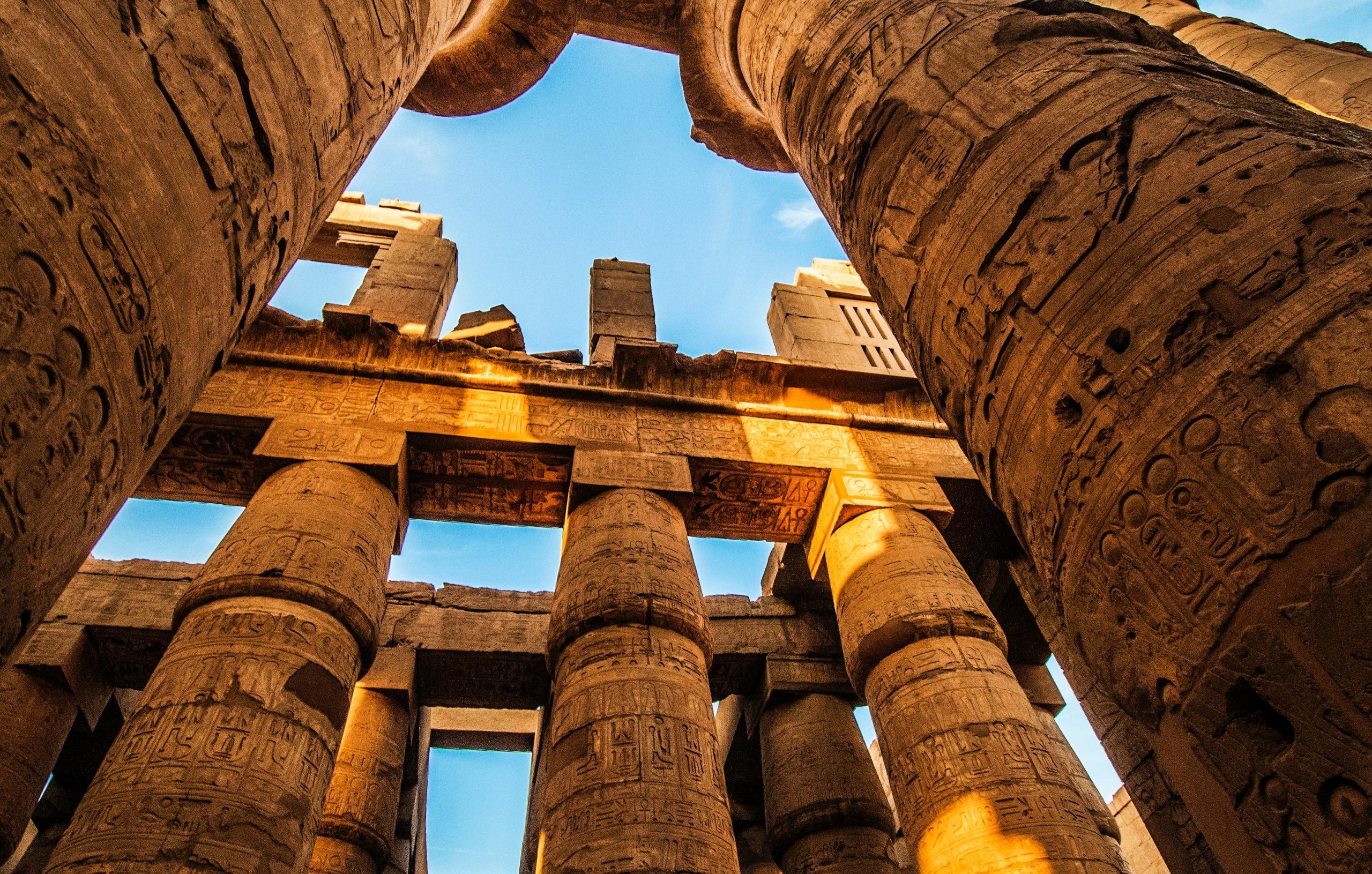

Intriguing and mystifying, complicated and long, the history of ancient Egypt is an uninterrupted arc that covers almost 3 000 years.
Over that period, the country had experienced several major events: dynastic rule and vicious civil war, foreign leadership and hostile takeovers.
On reading up on the ancient Egyptians, one would discover that they kept pets and loved board games, were very open about their conflicts on foreign soil and probably the most knowledgeable people of ancient times.
They were master architects and dexterous craftsmen, ferocious warriors who often went overboard and, believe it or not, great believers in romantic love.
So, although this tale is extremely long, we will attempt to bring across sufficient facts about ancient Egypt to, at least, whet your appetite to uncover more!
Want to give private lessons?
Join the Superprof community and share your knowledge with inquiring and motivated students.
The History of Ancient Egypt: A Timeline
Egypt’s history, like that of ancient Greece, can be broken down into several distinct periods.
- 5 000 – 3 100 BC; the pre-Dynastic Period: the development of civilisation over for more than 2 000 years.
- The first dynasty was established, under King Menes, with the unifying of the White Land in the south and the Red Land in the north.
- 3 100 – 2 686 BC; the Archaic period: Memphis is established as the capital city; the foundation of Egyptian ideology and society is laid.
- 2 686 – 2 181 BC; the Old Kingdom: the period of pyramid-building. King Djoser commissions the architect Imhotep with the creation of his pyramid – his burial monument – the first stone structure built in the world.
- 2 181 – 2 055 BC; the First Intermediate Period: the Old Kingdom collapses and central leadership is dissolved, leading to civil war in the country.
- 2 05 – 1786 BC; the Middle Kingdom: peace is restored: leaders agree on a more aggressive foreign policy, which includes trade and diplomatic relations with Palestine and Syria.
- 1 786 – 1 567 BC; the Second Intermediate Period: Rival powers, unsuccessfully, try to gain control over all of Egypt, but are unable to consolidate their power.
- 1 567 – 1 085 BC; the New Kingdom: the country is reunited and power is centralised under the first king of the 18th dynasty and a remarkable shift in religious beliefs follows.
- 1 085 – 664 BC; the Third Intermediate Period: substantial upheaval in politics, society and culture; local governance becomes pre-eminent once again.
- 664 – 332 BC; the Late Period: the country is re-unified, but it becomes part of the Persian Empire.
Alexander the Great, in 332 BC, overran the Persians and took control of Egypt. Following his death in 323 BC, Egypt is ruled by Ptolemy, the Macedonian general, who created his own dynasty by passing down leadership to his heirs.
In 31 BC, Cleopatra VII, the last of the Ptolemaic rulers, surrendered to Roman forces, placing Egypt under Roman rule for the next 600 years.
During this period, Christianity started pushing aside Roman gods, which had been very closely aligned with Egyptian deities.
When Arab invaders took over Egypt during the 7th century AD, they quickly converted the populace to Islam and, in doing so, removed any semblance of the Egypt’s ancient culture.
The above timeline is greatly condensed and glosses over most facts about ancient Egypt, from the imposing pharaohs to lamentations of the slaves and poets to the voiceless Sphinx – a pre-eminent symbol of Egypt.
Then again, now that the epochs have been set out, it may be easier to lay out some amazing facts about ancient Egypt.
Ancient Egypt: Basic Facts
The Nile River, with its lush, green delta, must have seemed like heaven-sent to the migrants from further south in Africa.
Just like the peoples who inhabited the area along the Tigris River who, subsequently, established the Mesopotamian civilisation, these early Egyptians established small colonies. They now had an abundant supply of water and hunted and gathered their nutritional needs.
Once the Egyptians had figured out the Nile’s annual flooding schedule, they could plant crops and, thus, transition to an agrarian society. They cultivated flax, wheat and, very importantly, papyrus, a basis for the recording of their written language.
Because the Nile is so lengthy – actually the longest river on planet Earth – it served both as a wonderful resource and a way of achieving dominance in this part of the world.
Egypt’s Pharaohs
The history of Ancient Egypt spanned more than three thousand years and was ruled by more than 31 dynasties. Over this vast period of time, a few pharaohs stand out as being very remarkable.
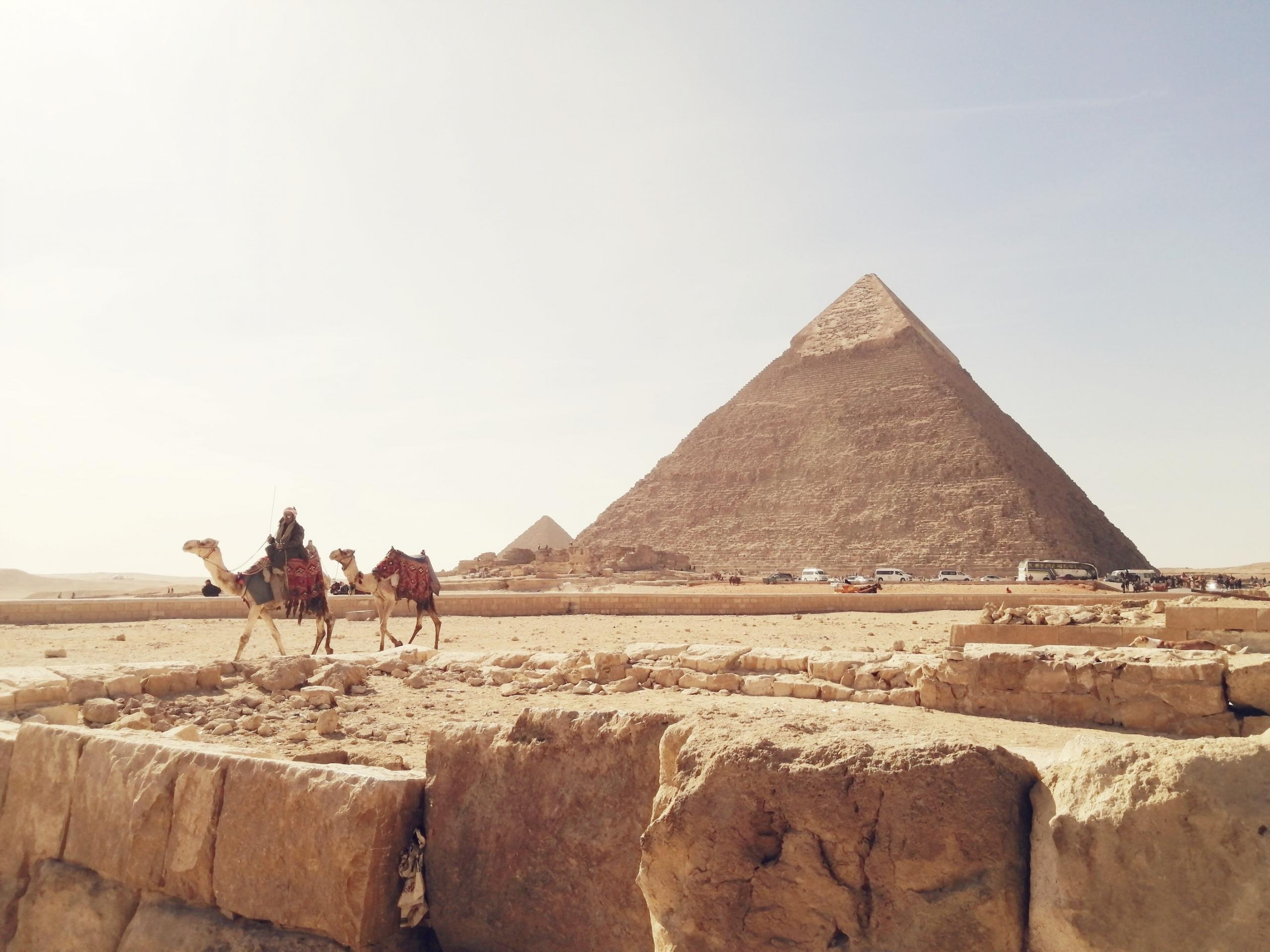
Khufu (also known as Cheops) commissioned the building of the Great Pyramid at Giza. Djoser, however, is credited with having built the first ever stone pyramid.
This was an amazing accomplishment, which is even highly regarded in modern times, in terms of engineering and architecture.
Amenhotep was renowned for his diplomatic skills. With him as pharaoh, Egypt enjoyed a long period of prosperity and peace. In stark contrast, Thutmose III was a severely military-minded individual. In fact, he allowed his stepmother to manage governmental affairs and only took over from her upon her death.
Hatshepsut was one of very few female monarchs of the ancient Egyptians.
Tutankhamun, the ‘boy king’, became well-known, not for his skill as a ruler, but for his burial. His mummified remains – a magnificent historical treasure – were discovered intact, despite grave-robbing being a very popular practice.
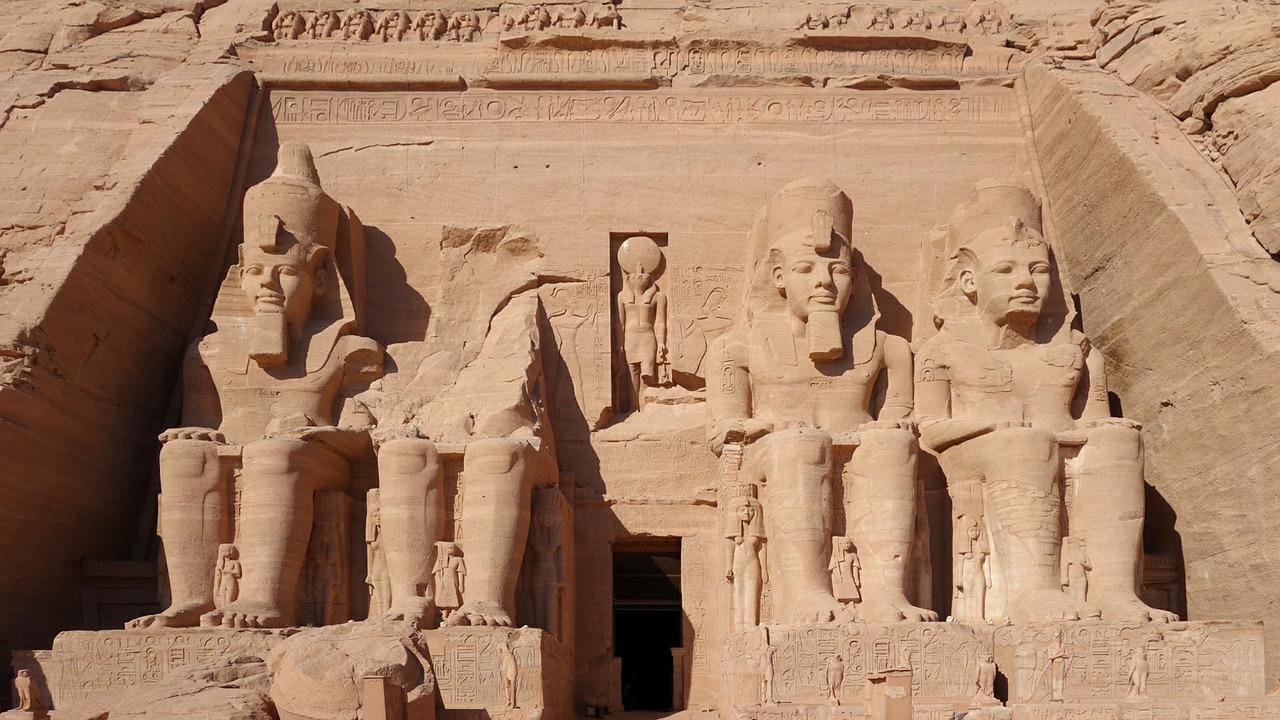
Of all the pharaohs, Ramses II was the most ostentatious: it is believed that his extravagance nearly bankrupted the monarchy.
He was Egypt’s monarch for 67 years and, reportedly, sired 97 children. He left behind a vast architectural legacy; some monuments had been erected to honour his greatness, while other existing ones had been modified to suggest his power and alleged divine nature.
Akhenaten, the tenth ruler of the Eighteenth Dynasty, caused a revolution in religion in Egypt. So devout was he, in fact, that he had his name changed from Amenhotep to the one he became known by, which meant ‘he who is in service to Aten’ – Aten being the sole god for all ancient Egyptians.
Ancient Egypt: Religion
In ancient Egyptian times, religion was an intricate part of people’s everyday lives.
Practising of religion did not simply entail having an array of deities, but involved consulting oracles, communicating with the dead and performing divinations and magic.
The emphasis of public religion, in Egypt, was twofold: on the king and on the gods. The pharaoh was seen as being an intermediary between the people and the gods.
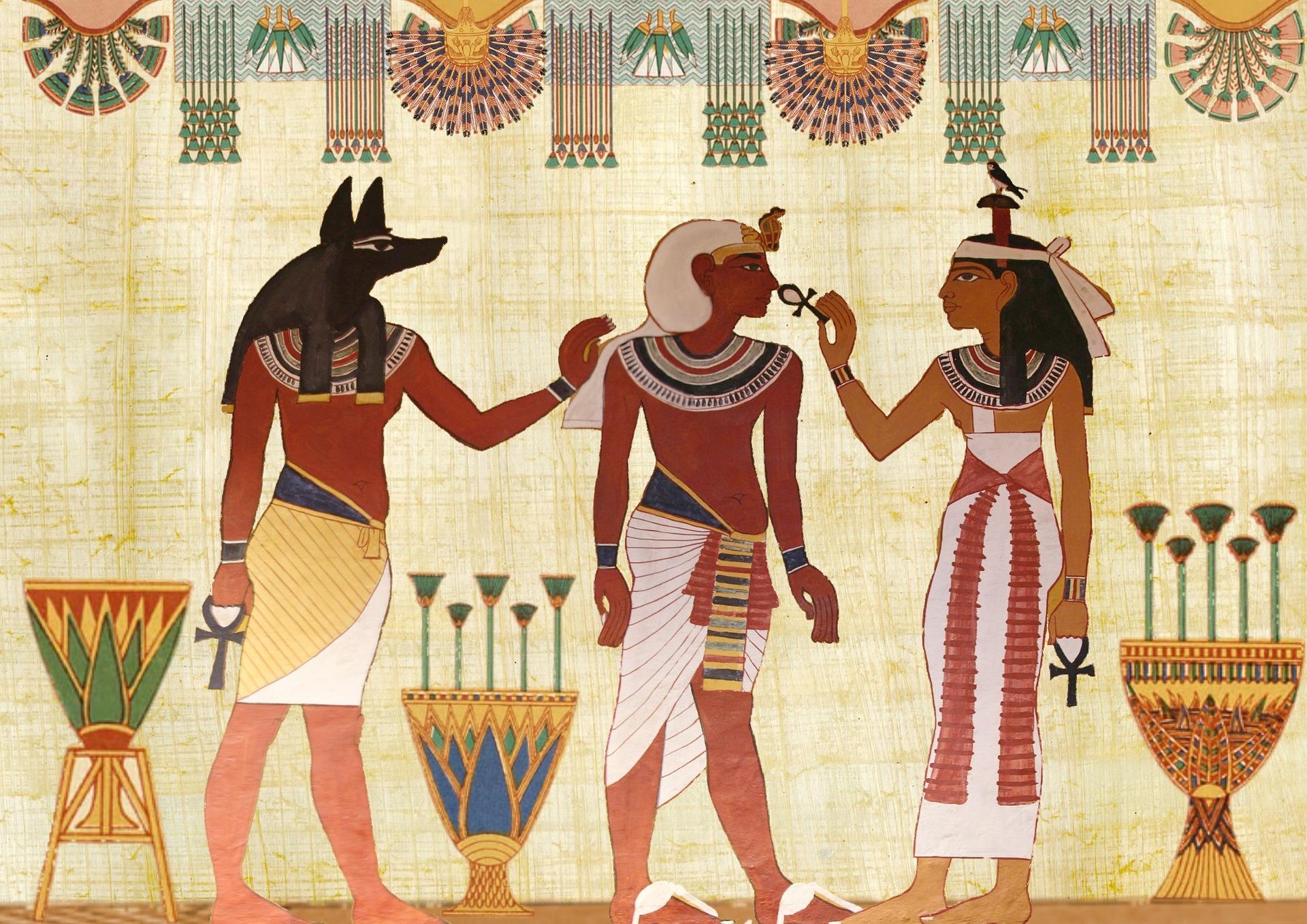
They, the gods, were portrayed as ethereal or otherworldly – often depicted as a human head on an animal body, or vice versa. This relates, most likely, to earlier religious beliefs, which were more animistic than divine.
Further, each region had its own specific deities, compounding the Egyptian belief system even more.
When a new family ascended to power, their region’s gods became pre-eminent. When Thebes succeeded Memphis, as the seat of power, Amun became the chief god of all of Egypt.
In a dramatic religious reversal, Amenhotep declared that Aten would be the only deity in Egypt. This was the closest that Ancient Egypt got to believing in just a single god. This could not have been a popular decision, since, after his death, Egypt returned to the worshipping of their whole array of gods again.
Of the pantheon of Egyptian gods, the sun god, Re or Ra outranked all the others, but was below Amun-Ra, the supreme deity – comparable to Zeus, god of the sky in Greek Mythology.
The Egyptians also had many other gods, including gods for the wisdom, motherhood, healing, afterlife, vegetation and the afterlife. Horus, the falcon-headed god, was the god of vengeance or, alternatively, war, the sky, light and protection.
Want to give private lessons?
Join the Superprof community and share your knowledge with inquiring and motivated students.
Egypt’s Society in Ancient Times
Egyptians, way back, were firm believers of social stratification.
At the top of the pile, naturally at that time, were the pharaohs, followed by their advisors – some of whom were the pharaoh’s consorts – and, then, high-ranking government officials.
This group was followed by the nobility, lower-ranking government officials, scribes and soldiers. Lastly, the lowest rank was made up of artisans and merchants, who were placed above farmers, workers and slaves.
There was also allowance made for social mobility, in that, citizens could improve their status through education – either via an apprenticeship or by way of study. One could become a government official or scribe, if one followed the academic route.
Other than that, children could inherit positions vacated by their parents: the son of a trader could follow in his father’s footsteps, as could the offspring of a farmer.
Ancient Egypt: Education
Children were taught reading, writing and maths, plus social values and religious instruction.
Just as today, people then believed that education was a way to a better life and, so, boys were sent to schools by families who had the means.
Yes, only the boys; the girls were taught at home.
Mothers taught their daughters to read and, maybe, write but, generally, only the children of merchants were taught maths.
Education for girls was chiefly focused on the ‘domestic arts’ of cooking and caring for children and husband.
The children of slaves and peasants, generally, did not attend school, because there were very few schools and open spaces were reserved for the children of the wealthy.
In any case, the poorer classes did not have the resources to spend on the education of their off-spring.
Gender Roles in Ancient Egypt
Egypt was quite progressive in this regard, since women enjoyed a great degree of independence – legal, financial and civil – even though men held most of the power. Women also had the ability to enter into contracts, serve on juries and purchase and sell property.
Other than this, women did not usually work outside of the home. When women did, which was rare, their compensation was equal to that of men.
In terms of dress code, there were some unusual practices for both men and women and how they decked themselves out.
Both women and men wore make-up, and while women wore short, sleeveless dresses, men dressed themselves in skirts, leaving their torsos bare, in all probability, to beat the heat.
Girls and boys wore no clothing at all, until they became adolescents.
For Marriage or Love?
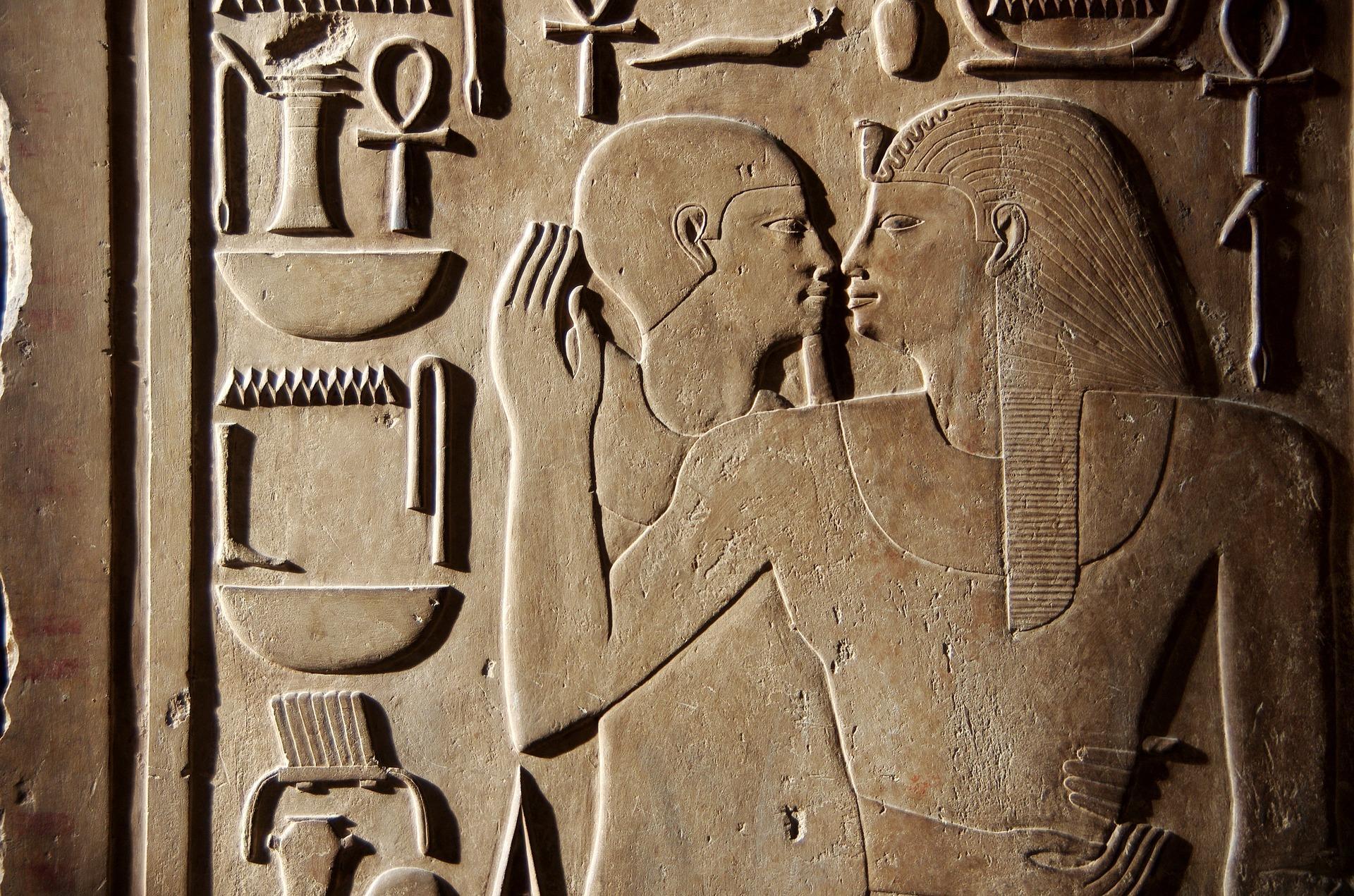
The ancient Egyptians were quite a romantic bunch, as mentioned earlier. This is epitomised by the images of Tutankhamun and his wife, who, by all accounts, adored and praised him.
Poetry, also, points to the fact that the ancient Egyptians were quite romantic, especially in the papyrus recordings of the New Kingdom era.
It may, at first, be surprising to read ‘My sister is unique, no-one can rival her …’ until one discovers that women, in general, were referred to ‘sister’.
All older women were referred to as ‘mother’ and, so, we must assume that the sister, mentioned above, was the writer’s love or wife and that he was expressing his deep love for her.
In spite of the undisputed evidence of romantic love, marriages were still arranged for family and social stability and were not, necessarily, entered into out of loving affection.
Ancient Egypt’s Legacy
Besides the pyramids, the modern world has a lot to thank the ancient Egyptians for.
Since the climatic conditions, surrounding the country, were pretty harsh, the Egyptians did not have to expend much energy to defend themselves against enemies or foreign insurgents.
Thus, they could devote their energies to develop their society, religion and cities, as well as technological wonders and architectural marvels.
Some Egyptian discoveries – from ink to write with and papyrus, to ox-drawn ploughs and toothpaste – are still being used today, albeit it an updated form.
Egyptian writing, a way to record a way of life, history and development, is very important! Ancient samples of hieroglyphics date back to as far as 2 800 years BC.
Further, it’s important to note that Egyptian manuscripts were the forerunners of the Phoenician alphabet, which had evolved into the Aramaic and Greek writing texts.
In truth: the Egyptian script has been shown to be the basis for most scripts which are being used today.
If these were the only contributions that ancient Egypt made to the world’s development and growth in knowledge, it would still be significant, wouldn’t you agree?
Interested in learning about other fascinating cultures? We'd recommend reading this articles on the indigenous people of Australia.
Want to give private lessons?
Join the Superprof community and share your knowledge with inquiring and motivated students.
Summarise with AI:
Enjoyed this article? Leave a rating!

 Loading...
