

If you are preparing for the practical driving test, the yard is not simply a place to demonstrate that you can handle a car. Under the official K53 test requirements, the yard test is a defined part of the assessment, with specific manoeuvres and testing requirements. The current South African National Road Traffic Act K53 manual for light motor vehicles says the test starts with the pre-trip inspection and includes turning in the road, alley docking to the left and right, parallel parking to the left and right, and the incline start.
Remember that in the K53 yard test your observations are scored as heavily as the manoeuvre itself.
If you do not have your Learner's Licence yet, our guide to the K53 learner’s licence testexplains the three sections before you move on to the practical stage.


Before You Start: The Vehicle Inspection
The yard test begins with the pre trip inspection. The official requirements state that the test shall commence with these inspections before the yard manoeuvres begin.
The practical lesson is simple: do not treat the inspection as an informal warm up. Learn the inspection requirements in the official manual and practise identifying and demonstrating the required items according to the K53 procedure.
Immediate Failures
Before we move on to the specific tests within the yard, it is helpful to note the following general list of errors that can immediately end the test.
NB: Be sure to check your official K53 material for the complete current immediate failure list.
The Yard Test: Alley Docking
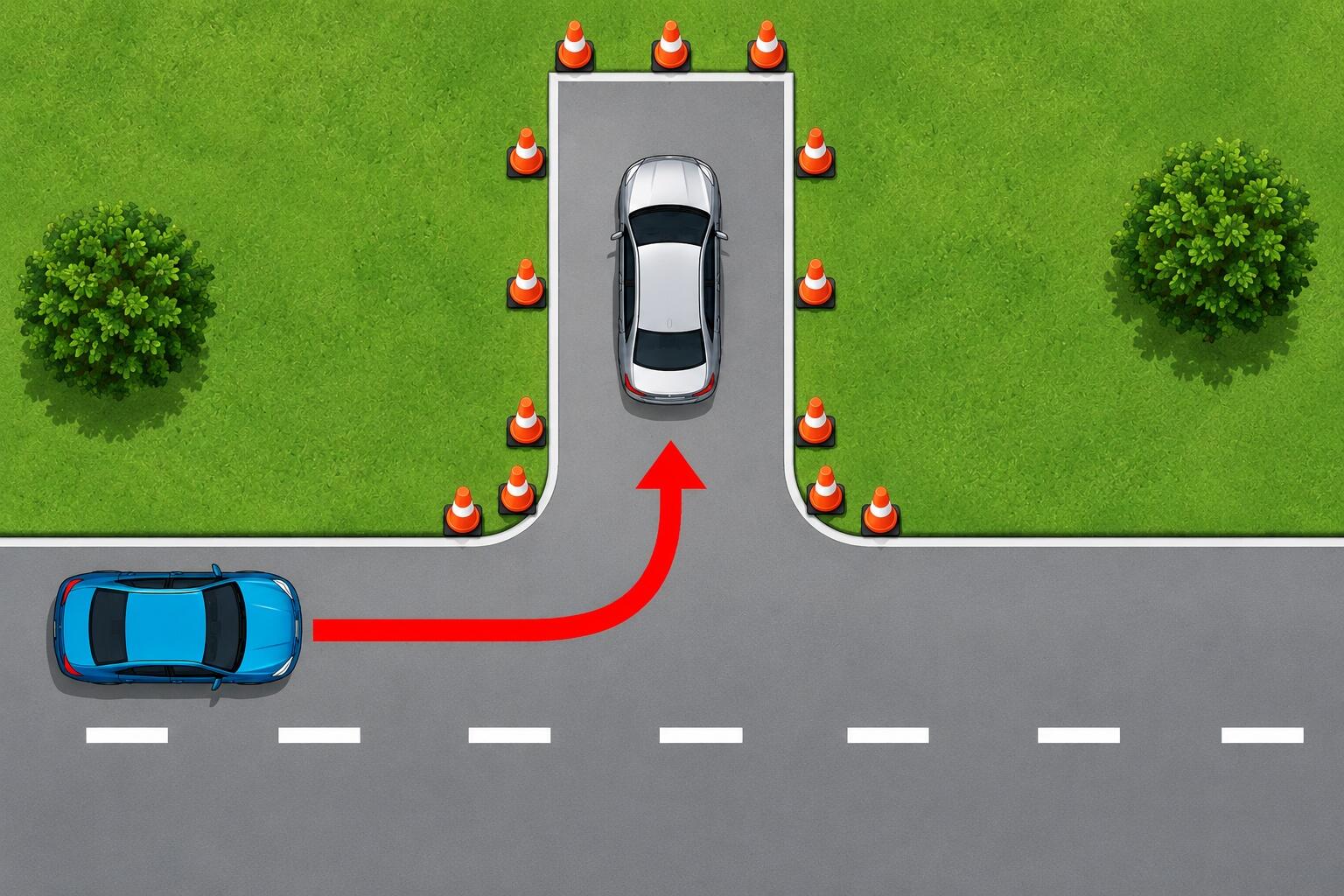
Alley docking is one of the manoeuvres specifically listed in the official light motor vehicle test, and it is examined to both the left and right.
The most useful question to ask your instructor is therefore not, “How do I park in an alley?” It is, “Which K53 actions, observations, boundary rules and permitted movements are scored for this manoeuvre at my DLTC?”
Touching a boundary line with a wheel, mounting the kerb or hitting an obstacle is not permitted.
The Yard Test: Parallel Parking
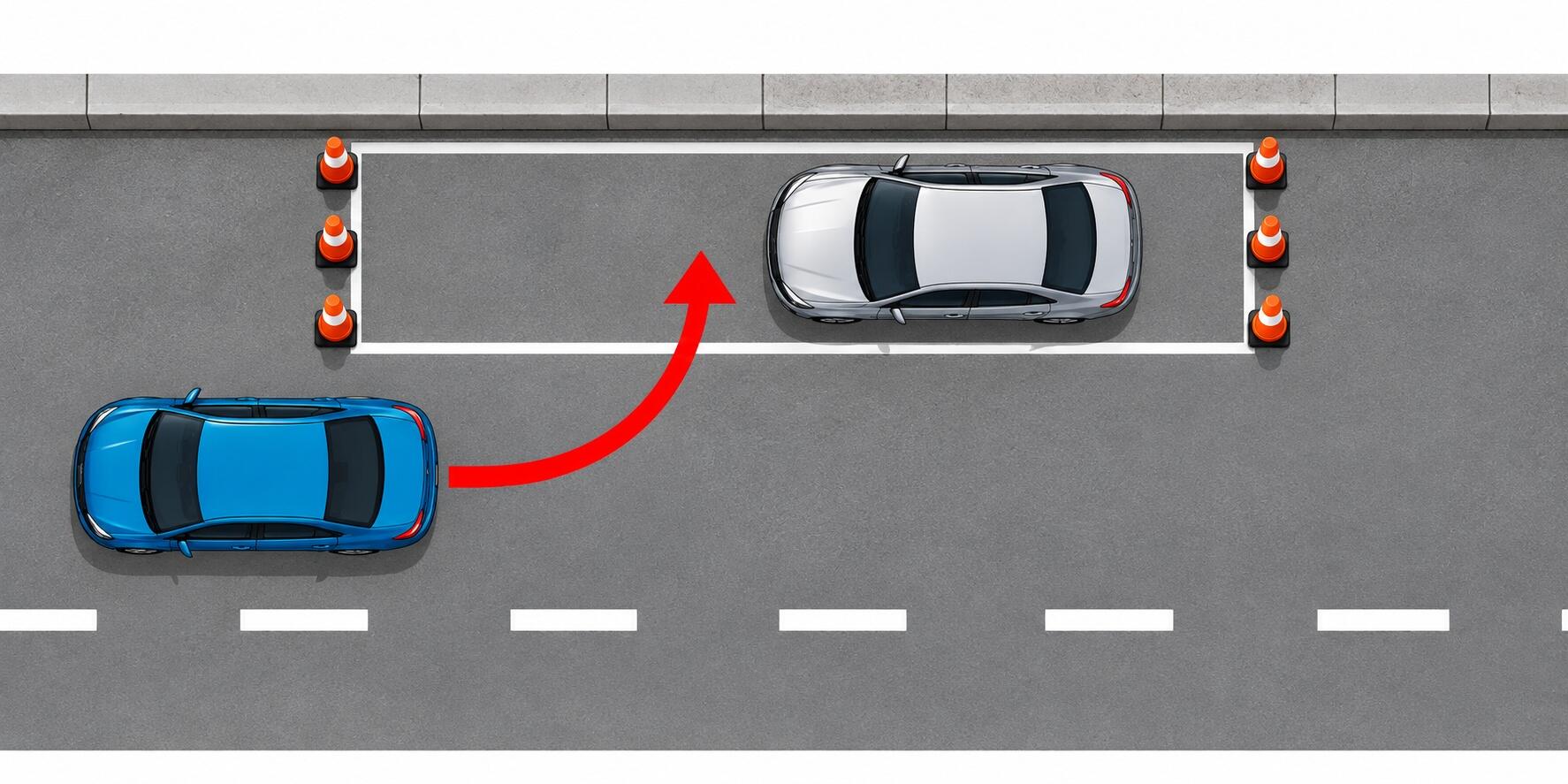
Parallel parking is also explicitly included in the official light motor vehicle (LMV) yard test, and it is tested to both the left and right.
| The manoeuvre | Reverse into a marked parallel parking bay and park the vehicle within the demarcated area. |
|---|---|
| Parking bay | The LMV practice area uses a 7 metre long and 2.6 metre wide parking bay, with a vertical kerb on one side and obstacles marking the other side. |
| Attempts | You have two attempts from the left and two from the right. |
| Maximum movements | The manoeuvre must be completed in no more than three movements |
| Before reversing | Check the mirrors and blind spot, signal, select reverse gear, obtain clutch control if driving a manual vehicle and complete the required 360 degree observation. |
| Blind spot | Check the right blind spot when parking to the left and the left blind spot when parking to the right. |
| Enter the bay | Reverse steer into the parking bay without touching the kerb or obstacles, using counter steering where necessary. |
| Finish | Stop, apply the handbrake, select neutral or park and cancel the signal. |
| Boundary Rule | Touching an obstacle, mounting the kerb or touching a boundary line can result in an immediate failure. |
Remember that the examiner is assessing more than whether the car ends up in the bay. They are carefully assessing your:
K53 tip: Practise the manoeuvre in a properly marked yard rather than learning a generic parking formula. The K53 test has prescribed dimensions, movements and observation requirements, so your instructor should teach you the procedure used for the test.
The Yard Test: The Incline Start
The incline start is the fourth manoeuvre expressly listed in the official light motor vehicle yard test.
For the K53 drivers yard test, the incline start test is one that can easily catch candidates out because allowing the vehicle to roll backwards results in an immediate fail.
You need to control the vehicle while completing the required K53 observation and moving off procedure at the same time.
Practise the full sequence, including the handbrake, clutch and accelerator control, until you can complete it smoothly and consistently.
Observations: What K53 Actually Demands
Observation is part of the K53 method and should be learnt as part of each manoeuvre rather than treated as a general reminder to “check your mirrors”.
Failed mirror or blind spot observations are recorded as observation errors and incur penalty points. The points sheet specifically includes mirrors and blind spots as scored items.
During the K53 drivers yard test, observation is part of the K53 scoring, not an optional extra. The required checks occur at specific points before and during each manoeuvre.
| Stage | Observation |
|---|---|
| Before moving | Mirrors and applicable blind spot |
| Before manoeuvring | 360-degree observation |
| During the manoeuvre | Required blind spot checks |
| Moving off again | 360-degree observation |
The Road Test
Once you have mastered the K53 yard test layout, the road test takes place on one of the DLTC’s pre-established routes. The route includes robots, controlled intersections, lane changes, a four-way stop, traffic lights, yield controlled intersections and a road where the emergency stop is performed.

You will also encounter traffic circles, pedestrian crossings and other everyday South African road conditions. Don't forget that sharing the road safely with minibus taxis is part of driving in this environment, so your observations, positioning, signalling and responses to other road users are assessed for points.
The examiner scores your performance against the prescribed K53 requirements, including observations, compliance with robots, signs and road markings, vehicle control and how you respond to the situations along the route. At least 65% of the route must be on public roads in an urban area.
If you need to revise signs, see our guide to every South African road sign you need for the K53 learner’s test.
If You Fail
Official South African sources confirm that a failed driving licence test is a formal licensing matter, but the exact rebooking waiting period and repeat fee vary by region. Check the current requirements and fees with the licensing office where you are booking.
How Many Lessons Do You Actually Need?
There is no official K53 rule that says a candidate must take a particular number of driving lessons before testing.
Any article or instructor claiming that every candidate needs a fixed number of lessons as a K53 requirement is not presenting a fact. It is not a requirement.
Instead, use your instructor’s assessment of your progress, and make sure you can consistently perform the official manoeuvres and meet theroad test requirements without coaching.
If you are still working towards your learner’s licence, start with our guide to booking your learner’s licence in South Africa.
depending on the province and municipality.
The Safest Way to Prepare
The best preparation is not to memorise generic parking instructions. It is to learn the South African K53 procedure that your examiner is actually assessing.
Practise the pre trip inspection, the four listed yard manoeuvres, the required observations and the prescribed road test environment. Work from the official manual for technical measurements, boundary rules, permitted movements, scoring and immediate failure criteria. If a website or instructor gives you a rule that conflicts with the official manual, check the primary source before treating it as a K53 requirement.
That is the central lesson of the K53 yard test layout: the test is a defined South African assessment, not a generic international driving test.
Before your K53 drivers yard test, make sure your practice is based on the manual applicable to your vehicle and licence code, and confirm any local booking, fee or administrative requirement with your DLTC.
References
- South African Government https://www.gov.za/sites/default/files/gcis_document/201409/28446a.pdf
- NaTIS https://www.natis.gov.za/index.php/downloads/general-documents?download=59%3Ak53-light-motor-vehicle-part1-code-b
- NaTIS https://www.natis.gov.za/index.php/downloads/general-documents?download=54%3Aminimum-requirements-for-registration-and-retention-of-grading-for-driving-licence-testing-centres
- Road Traffic Management Corporation https://www.rtmc.co.za/index.php/18-faqs
- Get Your Drivers https://www.getyourdrivers.co.za/
Summarise with AI:
Enjoyed this article? Leave a rating!

 Loading...