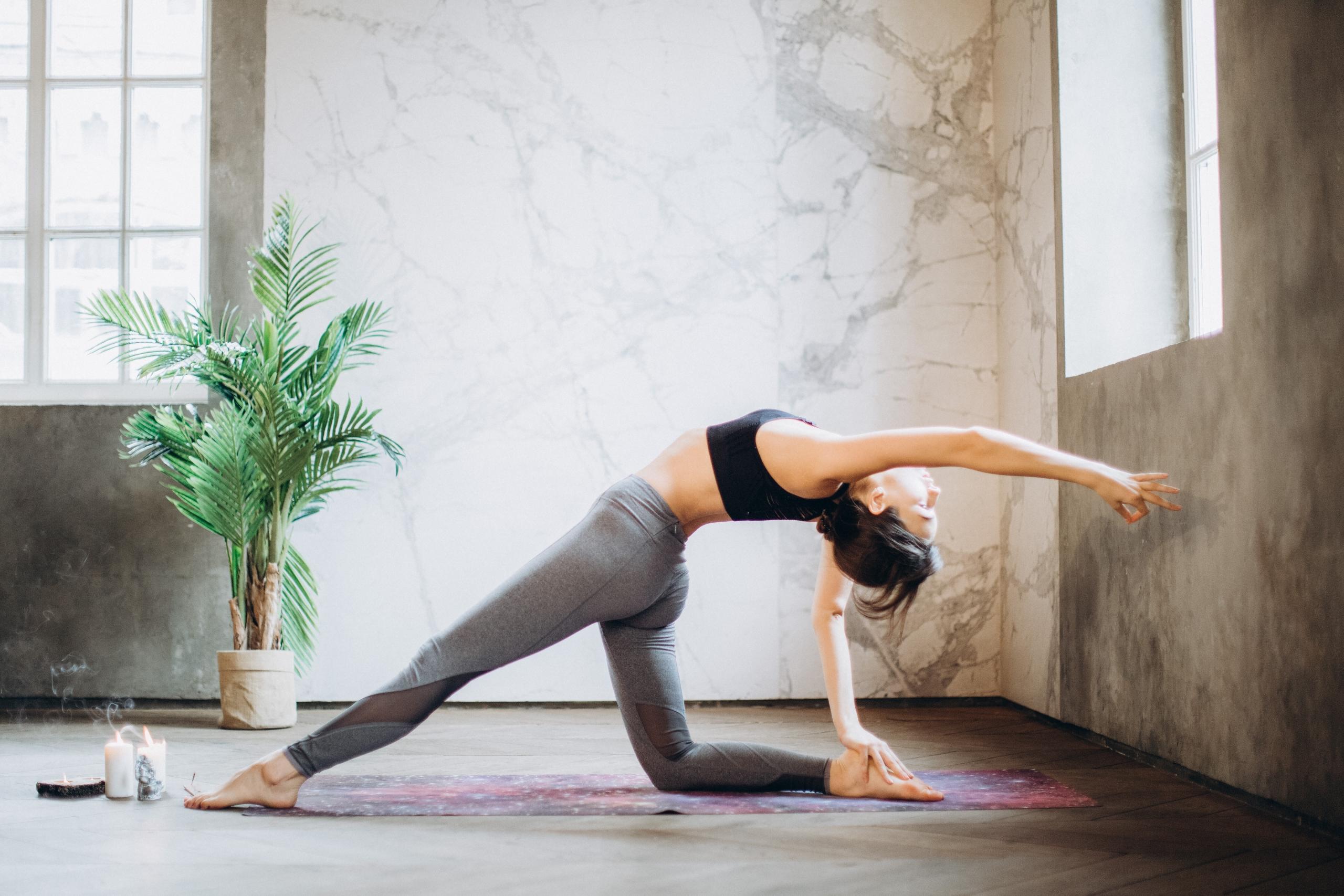

Many practising yogis will tell you that the greatest benefit you’ll experience with frequent yoga practice is a calm synergy between your body, mind and soul.
Yoga becomes a lifestyle for most.
It slowly starts to transform the way we see ourselves and the world for the better. It is a deep practice and if you really take the yoga philosophy to heart it can improve your health, strengthen your self-awareness and create peace within you.
A balanced yoga session today would include asanas, or postures, breathing techniques or meditation. But the Hatha yoga philosophy is a rich tradition from India that goes much further, over 5 000 years to try to be more exact. Yoga used to be a spiritual practice and doctrine, but it evolved exponentially over the last century into a wide range of styles. Today, yoga has a style that is suited topeople from all walks of life and it is ideal for those who try to assimilate the experiences they have on earth.
If you delve into this colourful world you’ll learn to love yourself, nurture and protect your body, develop compassion for yourself and others and become a healthier, happier and more blissful version of yourself.
This article will explain yoga philosophy as carried from the ancient texts. Whether you choose to practice yoga at home, attend a Hatha group class or book a lesson with one of our Superprof yoga teachers, these principles could transform your practice into a rich and life-rewarding experience.


Hatha and Yoga Philosophy
Yoga is all about balance.
Compassionately we continue to explore questions around our true self and our existence, seeking to unearth the answers that are locked deep within us. In our exploration of natural duality we aim to bring all things together to a state of true consciousness. Where everything works in harmony and balance. Recognising the light and the dark, the yin and the yang and the sun and the moon.
Yoga is thus the practice of bringing synergy between all parts of ourselves.
Over the centuries, the development of yoga led to a more physical type of practice called Hatha yoga. One where the postures required more focus to balance out spiritual views. This became the undercurrent of the true yogic lifestyle; a no-harm practice where people attempt to balance the physical and metaphysical world through the application of physical, spiritual and mental energies.
The meaning of ‘Hatha’ is just as dualistic as the practice of yoga.

This Sanskrit word is a combination of the sun (ha) and the moon (tha), where the sun symbolises the warmer, activating energies and the moon the opposite cool, inhibitive energies. It is through Hatha yoga that we implement practices that try to harmonise these polarities so that we can eventually reach our highest optimum, or enlightenment, as the ancient texts and yogis believed.
Learn more in this article what Hatha means and what yoga is all about.
The Eight Limbs of Yoga
The history of yoga is complex as it has never been linear.
As time went by there were different texts, gurus and yogis that developed it. The historians believe it is much older than the first references of yoga in the ancient Hindu theology texts, the Mahabharata and Bhagavad-Gita. The first recorded comprehensive text of the yogic practice were written 50-100 years after the Bhagavad-Gita and was called the Yoga Sutras of Patanjali.
Patanjali’s sutras became crucial to what yoga is and it laid out the practices that individuals can do to bring them closer to salvation. Modern yoga continues to use some of those principles in yoga classes of all styles, but it’s important to note how the following eight limbs of yoga laid yoga's fundamental foundations:
- Yama – Ethical discipline
- Niyama – Observances or positive duties
- Asana – Physical posture
- Pranayama – Extension or restraint of breath
- Pratyahara – Withdrawal of senses
- Dharana – Concentration
- Dhyana – Meditation
- Samadhi – Absorption
Over 1000 years later the Hatha Yoga Pradipika was written by Swami Swatmarama. This became the go-to Hatha text for practitioners and led to the breakthrough of Hatha as main type of yoga to practice. Its focus was a lot more physical with the inclusion of 15 postures and four new areas for yogis to concentrate on: Mudras, Asana, Pranayama and Samadhi.
Like all Hatha yogic history there are some contradictions and question around the principles of Hatha yoga. Some say the eight limbs are still relevant while other proclaim a different set of principles for Hatha, like the following seven that many Hatha yoga gurus still know and use in their practice nowadays.
1. Yama
Yama refers to discipline, vows, and practices that are mostly concerned with our interaction with the world around us. The 5 Yamas are as follows:
- Satya - truthfulness
- Asteya - non-stealing
- Ahimsa - non-violence
- Aparigraha - non-hoarding/non-greed
- Brahmacharya - the right use of energy
The aim of this aspect of yoga is to not only benefit ourselves, but also those around us.
2. Niyama
Shatkarma (Shatkriyas)
Niyama refers mostly to practices directed towards ourselves, but may also relate to actions towards the outside world.
Saucha is the first of the Niyamas, and it translates to cleanliness.
The Shatkarmas (Shatkriyas) are actions or a set of practices the yogi can use to purify the body in Hatha yoga. These cleansing practices are believed to clear blockages within energy chakras of the body in preparation for the main work of moving towards liberation (moksha). The six cleansing techniques are:
- Dhauti – Drinking and purging saltwater to clean the stomach
- Basti – Using a saltwater solution to purify the large intestine. Making use of enemas, the yogi will use a saltwater solution in their colon and perform asanas to help them compress and rinse the large intestine
- Neti – Saltwater is used to rinse the nostrils and cleanse the nasal passages
- Trataka – A focused gaze with the eyes that brings on greater concentration and the tearing of the eyes also rinses them
- Nauli – Cleansing the abdominal organs in a four-stage manoeuvre that locks the abdominal muscles in specific patterns
- Kapalabhati – A purifying breath exercise that involves forceful exhales and sharp inhalation.
These techniques are quite complex and therefore we suggest you only attempt them after you’ve learnt them with an experienced Swami or practitioner.
3. Asana
Translated as posture, asana is the most well-known aspect of Hatha yoga. Most of us are familiar with the various poses to be seen in a yoga class.
Most modern yoga poses will help you to create a healthy and strong body. You’ll learn to hold poses to activate certain muscles and stretch muscles and tendons which in turn will bring greater flexibility and mobility into your body.
There are many poses to choose from; a supine twist will work on opening your back, hips and shoulders, while collectively massaging your internal organs like the digestive system, the heart and your respiratory channel.
4. Pranayama (Breathing Exercises)
Breath has a way of influencing your physical body and mental state and these breathing techniques have deep philosophical roots in yoga.
Prana is a Sanskrit word that means ‘vital life force’ while Yama translates to ‘gain control’. The practice of Pranayama is thus not only to purify your lungs, bring mental clarity and calm to the nervous system, it is believed to also promote and control life energy. An experienced Swami or Hatha teacher will be able to take you through a range of exercises, each suited to produce a different outcome.
5. Mudra
Mudras are set gestures using specific body parts, like the hands or head, and there is quite a selection. Most of us have seen some form of mudra where a figurine or statue of a Hindu god is holding their hands in a certain position. The hastra mudra is when the middle finger and thumb connect and is seen when yogis rest their hands in their laps while meditating.
6. Bandha
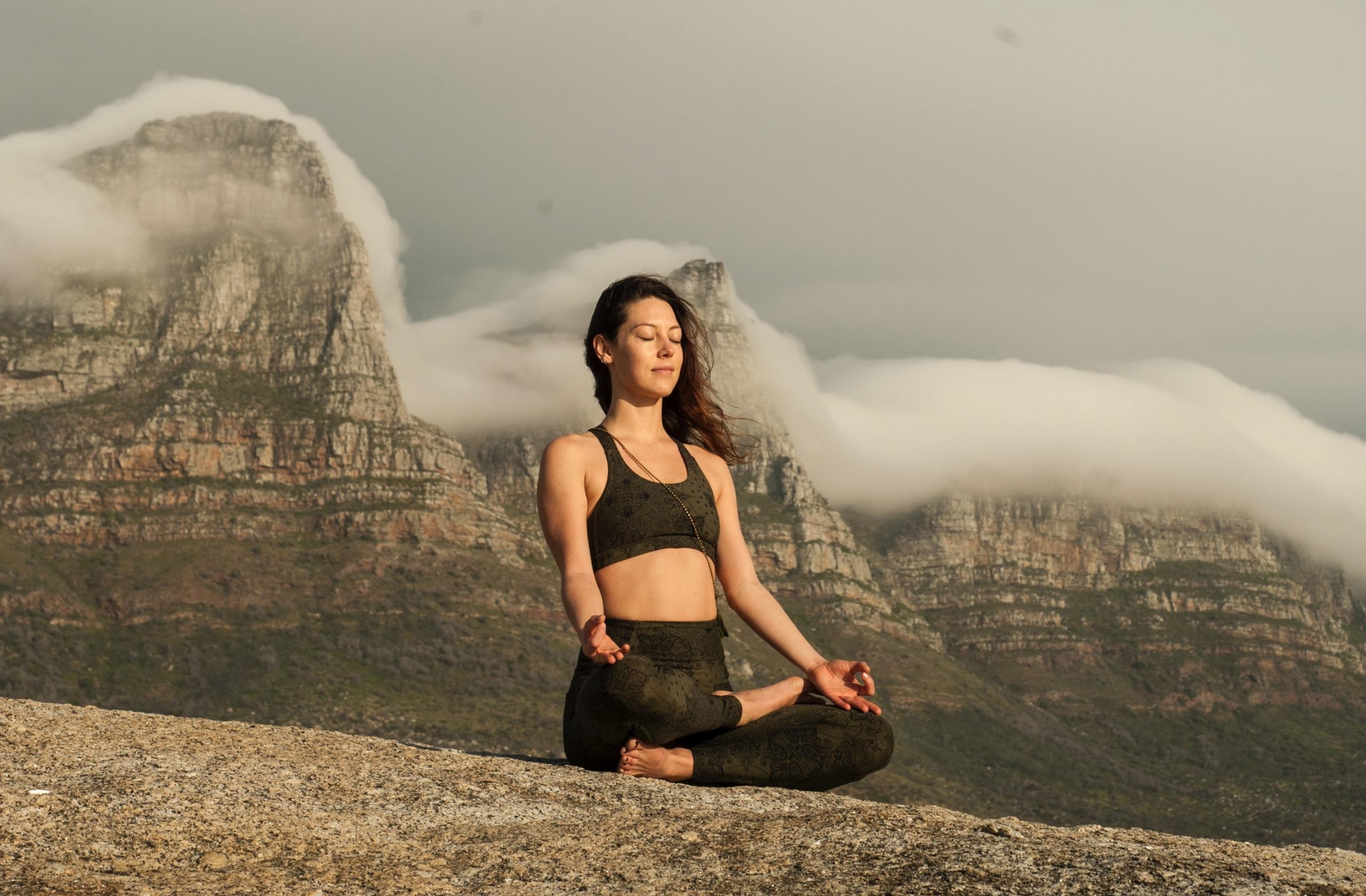
Bandha is the process of ‘locking’ certain areas to hold energy during pranayama and mudra practices. Yogis will try and lock energy in specific areas to focus their energetic force there while they perform yogic activities. It is said to activate the chakra in focus and essentially helps to burn through impurities and unwanted blockages.
7. Dhyana
Dhyana refers to meditation in a yogic context. Many of us have tried to clear and empty our minds while meditating, but in this context it is more about allowing your mind to focus singularly on one thing.
This attempted awareness and concentration teaches our minds to slowly exclude intrusive thoughts. The yogis also believe that this type of meditation is useful in life as you can bring focus into whichever task you are busy with, without a wandering mind and fully engaged. Many Yogis find a mantra to help them while they practice this singular focus and eventually their powers of concentration start to grow stronger.
8. Samadhi
Samadhi is the ultimate objective and reason why yogi’s do all these various practices. It is a major achievement and according to them this higher state of consciousness and bliss is attainable, but not necessarily achieved by all who follow a Hatha yoga spiritual practice. It is also the eighth limb in the Ashtanga limbs and could be paralleled to a trance where the mind and the self become a pure channel of awareness. This state allows yogis to endure extreme physical conditions for extended periods of time.
Learn about the benefits and find out how Hatha yoga can transform your body and mind in this article.
Find websites, attend a course or read a book about about yoga philospohy and tradition. You'll soon realise that it is not a simple, straightforward answer to some of these complex questions. Many teachers will tell you that it is about your own personal journey and making yoga what you want it to be.
With the right Swami or yoga teacher this might be much easier, as the practice under guidance will reveal new areas you as a yogi can explore and work on. The best part is, you can find a Hatha yoga teacher right here on Superprof.
Are you ready to bring more meaning to your yoga? Book a session today.
Summarise with AI:
Enjoyed this article? Leave a rating!

 Loading...