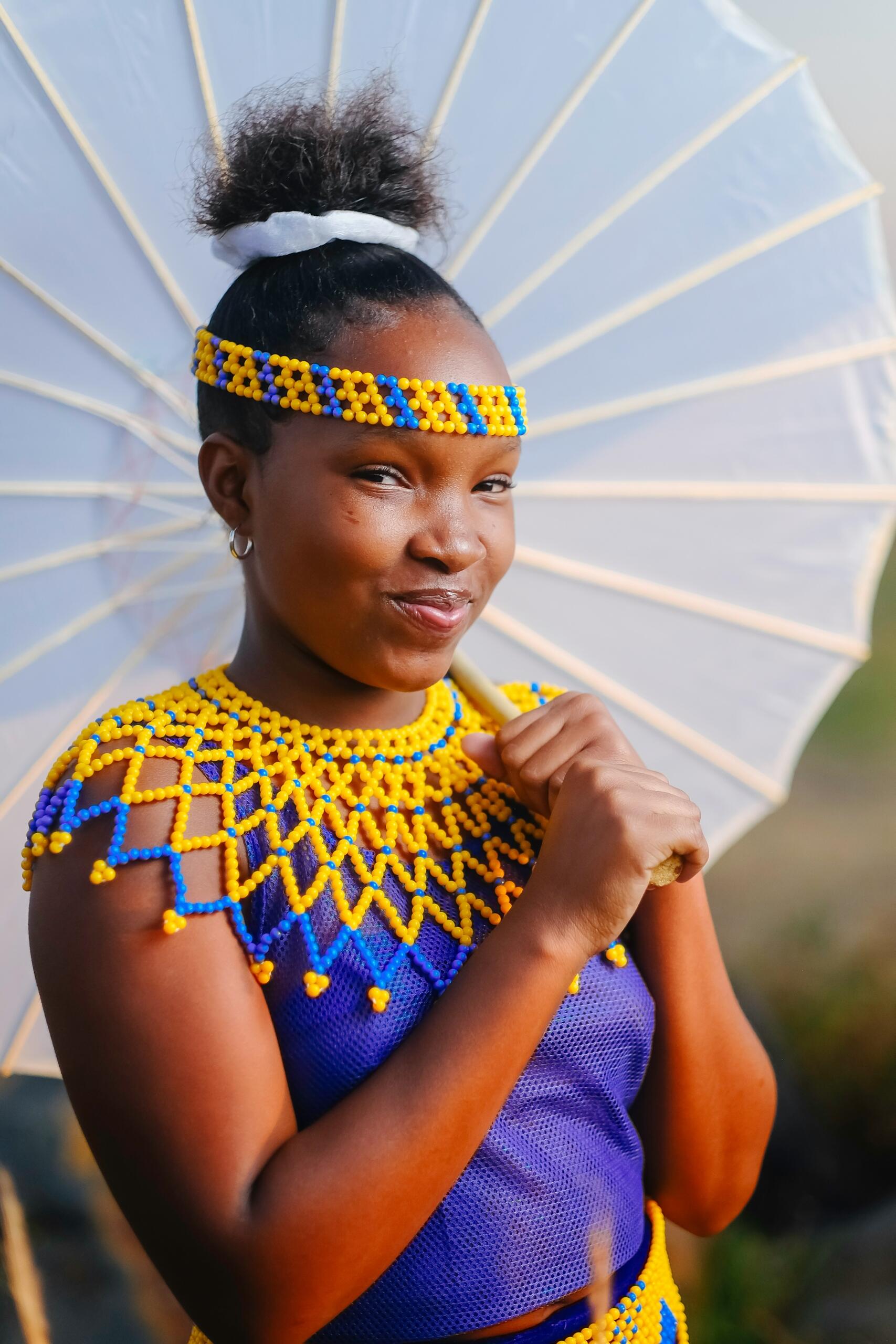

Clothing can communicate identity, family history, marital status and cultural belonging. In Zulu communities, traditional garments and beadwork have long played an important role in expressing these connections. Today, traditional Zulu attire appears at weddings, coming of age celebrations, heritage events and other important gatherings, combining inherited customs with contemporary design.


Attire as a Cultural Language
Traditional dress is not simply about appearance. Garments, accessories and beadwork can communicate information about the wearer, the occasion and their family or community.
If you are exploring Zulu heritage for the first time, discover how clan names connect families with ancestry and identity. This provides another perspective on how cultural knowledge is passed between generations.
Historically, clothing could help distinguish different stages of life and social positions. Some garments were associated with marriage, while others were worn by unmarried women, children or men.
Today, Zulu traditional attire is worn alongside contemporary clothing, with people choosing garments that reflect their family customs, personal preferences and the occasion.
Key Zulu Traditional Attire at a Glance
| Garment of Accessory | Description |
|---|---|
| Isicholo | A distinctive wide hat traditionally associated with married women |
| Isidwaba | A skirt historically made from animal hide |
| Beadwork | Decorative pieces that may express identity, relationships or personal messages |
| Ibheshu | A traditional hide garment worn by men |
| Ibhayi | A shawl or wrap that can have cultural significance in family settings |
| Izincu | Strands of beads traditionally worn around the waist, ankles or elbows in some contexts |
These garments do not all appear together in every outfit. Their use depends on the wearer, the event and the family's customs.
Isicholo and Other Headwear
The isicholo is one of the most recognisable elements of traditional Zulu women's dress. It is a distinctive, broad hat traditionally associated with married women.

Historically, the isicholo was associated with a woman's marital status and place within her family. Its shape and construction have changed over time, and contemporary versions are often designed for weddings, ceremonies and cultural displays.
When choosing Zulu traditional attire for woman, it is useful to consider whether the outfit is intended to represent a particular family tradition or simply draw inspiration from traditional design. For instance, a bridal ensemble may include a hat or headpiece, but not every woman wearing traditional clothing will necessarily wear an isicholo.
For a contemporary event, you may see traditional silhouettes paired with modern fabrics, footwear or hairstyles. These adaptations do not automatically make the outfit less meaningful. Clothing traditions have always existed within changing social and material circumstances.
Beadwork and What the Colours Mean
Zulu beadwork is admired for its colour, intricate patterns and craftsmanship. Beaded necklaces, bracelets, waistbands and other accessories can complement traditional garments or form the centrepiece of an outfit.
Academic research has explored beadwork as a form of communication. In some contexts, designs have conveyed personal messages, relationship intentions or information about social identity. Yet scholars also caution against assuming that every colour has one fixed meaning across all Zulu communities.
For example, some published interpretations associate white with positive ideas such as purity or happiness, while yellow may be connected with prosperity in certain contexts.

If you are choosing Zulu traditional attire for woman, ask the maker or family members about the beadwork rather than relying entirely on a colour chart found online. The person who made the piece may know whether its pattern follows a regional style, a family tradition or a personal design.
Modern beadwork also reflects creativity and changing fashion. Contemporary artists use different colours, shapes and materials, and their work can combine traditional techniques with new ideas.
You may encounter Zulu Ndebele traditional attire in online searches for South African cultural clothing. Although Zulu and Ndebele communities have their own distinct histories and clothing traditions, photographs and product listings sometimes group different styles together. Check the source carefully before identifying a garment as belonging to a particular community.
Traditional Zulu attire is one part of a much wider cultural heritage that includes spiritual beliefs and ancestral connections. You can explore another aspect of these traditions in our article about dreams and their meanings in Zulu culture.
Everyday vs Ceremonial Attire, Historically
Men's traditional clothing also includes distinctive pieces. The ibheshu, traditionally made from animal hide, is worn around the waist and may form part of ceremonial dress. Other accessories, including shields and animal hide adornments, are associated with particular historical or ceremonial contexts rather than everyday modern clothing. Next time you are at an occasion and see these items worn, these make great cross-cultural opportunities for discussion and connection - ask questions.
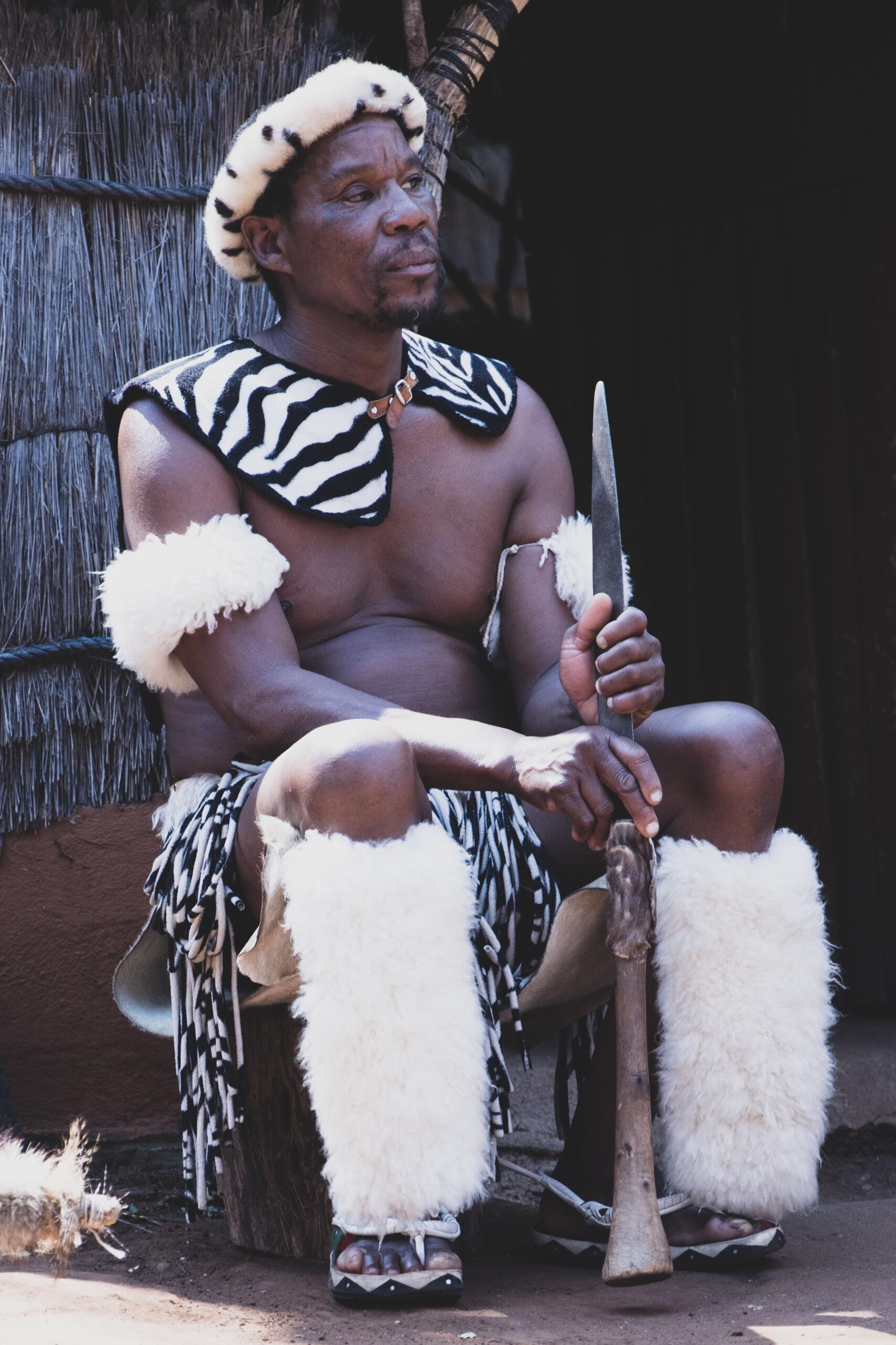
Animal hides and skins were used for various garments, while beads and other decorations could communicate identity or status.
Today, traditional garments continue to be worn for particular occasions even as Western style is common in everyday life.
As such, Zulu traditional attire is often associated with weddings, family ceremonies, cultural festivals and Heritage Day celebrations. It also appears in dance performances, educational displays and community events like when the Springboks play an international rugby match!
Royal clothing and regalia also offer a glimpse into the history of the Zulu kingdom. To explore that history further, read about the Zulu kings from Shaka to Cetshwayo.
The distinction between every day and ceremonial clothing is not absolute. Some people wear beadwork or traditional accessories regularly, while others reserve a complete traditional outfit for special occasions.
Everyday and Ceremonial Clothing Compared
| Everyday or Contemporary Wear | Ceremonial Wear |
|---|---|
| Practical clothing suited to daily activities | Outfits selected for a particular cultural occasion |
| May include individual accessories or beadwork | May include coordinated garments, headwear and beadwork |
| Often combines contemporary and traditional elements | May follow specific family or community customs |
| Chosen mainly for comfort and personal preference | May reflect the significance of the event and the wearer's role |
If you attend a cultural event in KwaZulu Natal, you may see several different styles represented. If you are searching Zulu traditional wedding attire, it is best to confirm your online information with someone from the community rather than making assumptions or a cultural and fashion faux pas!
For more context about the occasions when traditional dress is worn, learn how Umemulo, Umhlonyane and uMkhosi woMhlanga, mark important coming of age transitions.
Zulu Bridal Attire
If you are searching Zulu traditional wedding attire, weddings provide one of the clearest examples of how clothing can communicate family relationships and cultural identity. Bear in mind that traditional Zulu weddings may involve several stages, including family negotiations, gift exchanges and celebrations involving relatives from both sides.
Umembeso is a ceremony associated with the exchange of gifts from the groom's family to the bride's family before the wedding. Umembeso Zulu traditional attire can be part of this wider cultural setting, although the exact arrangements vary between families.
Umembeso Zulu traditional attire may include garments selected for the occasion, beadwork and accessories that reflect the bride's family customs. You'll find that some brides choose hide inspired skirts, while others wear contemporary fabric versions with traditional styling.
It is useful to distinguish umembeso Zulu traditional attire from the occassion itself. The ceremony concerns the exchange of gifts and the relationship between the families. The outfit is one part of the event, not the whole meaning of the tradition.

When researching Zulu traditional wedding attire, look for photographs with reliable captions. A photograph of a bride wearing beadwork may be from a wedding, an engagement celebration or a cultural fashion shoot. Do not assume the event without supporting information.
For a broader understanding of family praise traditions, explore recorded clan praise phrases associated with common Zulu surnames. These expressions are another wonderful example of how family heritage can be recognised during important gatherings.
Modern Adaptations and Cultural Identity
Contemporary designers and beadworkers continue to reinterpret Zulu Ndebele traditional attire. For example, fabric skirts may replace heavier hide garments, beadwork may be produced in new colour combinations, and accessories may be designed to suit individual tastes.
If you are sourcing traditional Zulu attire for an occasion, ask about the garment's origin, how it should be worn and whether its design has a particular family or regional association. This helps to avoid inaccurate assumptions about cultural meaning.
Zulu traditional attire can therefore look different from one celebration to another. A young woman attending a cultural event might wear a beaded skirt and necklace with modern footwear, while a bride may choose a more elaborate ensemble that reflects family expectations.
The phrase Zulu Ndebele traditional attire also appears in searches and retail descriptions, but the two traditions should not be treated as interchangeable. Both communities have distinctive cultural histories, garments and decorative practices - it is always best to verify with an elder from the Zulu community.
Choosing Traditional Zulu Attire
If you are attending a wedding or cultural celebration, it is wise to ask your host whether there is a dress code. Some families may encourage guests to wear traditional clothing, while others may have specific expectations for particular parts of the ceremony.
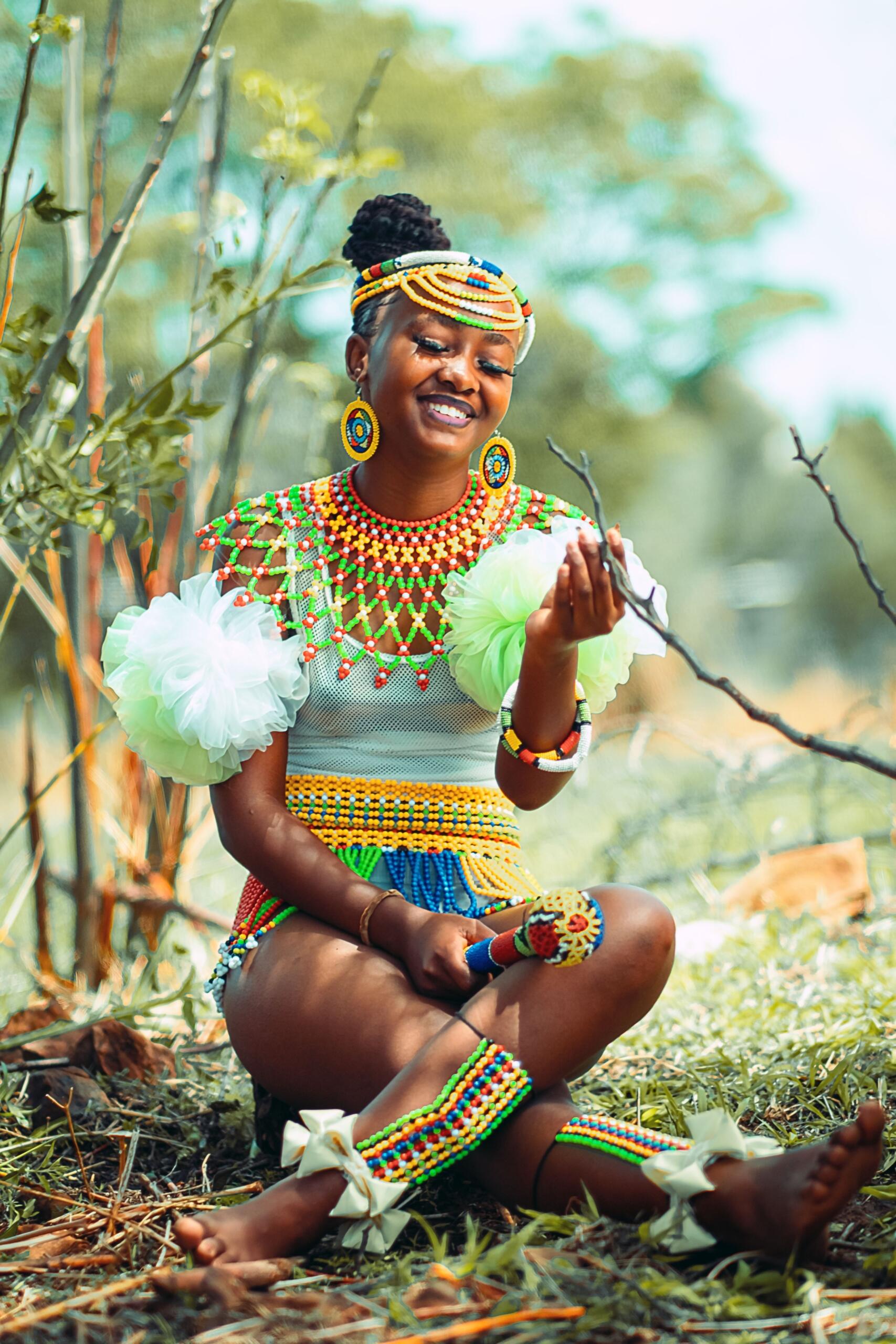
When selecting Zulu traditional attire for woman, consider the event, your comfort and any guidance provided by the family. There is no need to assume that every celebration requires an elaborate outfit.
Likewise, umembeso Zulu traditional attire may differ from what a bride wears later in the wedding celebrations. The family can explain which garments are appropriate for the occasion and whether there are customs you should understand.
For a traditional wedding, Zulu traditional wedding attire may include beadwork, skirts, headwear or other pieces selected according to family preference. The garments can be meaningful without every item having a universally agreed symbolic interpretation.
Remember these practical points:
Traditional Zulu attire can be a beautiful way to express cultural pride, but remember, respectful participation begins with listening and learning.
References
- Vuk'uzenzele. “Celebrating Our Heritage.” South African Government publication. Read the cultural overview.
- Xulu, Clerah Buyisiwe Simangele. “Colour Coding and Its Meaning in Zulu Women's Beadwork in Fashion Design and Decoration.” University of Zululand, 2002. Read the academic research record.
- Klopper, Sandra. “You Need Only One Bull to Cover Fifty Cows: Zulu Women and 'Traditional' Dress.” University of the Witwatersrand, 1987. Read the research record.
- “Traditional Wedding Attire in South Africa: A Cultural Guide.” The Wedding Directory. Read the overview of Zulu bridal clothing.
- “The Moment: Matshepo and Keabetswe's Umembeso.” Sunday Times, 2014. Read the wedding report.
- “Women, Beadwork and Bodies: The Making and Marking of Migrant Liminality in South Africa, 1850–1950.” African Studies, 2014. Read the academic article.
Summarise with AI:
Enjoyed this article? Leave a rating!

 Loading...