

This year, you're finally going to do it. If you've been doing all the right exercises to get surf fit and have cycled through surfing websites to learn the things every surfer knows, the next step is understanding what surf lingo means. Here, you can learn all the words and phrases, how to read swell charts, and more.
How to Read a Surf Report
- Look at swell size, direction, and period - the time between wave crests.
- Consider wind direction: offshore (land to sea), and onshore (sea to land).
- Tide: low means more powerful waves; high means gentler waves.
- For safety reasons, use multiple forecasts to plan your surf.


How to Read Surf Forecast for Beginner Surfers
As a beginner surfer, catching your first wave involves more than casting yourself onto the ocean with a board under your arm. In fact, even experienced surfers don't just toss themselves into the seas with wild abandon.

At least, not without checking a couple of trusted surf forecasts.
Sunny weather, low wind, and sandy beaches don't always mean conditions are perfect for surfing. There might be a storm brewing (or worse: raging!) a few miles out that will impact surf conditions near the coast. What's under the water matters, too. Is your surf spot on a sand break or a reef break?
Shifting sands underwater can affect where your waves come from, and how they form and break. That makes them less predictable. On the other hand, reef breaks create more stable waves, as if the water were combing through the reef.
Luckily, you don't have to know all about these things. Today's surf forecast platforms know what features are in your part of the ocean. They deliver all the information you need for a successful surf session. The trick is understanding what they're telling you.
Swell Size
This is usually given in metres (or feet, if you prefer that system). It represents the size of the wave, also called swell height. As a beginner, you're fine surfing 1 - 3 metre swells. In fact, if you're an absolute beginner, under 1 metre is perfect. You'll be ready for 3-metre waves soon enough!
Across oceans, buoys equipped with sensors measure swell height. All those measurements put together give a picture of swell height across oceans.
Swell Period
Surf forecasts give swell periods in seconds. That's the time between one wave breaking and another one forming at a specific point in the ocean. It sounds complicated; luckily your surf forecast software breaks it down for you.
Six seconds or less means weak waves. Eight to 10 seconds is ideal, especially for beginners.
Of course, you can always get in the habit of estimating swell period on your own. You only need to look at how far the wave breaks beyond the curl. It'll take you a while to get a feel for good swell periods, but don't just rely on your apps! Otherwise, you'll never build that skill.
Swell Direction
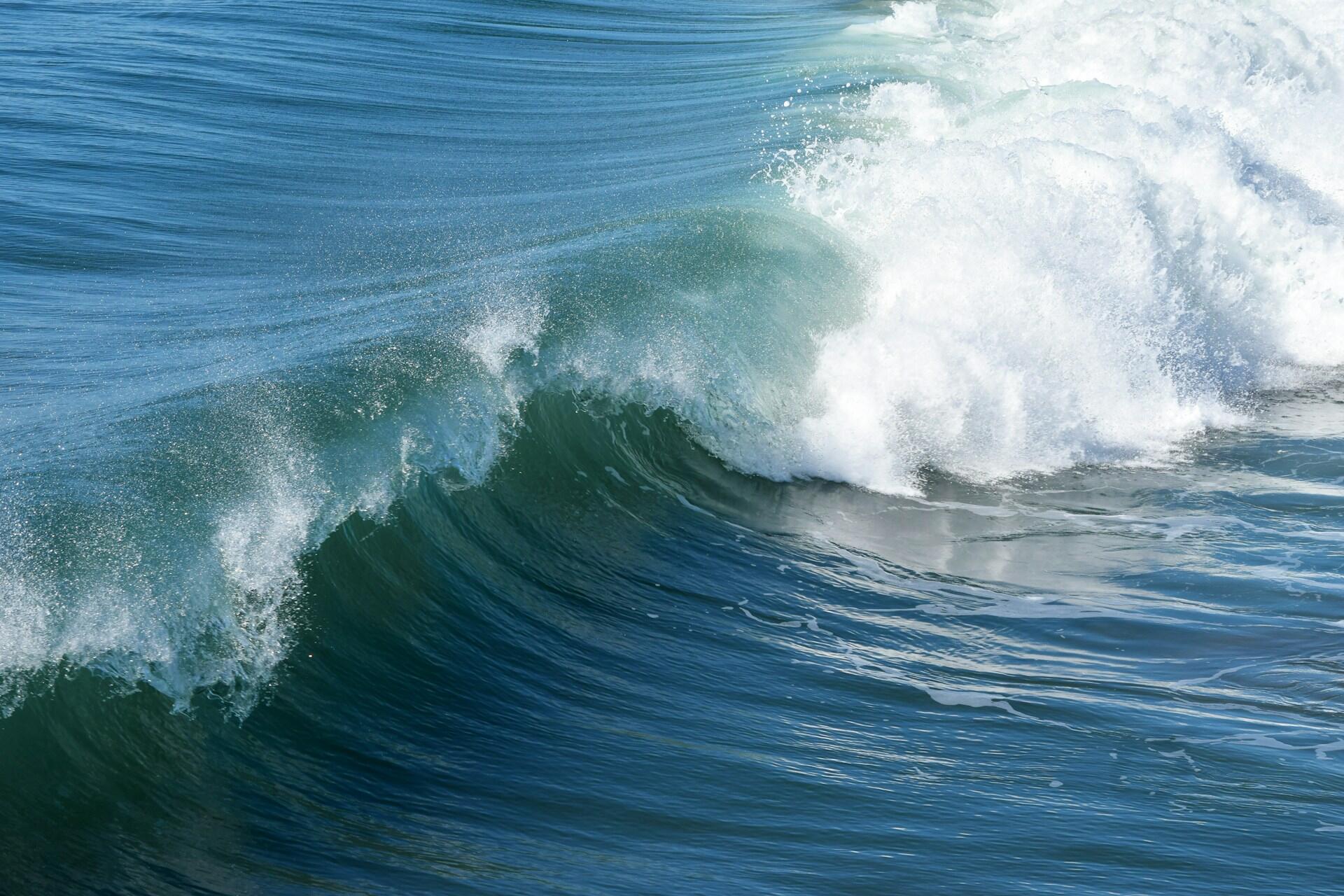
You might have gathered by now that swells are the most important aspect of surfing forecasts. For this indicator, breaks (sand breaks and reef breaks) matter.
Essentially, they're the floor of the ocean near the shore.
A sand break means nothing but sand covers the underwater shelf.
A reef break means corals, algae, and rocks form a barrier to waves' underwater motion.
If your surf spot has a reef break, your waves' direction is likely easier to predict. Sand breaks are a bit more challenging, as there's nothing underwater to regulate their direction. To predict where they're likely to come from, it helps to study nearby beaches' weather conditions and wind direction.
Two More Important Indicators
After swells, wind and tide make all the difference to your surfing. Above, you read about offshore and onshore winds; they describe whether the wind is blowing out to sea or in from the sea, respectively. For the record, surfers want offshore winds because they help sustain the waves. You can still surf onshore winds, but they're not ideal.
Regardless of direction, a wind speed of 1 - 5 km/hour is ideal.
The stronger the wind speed, the more challenging surfing becomes.
As for tides, surfers have only one hard and fast rule.
Low tide means more surfable waves.
High tide means lazy waves with fewer crests.
How the tides affect your part of the ocean matters to your surfing experience. Here, too, underwater conditions play a huge role. Remember that sand breaks make for more unpredictable waves, while reef breaks may be more dangerous. Who wants to fall on a reef their first time out?
Swell Height vs. Wave Height: Understanding Key Surfing Terms
One quick look at search term analytics related to surf forecasts shows 'swell meaning surf' is one of the top questions people ask.
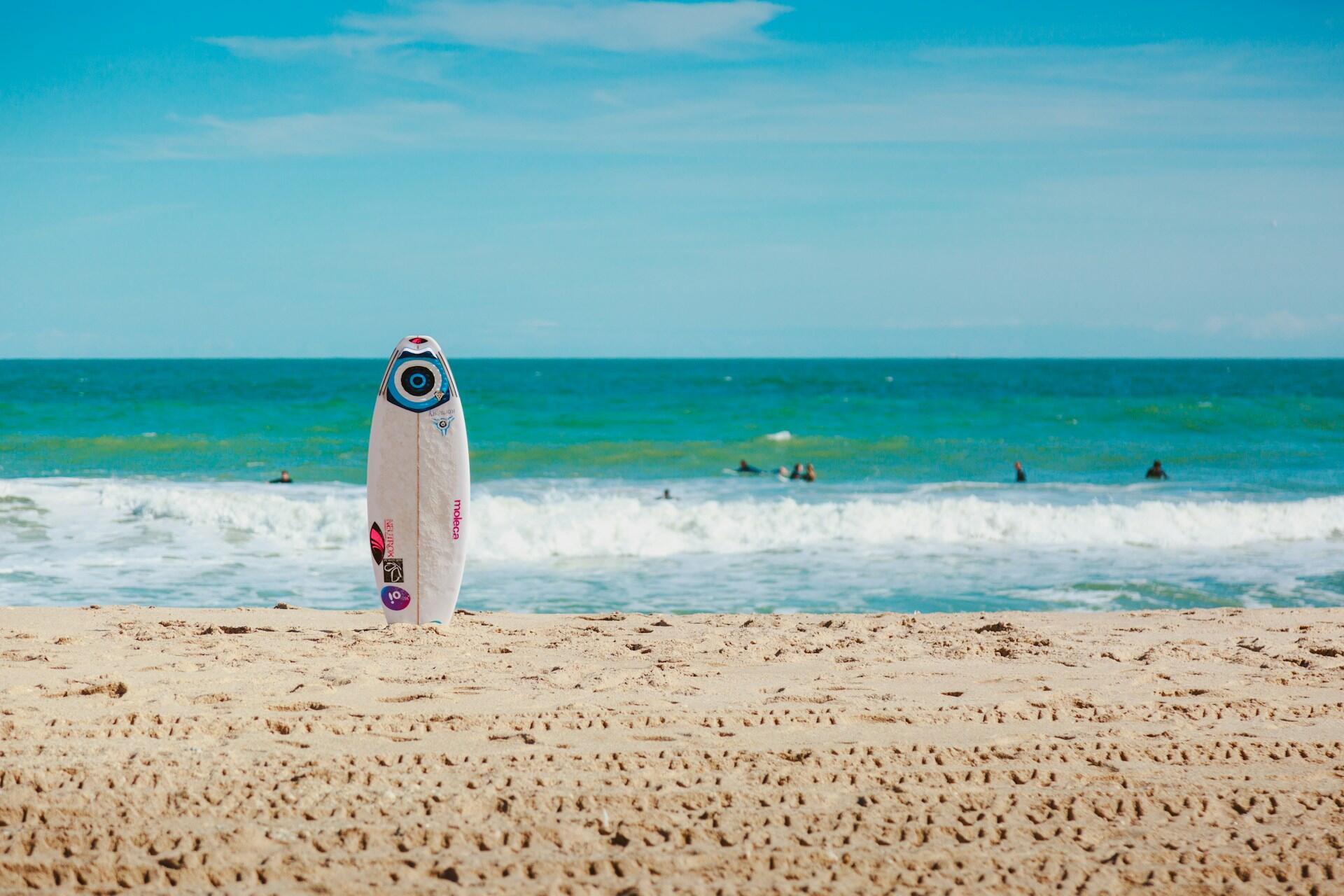
At the risk of getting a bit technical, a swell defines ocean movements.
Weather conditions far out at sea generate that activity. Strong winds, called 'fetch,' blow over open water, driving series of swells.
A bit of basic physics ensures a uniform pattern of swells that eventually reach surfable areas. The closer they get to shore, swells' energy weakens until they break into surfable waves.
With that sorted, we turn to more surf lingo every beginner must know before hitting the waves.
Besides these important surfing words, you have two more to look out for. Both of them relate to surfing safety.
Shorebreak
These are waves that break close to shore.
They are not surfable and can be hard to paddle through on your way to the line.
Closeout
When the waves all break at once.
This releases a lot of energy that knocks surfers off their boards and underwater.
We close out this section with the question beginners often ask: what's the difference between swell height and wave height? Hint: swell height ≠ wave height!
The measure of open-ocean swells.
The height of a swell before it reaches shore. Typically measured with buoys.
The surfable wave size.
Unique to every beach.
Impacted by geographic features.
Where to Find Surf Forecasts
We've come such a long way from the art of eyeballing the sea and guessing surf conditions! We could have a philosophical debate over whether that's a net good, but why do that when surfing awaits? Checking surf forecasts is the easiest way to determine whether it's a fine time for surfing. You have more than a handful of them to choose from.
- Surfline is one of the oldest and best-established surf forecasts. Free access and premium membership packages available.
- Surf-Forecast provides detailed surf breaks for more than 7 000 locations. Bonus: users can set alerts for optimal surf conditions in their area. Very detailed information; perhaps too much for beginners.
- Swell offers free access to most tide, swell, wind, and surf reports.
Consult more than one surf forecast platform to get the most up-to-date information.
Also, talk with more experienced surfers at every surf spot you visit.
The type of surfboard to bring depends in part on the surf forecast. That assumes you have more than one board. If not, surf forecasts can help you decide whether conditions are ideal for the type of board you have. That not only spares you a fruitless trip to the beach, but it keeps you safe, too.
How to Read Surf Report
All this is a lot to remember in all the excitement of loading up your quiver (your collection of surfboards) for a day of surfing. This handy reference will ensure you don't forget any important key surf indicators.
| Forecast element | What it means | Look for |
|---|---|---|
| Swell size | The height of the swell (wave) | 1 - 3 metre waves <1 metre if you're a beginner.< td> |
| Swell period | The seconds that pass between one swell and the next. | 8 - 10 seconds between swells. |
| Swell direction | The direction your waves will come from. | The type of break your surf spot has. Conditions at nearby beaches. Wind direction. |
| Tide | The oceans' cycles of more or less water in a given spot. Known as high and low tides. | Low tide: ideal surf High tide: fewer surfable waves |
| Wind | The direction and force of the wind. | Offshore winds <5 km h.< td> |
| Swell height | The height of the swell before it reaches shore. | 0,3 to 0,6 metres are ideal for beginners. |
| Wave height | The height of the waves as they approach shore. | 1-metre waves or less are ideal for beginners. |
You might consider printing out this chart and laminating it, to keep it safe from salty water splashes. Keep it in your kit bag, along with all your other essential surfing gear. At least until you're a seasoned surfer who can read the ocean like it's second nature.
Summarise with AI:
Enjoyed this article? Leave a rating!

 Loading...