


What Qualifications are Available
- In Pretoria, you can pursue a diploma or a degree in nursing.
- It will take 3 years to obtain a nursing diploma.
- A nursing degree will take 4 years to complete.
From the moment you start attending your first lecture at university or when you submit your first assignment after registering for a distance learning course at university, you are already imagining your graduation day. A degree or diploma is a stepping stone toward reaching your career goals. The nursing diploma or degree really adds value to your life and allows you to set foot in a hospital or healthcare environment with enough confidence to meet all the requirements expected from nurses.
It would be exciting to fulfill all the requirements of a nurse working in a hospital, but before you get to that stage, you need to ensure that you meet the requirements to study nursing in the first place.
If you are in the Pretoria area and you are looking to complete a degree in nursing, the requirements that you need to meet in order to study nursing at the University of Pretoria is much the same as the requirements to get into nursing at any university in South Africa. Before you dream of graduating as a nurse, you need to make sure that you meet the requirements to get into a university to pursue nursing studies.
The general requirements to study nursing are as follows:
- Obtain a National Senior Certificate (NSC)
- Pass the following subjects in Grade 12:
- Mathematics,
- Physical science
- Life science.
Like most universities, the University of Pretoria (UP) requires you to pass the following FET subjects on these levels:
- Mathematics level 4 or Mathematics literacy level 5
- Physical science level 4
- Life science level 4
- English communication skills level 4
Depending on the type of nursing qualification you will pursue, the requirements will differ.
In fact, you can get admission to do a nursing diploma if you have obtained a National Senior Certificate (NSC) as well as a National Vocational Certificate. The difference is that you are required to obtain at least 50% if you are applying for admission with a National Vocational Certificate and you need to obtain at least 55% to be admitted to complete a diploma with a National Senior Certificate. Thus, while you are dreaming of your nursing graduation, you also need to ensure that you are working towards achieving the required marks to get admission into university so your graduation dream can become a reality.
It is extremely important to do your research on what subjects are required for you to complete either a nursing degree or diploma.
Take the first step towards a rewarding healthcare career by enrolling in our comprehensive private nursing assistant classes. Join our program to acquire essential skills, hands-on training, and the knowledge needed to excel in the dynamic world of healthcare as a compassionate and competent nursing assistant.


Where to Study Nursing in Pretoria
Once you are certain that you have met the admission requirements, it is of utmost importance to consider where you will pursue your nursing studies. It is great to consider nursing schools and universities offering nursing courses based on word-of-mouth recommendation. However, it is most important to do your own research on the different universities or nursing schools offering nursing courses, degrees and diplomas.
University of Pretoria (UP)
One of the most common universities that comes to mind when you think of studying nursing in the Pretoria region is the University of Pretoria (UP). The University's Nursing Department at the University of Pretoria was founded back in 1956 and has ever since focused on excellence in teaching and learning. The nursing course at this university is set on providing practical and theoretical knowledge in general nursing as well as midwifery. You will complete your nursing degree over four years. During these four years, the following content will be covered:
- First year: Anatomy, nursing, dynamics of nursing practice, medical terminology, physiology, nursing practice education, and computer literacy.
- Second year: community development, psychology, microbiology, integrative health care
- Third year: Pharmacology, dynamics of nursing practice, nursing practice education
- Fourth year: nursing studies, dynamics of nursing practice, nursing practice education

To gain admission into the University of Pretoria, you will alongside the other common requirements need to go through an interview with university admissions personnel and your minimum admission point score (APS) when you apply must be 28.
Tshwane University of Technology (TUT)
At the University of Technology (TUT), you can choose to join the Adelaide Tambo School of Nursing Science that was founded and named after the former chancellor, Mrs. Adelaide Tambo who devoted her own life to nursing. The university seeks to fulfil their responsibility by providing nurses with education that will ensure optimum health for South Africans who are treated by the nurses who have graduated from TUT.
In Pretoria, you are spoilt for choice in terms of the universities that you can choose to study at.
Nursing Colleges Near Me
If you are unsure whether nursing is right for you or not, you can get a taste of what nursing would be like by completing a certified course in Ancillary Health Care which carries an NQF level 1. You could also apply to the Pretoria Technical College and try out the Ancillary Health Care Course for this course, you simply need to have completed either grade 9 or grade 12. You would also have to complete at least one business related subject.
Within a mere 12 years, you can decide if nursing is the course for you or not. Plus having a certificate albeit an NQF level 1 certificate is having your foot in the right direction should you been keen on becoming a primary healthcare worker or an ancillary healthcare worker.
It is always a good idea to try out courses and certified courses pertaining to the career that you would like to pursue once you have completed school or while you are at school. This way, you get the gist of how complex the subject content will be to grasp. If you find a particular course to be overwhelming, you know that you may need to search for a tutor to help you understand the content.
If you are in search of online nursing classes, you may want to visit our Superprof site in order to find the right tutor.
Competencies to Develop as a Nurse
During your years of studying to become a nurse, you will learn some of the responsibilities that you will need to take on when you are actually in the health care setting. You will learn how vital it is for you to:
- Observe, listen and talk. It is through observing patients continuously and by talking to your patients that you will understand their symptoms and make conclusions about whether they are improving or not.
- Be organised and recording everything. When seeing to so many patients, you need to ensure that your organisational skills are on point. You also need to make sure to record everything down clearly so that you never forget any important details.
- Understand the rules and ins and outs of administering medication: Part of a nurse's job is to administer the right medications to the right patients. You need to be clued up on how to do this task.
- Be able to supervise. While you are studying to become a nurse, you are the one that is supervised by experienced nurses. However, once you become a nurse, you will have to supervise other nurses who are training to become nurses

Nursing Diploma Requirements
Not everyone is cut out to complete a nursing degree. Some people could get far in their career as a nurse even though they completed a nursing diploma and not a nursing degree.
You should not give up hope on nursing and the idea of helping people if you don't get admission into a university in Pretoria to complete a degree.
To complete a diploma in nursing, you will need to take the following steps:
- Submit your grade 12 and 11 results.
- Send a short CV.
To be admitted to complete a diploma in nursing, you need to make sure that you meet the following admission criteria:
- Complete matric with a National Senior Certificate with a 50% average
- Get 40% in life and physical sciences
- Pass mathematics with a 40% or mathematical literacy with a 50%
- Obtain at least 40% in English
- Computer literacy with a mark of 40% or over isn't a requirement, but is highly recommended
You can also gain admission to complete a nursing diploma at most nursing colleges even if you have completed a National Vocational Certificate with an average of 55% or more. You also need to make sure that you meet these other requirements if you have completed a National Vocational Certificate:
- Life science with a mark of 50% or over
- Mathematics with an average of 50% and mathematics literacy with a minimum of 60%
- English communication pass with 50% or more
- Computer literacy is also recommended, and you should have obtained 40% in computer literacy
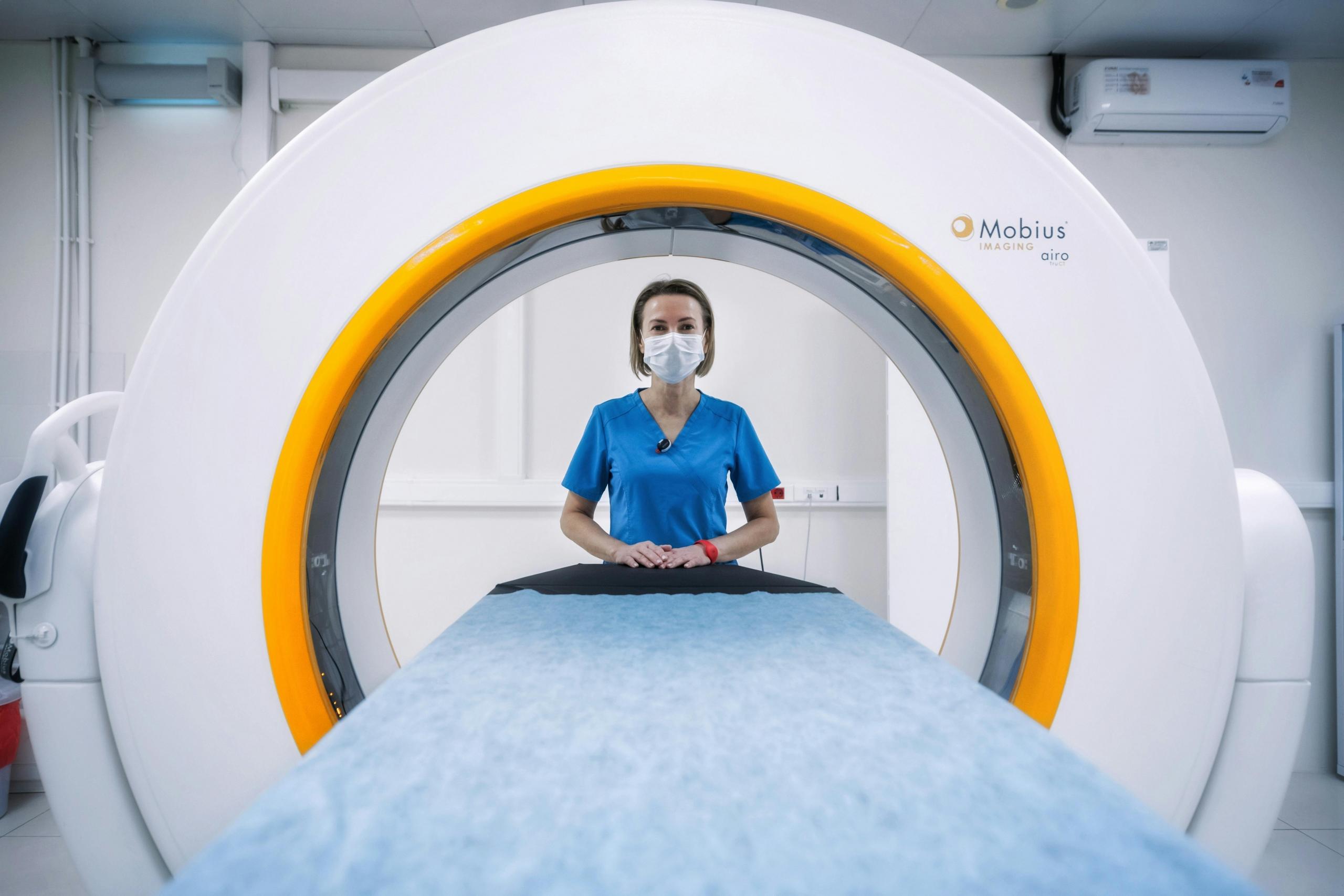
If you get into a nursing college to complete a nursing diploma instead of getting accepted into a university to complete a degree, you need to keep your chin held high and remember that you will still graduate after 3 years and get to wear your nurses' scrubs. You can always choose to study further thereafter.
A Recap of the Steps to Becoming a Nurse
To become a nurse, you will need to meet certain educational and professional requirements, and these are set out below.
- Obtain your Matric certificate. Make sure that you take and pass all the subjects required by your future nursing school or university.
- Choose between a 3-year Diploma in Nursing which will allow you to work as a registered nurse, or a 4-year Bachelor of Nursing degree (BCur).
- Do your research to verify that the nursing school or university you attend is accredited by the South African Nursing Council (SANC). Pretoria offers you the chance to study at several reputable public and private nursing colleges.
- Complete your clinical training. Your nursing course will include theoretical and practical components. You will need to perform clinical training in hospitals and other healthcare facilities to gain hands-on experience in nursing.
- Pass the South African Nursing Council Licensing Exam: After you complete your nursing qualification, you will need to pass the SANC exam in order to become a licensed nurse.
- Register with the South African Nursing Council. Once you pass the Licensing Exam, you will also need to register with SANC to legally work as a nurse.
- Engage in Continuous Professional Development (CPD): To maintain your nursing license, you need to continue your learning by taking steps for ongoing professional development.
Although it seems like a long road, don't give up on your dream to become a nurse.
Summarise with AI:
Enjoyed this article? Leave a rating!


 Loading...
I want to study diploma in nursing with subject. Sepedi 70-79,Biology 60_ 69,English 40_ 49, Afrikaans 40_49, Agriculture 40_49, Geography 40_49
Hello Molekoa
We encourage you to reach out to the nursing colleges that interest you to find out what their entry requirements are. We wish you all the best with your future studies.
Hello I’m a Namibian and would like to know if one can study in South Africa for nursing and perhaps get employed
Hello Junior
South African universities and other training institutions usually accept students from other countries. You’ll need to check the policies and fee structures of the universities and schools that interest you. To work as a nurse in South Africa, you’ll need an appropriate work permit and a recognised nursing qualification.
Hi, I’m going to be a grade 12 this year and i need some advice, I do maths literacy , biology, tourism, business studies ,Geography ,English as a home language and French as a second language will it be possible for me to get a nursing degree with this subjects? and also if I can will I be able to advance my studies to eventually become a general practitioner as being a doctor was Mt goal initially
Hello Jasmine,
We recommend that you reach out to a careers counsellor, who will be able to provide you with the guidance you need. Most tertiary institutions offer this service free of charge, so you should be able to find a counsellor near you.