Yoga has been proven to reduce stress, balance hormones, increase metabolism, strengthen joints, tone muscles and help with cardiovascular health. If all those benefits aren’t enough, you will also become more flexible and less injury prone the more yoga you do.
The objective of yoga is to create harmony and balance between the body and the mind. While you are giving your body new challenges through physical exercise, you are also stretching your mind to go to new places. This leads to a greater body-mind connection, improved holistic health and you’ll be more in touch with your body to ensure you remain mobile and healthy for longer.
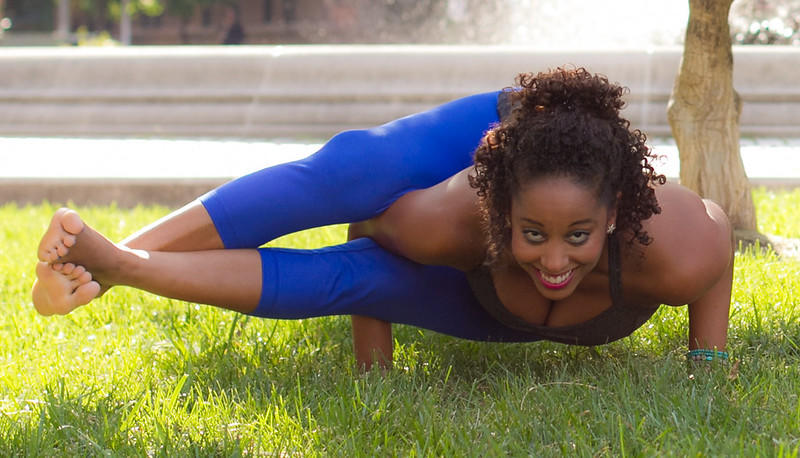
If you are looking for poses that will help you ease into yoga for the first time, you’ve come to the right place. Whether you are a runner with stiff legs, someone sitting at a desk the whole time, or simply have a tired body, these 10 poses will not only improve your flexibility, but if you follow calm and relaxed breathing, you’ll gain all the numerous other benefits yoga has to offer as well.
Ready to learn about our selection of eleven asanas for flexibility?


Cow Pose (Bitilasana)
Target areas: Spine, Hips and Shoulders
Core Benefit: Spinal Extension
A lot of poses in yoga have quite appropriate, descriptive names. Bitilasana is the Sanskrit name for this pose, but it is also called cow pose as you'll try to mimic the dipped back of a cow when doing it.
To do the pose you’ll have to go down onto all fours where your hands are under the shoulders and with bent knees, directly under your hips. Slowly as you breathe in you start to lower your belly in a controlled way towards the floor while lifting your head to look to the front. Your spine curves downwards now to create space and mobility in between the vertebra while also working on the shoulders and hip joints. Try and open the heart as you broaden your collar bones and expose them in the front and when you are ready to exhale, you’ll move to the next pose (cat pose).

Cat Pose (Marjaryasana)
Target areas: Spine, Hips and Shoulders
Core Benefit: Spinal Flexion
Cat pose is usually used in conjunction with cow pose as the objective is to take your spinal cord into a position of flexion, the exact opposite to cow pose. Just imagine the shape of a scared cat; their backs are rounded to the ceiling while all four legs are pointing downwards. Staying on your hands and knees, you’re going to move into your cat back by tucking your chin towards your chest, pulling in your belly button, and doming your back towards the ceiling. To go further you can press your hands into the floor and tuck in your pelvis, like tucking in your tail bone under your body.
On the next inhale you’ll move back to cow and continue with cats and cows for about 3-4 rounds, syncing your breath with your movement and closing your eyes to relax.

Cobra Pose (Bhujangasana)
Target Areas: Digestion and Spine
Core benefit: Ease back pain
Cobra is a classical yoga pose and can help to relieve back pain in a lot of people. Yogis also believe that it will fire up the digestive system and you’ll feel stretching the entire front part of your body while the muscles in your back, arms and shoulders will strengthen.
Lie flat on your stomach you place your hands directly under your shoulders. Using your back muscles slowly try and lift your head and shoulders from the floor, just supporting the lift with very gentle pressure in your palms. Don’t press too hard into your hands and squeeze your butt and activate your legs to protect the lower back. People with lower back problems should take extra care, and if you feel a bit of pressure on the lower back you can widen your legs a bit, but do not crunch into the lower back.

Low Lunge Pose (Anjaneyasana)
Target Areas: Hips, Groin, Legs, Chest
Core Benefit: Stretch and relieve tight muscles in the hips and legs
Low lunge is a fantastic way to open your hips, stretch the groin area and stretch the hamstrings and quadriceps. Different variations will have different benefits and if you lift your arms you’ll also work into the shoulders and the intercostal muscles. It’s also a great pose for focus and establishing good breathing behaviours in what might be an uncomfortable pose at first.
There are different ways of going into the pose, the easiest is moving from a plank or a downwards facing dog. For now, let’s work from a plank which is the same position as a push-up. Step your right foot forward and place it just outside the right hand. Lower the back knee onto the mat and then slowly heel toe your right foot to be just inside of the right hand, lifting the right hand to get it past. Now gradually and slowly lift your upper body and arms up to the sky, using your hands to press you up on your knees if needed, balancing on the left knee at the back and the right foot in front.

Open your collar bones and try and gently get the left hip to lower, crawling your right foot forward while your leg stays bent, until you feel a stretch in the groin. To come out of it drop your hands onto the mat and step the right knee back to position it next to the left. You are then ready to go onto the left side, starting with a plank and repeating the whole pattern.
Half Split Pose/Half Monkey Pose (Ardha Hanumanasana)
Target Areas: Legs, Hips, Lower Back
Core Benefit: Stretching the lower back, back of the legs and opening the hips
The half monkey pose is setting beginners up to eventually progress towards a full split pose. There are always regressions like this to make poses easier and you should certainly not be worried about being flexible when you start to practise yoga. The shape of this pose is similar looking to a spilt except you will try and distribute weight between the foot in front and the opposite back knee.
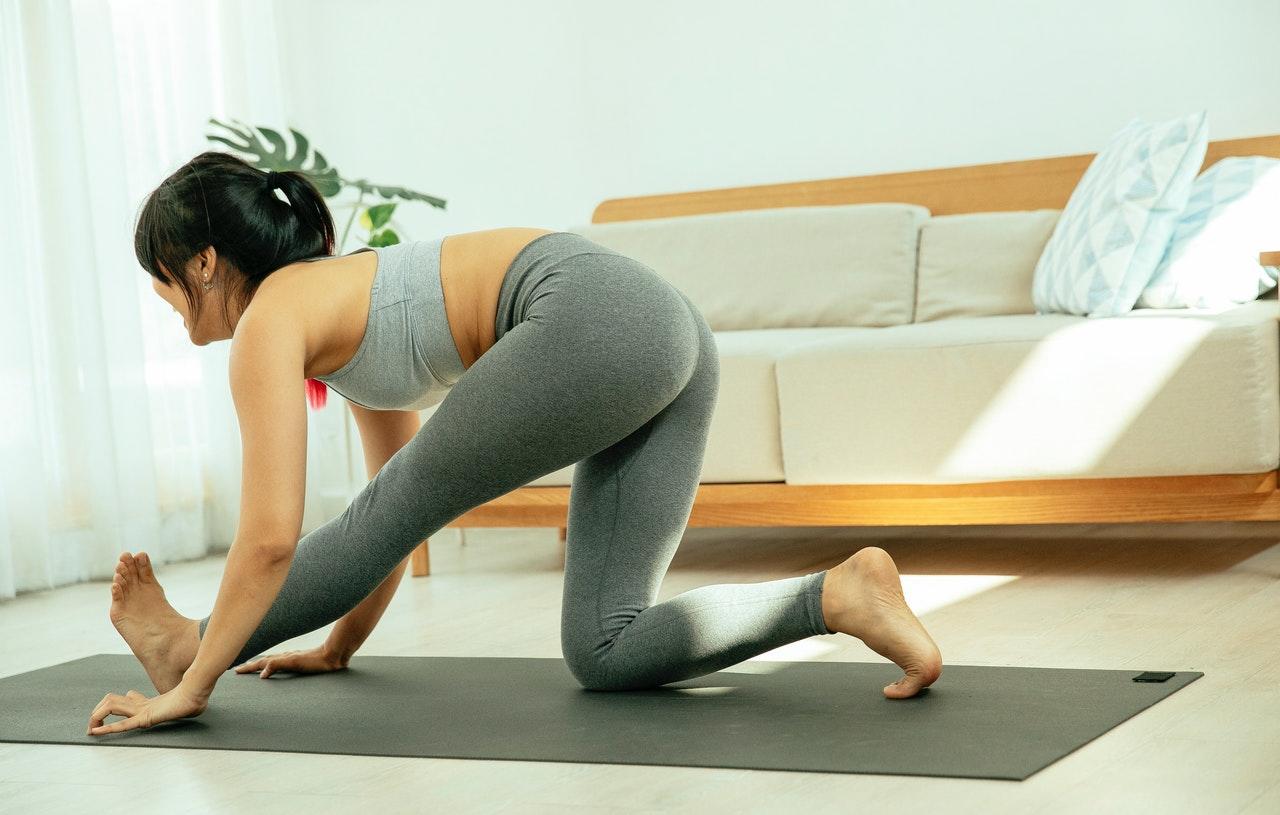
Yogis have different ways to also get into this pose, one way is to stand on your knees, extend the right leg in front of you while your hands are resting on your hips, trying to get the right leg as straight as possible. Hinging at the hip fold forward and drop your hands on either side of the extended right leg, which should be resting on your heel. To make the pose more effective you can try and lengthen your spine and fold forward as far as you can before allowing the head to drop and the neck to relax.
Pigeon Pose (Eka Pada Kapotasana)
Target Areas: Hip flexors and lumbar curve
Core Benefit: Opening hips
One of the favourite hip openers yoga teachers enjoy using in a flexibility yoga sequence is the pigeon pose. It works deep into the hip flexors, but it also helps with the realignment of the lumbar spine.
The transition into a pigeon pose is a bit of a tricky one. The best idea is to get a visual representation to see where you are moving towards, like the one we included in this article. Most yoga sequences move to pigeon pose from a downward facing dog, but we’ll explain it as if you are standing on all fours. You’re going to try and bring your right knee close to your right wrist, place it on the mat and then spin the right ankle across the floor to get it closer to the left wrist. The shin should be almost parallel to the front of your mat. Then gradually use the back foot to walk your back knee backwards as you lower your groin towards the floor. You should feel an opening in the right hip and try to keep the hips square and balanced for optimal results. Come out the same way you entered the pose and remember the left side to ensure you have a balanced practice.

Downward-Facing Dog (Adho Mukha Svanasana)
Target areas: The entire body, especially the shoulders, arms, spine and back body
Core Benefits: Build strength, flexibility and focus
This is one of the most used poses in Vinyasa, Hot Yoga and Hatha Yoga, but it is also used frequently in most other styles of yoga. It’s great to build overall strength, spinal alignment and stamina, while also allowing us to focus on teaching our bodies and brains to breathe in uncomfortable upside down positions (inversions).
Imagine you’re trying to make a pyramid shape between your body and the floor. You are going to do this by simply raising your hips to the ceiling from a plank or push-up position. First try to get a straight back by pushing your palms into the floor to elongate the spine and arms and then gradually while keeping your hips and back in that exact position, try to lower your heels to straighten your legs.

Upward-facing Dog (Urdhva Mukha Shvanasana)
Target Areas: Back muscles, Shoulders, Arms, Stomach
Core Benefits: Stimulating the core area and deep back stretching
Another favourite, the upward-facing dog is the pose is the one that you might recognise from magazines and articles on yoga. The shape of it is similar to the cobra pose, but it’s just more lifted of the floor and goes a bit deeper into the various focus areas. Because you are placing your weight onto your palms and arms it’s a great arm strength builder.
From the previous pose, the down-dog you can move back to a plank and then in a controlled way lower your hips towards the floor, keeping the arms straight and the upper body lifted and facing forward. Your hips should be just off the floor and if you try and broaden your chest and imagine you are bringing your shoulder blades closer to each other, you’ll get to feel a good opening in your stomach and the chest area.

Butterfly Pose/Bound Angle Pose (Baddha Konasana)
Target Areas: Hips, inner thighs and Groins
Core Benefit: Opening hips in a relaxed and focussed way
This is a lovely relaxing seated posture with that gently opens the groin and hips. Most of us sit too much in cars or in front of computers and this can shorten and tighten the areas around the hips, sometimes leading to lower back pain.
Sit on your mat and bend your legs so that your feet is close to your bum. Slowly allow the knees to drop open to both sides as you open your legs and allow the soles of the feet to touch. Try and sit nice and upright, you might already feel the opening in the hips and the increased circulation in the pelvic area. If you want to go deeper into the pose you can peace grip your big toe with the middle and index finger and fold forward trying to get your forehead to your feet. Always move slowly if you fold forward and come out of it.

Seated Forward Fold Pose (Pashimottanasana)
Target Areas: Back, Hamstrings, Calves
Core Benefit: Stretch the back of the legs and back while calming your mind and body
This is a common pose used in a variety of sport types and it is an excellent pose to help open the hips and hamstrings. It’s excellent for runners and cyclists to bring flexibility back into shortened muscle fibres.
Start in a seated position with both legs straight in front of you. On an inhale try and sit tall, creating space in each vertebra with a straight spine. Then hinge forward from the hips as you try and lower your upper body forward and down onto your legs. Try and get your belly on your legs for spine elongation and relax your neck as your head drops forward.

Plough Pose (Halasana)
Target Areas: Back, Neck, Shoulders, Heart,
Core Benefits: Improve blood circulation while strengthening and stretching back muscles
Plough pose is excellent for increasing flexibility in the back body, including the legs and all the way down your back. It is also an inversion pose which means it’ll send blood rushing to your head and heart, increasing the benefits oxygen has on your body overall.
Lying flat on your back, start the pose by lifting your legs to 90 degrees. Then tilt your pelvis up as you bring your legs over your head, using your hands on your lower back to lift your hips and support your lower back. You should have the weight on your shoulders, not your neck, and keep looking to your legs to protect your neck. Legs can be bent or straight, but you’ll notice how straight legs will work on the legs as well.

Putting It Together in a Flexibility Yoga Sequence
Now you can put them all together in your own little sequence, either in the order we laid them out, or add them to your own stretching routine with other poses.
For these more relaxing and stretching poses, it is recommended that you stay for 1-2 minutes in the pose on each side. Breath is probably one of the most fundamental things in yoga, so ensure you are breathing slow and deep, trying to soften and move deeper into the pose with each exhale.
Most beginners are used to todays’ pressurised and driven world, so the best advice we have for a beginner is to go slow, learn about your body and see if you can relax into poses while you learn the foundations.
It’s also important that you know the risks involved, so do your research and speak to your doctor before taking on a new fitness routine, especially if you are pregnant or had a heart bypass or other complex surgeries. Read more about the biggest mistakes you can make while practising yoga here.
To find the optimal ‘sweet’ spot for each asana (pose) is also a balancing act between strength and flexibility, working hard and softening or releasing into a pose. There are various ways to do poses to create tension and release, and the more you learn about your body the more you will be able to find subtle ways in which you can utilise these. You can also learn more about becoming flexible in this article.
We hope you enjoy the discovery of a happier, healthier, you through these poses. If you need an experienced yoga teacher in your area, we list a wide range of yogis right here on Superprof.
Summarise with AI:
Enjoyed this article? Leave a rating!

 Loading...