


Over 130 million people speak German around the world, making it one of the most spoken languages today. If it is your intention to learn German, it would be a good idea to know a bit of German language history, so that you can understand the nuances and differences in the different countries.
In most cases, people don’t know how a language evolved and how its characteristics came about.
Knowing the history of a language, which you are considering studying, is very useful since it will help you understand the origin of certain words and how the grammar and the construction of the language evolved over time.
The history of German will also set out how it is that Standard German, which is mostly spoken and studied today, became so important and prominent. There are, of course, still other versions of the German language and many dialects still in use today.
Today’s article will take you through the origins of the German languages, as well as the history of the many German dialects. This will bring you a deeper understanding of the richness of the German languages and their culture. Hopefully, you will be encouraged to keep on learning the language, and direct you to choose lessons more appropriate to your needs.


How Did the German Language Originate?
A brief excursion into German language history will reveal that the language has undergone several periods that have shaped and fashioned its pronunciation and structure. History has played a defining role in the different kinds of German dialects and languages that we know today.
German belongs to the family of Indo-European languages - a group of languages native to southern and western Eurasia - which includes most of the European languages spoken today.
In particular, German forms part of the West Germanic languages, along with Dutch and English.
During the Early Middle Ages, the West Germanic languages were influenced by the inward-looking development of Old and Middle English to the North, while the High German consonant shift was occurring, in the west, during the migration period.
This shift caused a clear differentiation between Old High German and Old Saxon.
The High German consonant shift relates to phonological development, which means that a sound change took place and affected the language over a period of time.
Examples of this are the appearance of new sounds and words where, for example, the umlaut came about in vowels, such as ä, ë, ü, ö.
In the case of the West Germanic languages, this consonant shift brought about Old High German, which can be regarded as the earliest stage of the German language. This was quite a long period of time, lasting from 750 to 1050 and represented the initial stages of German.
At this point the language could be regarded as a dialect and not yet an established, standardised language. Old High German, was spoken chiefly by independent tribal kingdoms located in Central Europe.
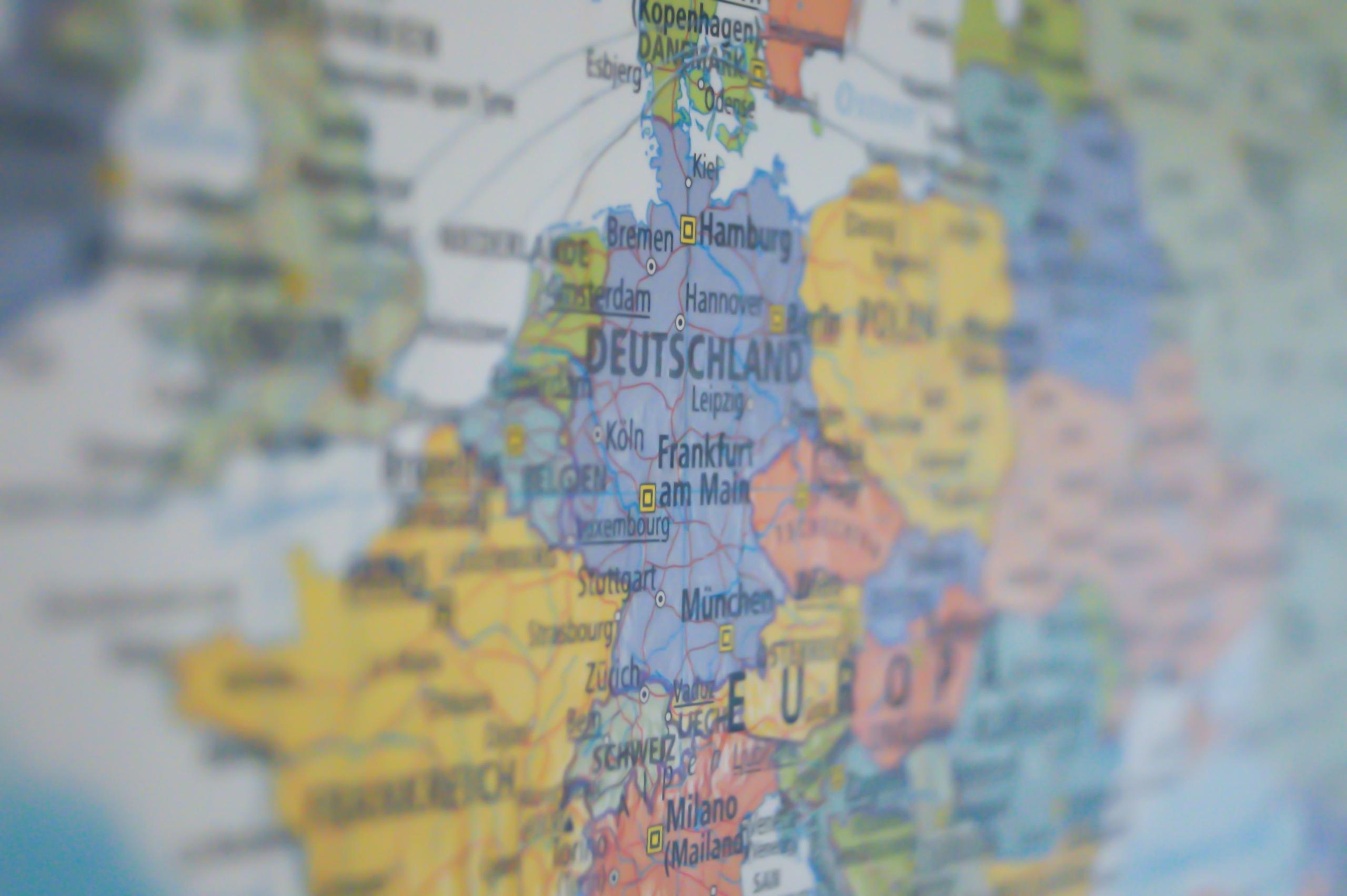
Written documents from this period are a rarity; the only one known to have survived is the German Abrogans glossary, which is thought to be the oldest book in the German language.
A preserved copy of this Middle Latin-Old High German glossary can be found in the Abbey Library of St Gall in St Gallen, Switzerland. This ancient document is regarded as the Old High German thesaurus of its time and is, thus, an extremely valuable resource, since it contains 3 670 of the oldest words originally used in Old High German.
Territory and History
Old High German was established and used initially in Central Germany, as it is known today, with other languages being utilised in the surrounding parts of Germany and neighbouring countries.
In the Western parts of Germany, the Franks took on the Gallo-Romance language and to the north, the old Dutch varieties of the language were kept, unaffected by the High German consonant shift (Second Sound Shift).
The Lombards retained their own dialect, in the south, until they were subjugated by Charlemagne in 744, after which the Romance language was acquired.
Until there was a German push to the east – also known as Ostkolonisation – no German language had been spoken in that part of the country.
The Monastery Dialects
A very interesting feature of German language history are the monastery dialects.
As no standardised versions of Old High German existed, except for the glossaries and manuscripts produced by the monasteries, the vernaculars which thus arose were referred to as ‘monastery dialects’. These dialects were then influenced by their environments and, thus, created sounds which were specific to their particular surroundings.
Another interesting detail about Old High German is the fact that, of the different dialects which were developed in particular territories, some have evolved and are, even today, still spoken in certain cities or regions.
During the Old High German period, there were several vernaculars within the territory. These could be divided into two main groups: the Central German (Middle German) and the Upper German dialects.
Middle German or Central German
Central German dialects were mainly spoken in the Rhineland region, in the west, extending towards the previously eastern territories of Germany, which belong to Poland today.
The Middle German or Central German group dialects were impacted on by the High German consonant shift, but to a lesser degree than the dialects of the Upper German region.
Several of these dialects continued to evolve to the extent that they are still spoken dialects in cities and regions around present-day Germany. During the Old High German period, there were up to eighteen dialects actively in use.
Upper German
The other German dialectical group is named the Upper German group. It is spoken predominantly in present-day southern Germany, central and northern Switzerland, Austria and even in the region of France close to the German-Swiss border.
During the Old High German period, mainly Bairisch (Bavarian) and Alemannic were considered part of the Upper German dialects group. These dialects are spoken over a wide territory, and there are several ways in which they are represented in the various cities and regions.
Old High German developed over a period which was marked by the monastery dialects, as it was a product of the monasteries, in cities such as Fulda and St Gallen. These cities worked on the translation of Latin texts as well as the explanation of glossaries of the Old High German language and this was, therefore, a very important period for literacy, literature and poetry in particular.
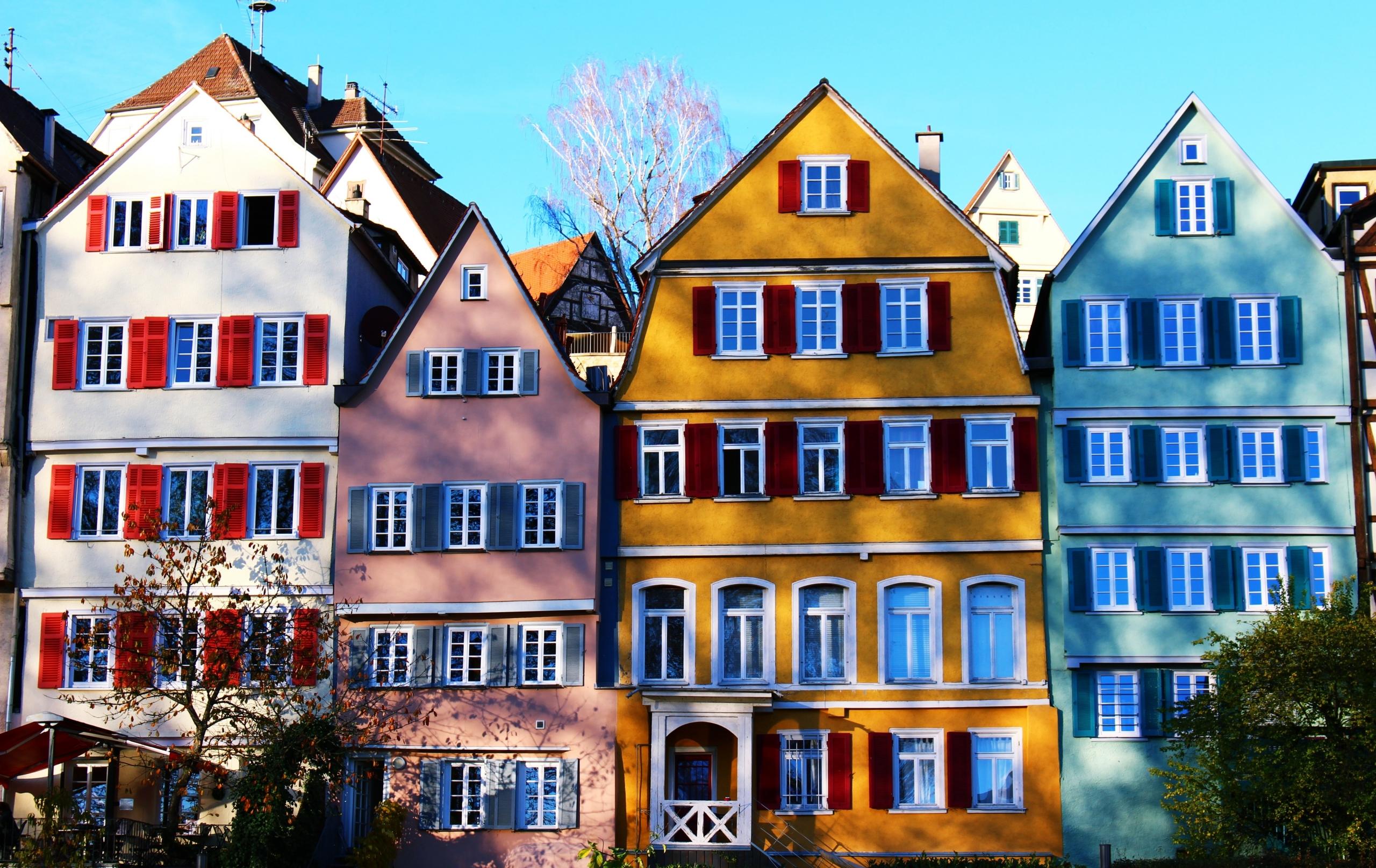
There was, during this period, a strong dedication among monks and scholars to preserve Old High German, in particular through epic poetry. Charlemagne, himself, during the Carolingen Renaissance, ordered that great care should be taken to preserve epic poetry manuscripts for posterity.
Subsequent generations were not as dedicated in their care of manuscripts entrusted to them, which led to the loss of numerous Old High German records. Charlemagne’s successor, Louis the Pious, in particular, oversaw the destruction of his father’s collection of Old High German epic poetry as well as content regarded as pagan.
Several monks and authors of this period, including an abbot at Fulda’s monastery in 822, Rabanus Maurus, played a vital role in the refinement of German literacy.
Notker Labeo, a Benedictine monk, also referred to as Notker the German, dedicated much of his time to develop an orthography (a conventional spelling system) and an imposing writing style for Old High German.
The End of an Era: Old High German
While it was difficult to track down all the dialects that make up Old High German, the end of the period was less debateable for several reasons.
The first being that, during the 11th century, sound changes were reproduced in the spelling of words, which led to a total remodelling of the system of adjective and noun declension. Additionally, the death of Notker Labeo in 1022 marked the end of his life-long work of translation of various Latin texts into German.
Encyclopedia.com describes his contribution as follows: His contribution to the German language may be compared to Alfred the Great’s work in making Anglo-Saxon a literary language. Like Alfred, Notker translated the Latin classics to make them available to a wider audience.
In recognition of his service to the German language, he was posthumously renamed Teutonicus.
The middle of the 11th century (the time of his passing), thus, marked the transition to Middle High German.
These days, German dialects and languages bear testimony to the richness of the language and the influence that the Second Sound Shift had on the West Germanic language in Central Europe, leading to the creation of the dialects and the languages we know today.
When you’re travelling in Germany, Austria or Switzerland, you would be fascinated by the differences in phonetics and pronunciation between Austrian German and Swiss German and each country’s official language.
Culture and history have also strongly influenced the preservation and development of the language.
These languages were all influenced by the Second Sound Shift and had the Old High German period acting as an umbrella under which the different German dialects and languages could appear and develop.
Why not acquaint yourself with this very interesting language and study its linguistics?
Nutze den Tag!
Summarise with AI:
Enjoyed this article? Leave a rating!

 Loading...
