

Reading is no longer limited to printed books. In South Africa, children, teenagers and adults can increasingly access stories, textbooks and other reading material through mobile phones, tablets and computers. Digital reading includes the following formats: e-books, mobile-friendly stories, digital libraries, reading apps and audiobooks.
This shift is particularly relevant in South Africa because access to mobile technology is much more widespread than access to fixed internet connections. According to Statistics South Africa's 2024 General Household Survey1, 96.1% of households had access to at least one mobile phone, while 82.1% had internet access through at least one means. Mobile broadband was the most common form of internet access, with 75.6% of households able to access the internet through mobile devices.



Reading in the Digital Age
Digital reading does not replace printed books, and access to technology is not equal across all households. However, mobile reading and digital resources can provide another way for South Africans to access books and literacy materials, particularly where physical books are difficult to obtain.
Digital reading has developed alongside the expansion of mobile technology. A learner can now read a story on a smartphone, download a book to read offline, listen to text using text-to-speech technology or access digital learning material through a school platform.
For South African readers, the growth of mobile access is particularly significant. Statistics South Africa reported that mobile broadband access increased from 28.0% of households in 2010 to 82.1% in 2024 when measured as access through all available means. By comparison, fixed internet access at home stood at 17.4% in 2024.
Mobile-friendly reading platforms have become an important part of South Africa's digital literacy landscape. Services that are designed to work on mobile phones can potentially reach readers who do not have a computer or fixed broadband connection at home.
Digital reading can also support multilingualism. Platforms such as African Storybook provide children's books in hundreds of African languages, while South African organisations such as FunDza produce locally relevant reading material for young people.
E-books and Mobile Reading

E-books and mobile reading have created additional ways for South African learners and families to access reading material. Instead of relying solely on printed books, readers can use smartphones, tablets and other connected devices to access stories, educational texts and digital libraries.
This can be particularly useful where access to physical books is limited, although digital reading still depends on factors such as device availability, connectivity and data access. South African organisations have developed digital platforms that respond to these circumstances, including services offering mobile-friendly content, downloadable books and resources that can be used offline.
Smartphone Access
Mobile phones are particularly relevant to digital reading in South Africa because they are widely available. The General Household Survey 2024 found that 96.1% of households owned at least one mobile phone.
This does not mean that every household has a smartphone or that every person has reliable internet access. It does, however, demonstrate why mobile technology is an important channel for distributing digital reading material.
FunDza provides one South African example. Its FunDza.mobi platform is designed as a mobile-friendly "library on a phone" and can also be accessed using an Android application. The organisation publishes stories, blogs and other reading material for young people.
FunDza's approach has a particular focus on teenagers and young adults. The organisation states that its material is intended for young people who may not previously have identified themselves as readers and that locally relevant content is central to its work.
Digital Libraries
Digital libraries can provide access to a much larger collection of reading material than a single device can physically store.
African Storybook is one example. Its platform provides open access to picture storybooks in African languages. Readers can read stories online, download them for offline use or print them. The platform also provides a Reader App that allows downloaded stories to be read without an internet connection.
This offline function is particularly relevant where internet connectivity is intermittent. A parent, teacher or tutor can download reading material while connected and then use it later without maintaining an active connection.
Snapplify provides another model of digital reading. Its education platform gives learners and educators access to a digital library containing curriculum-aligned educational resources, textbooks, study guides and other material. Snapplify also allows content to be downloaded for offline reading.
South African Digital Reading Platforms
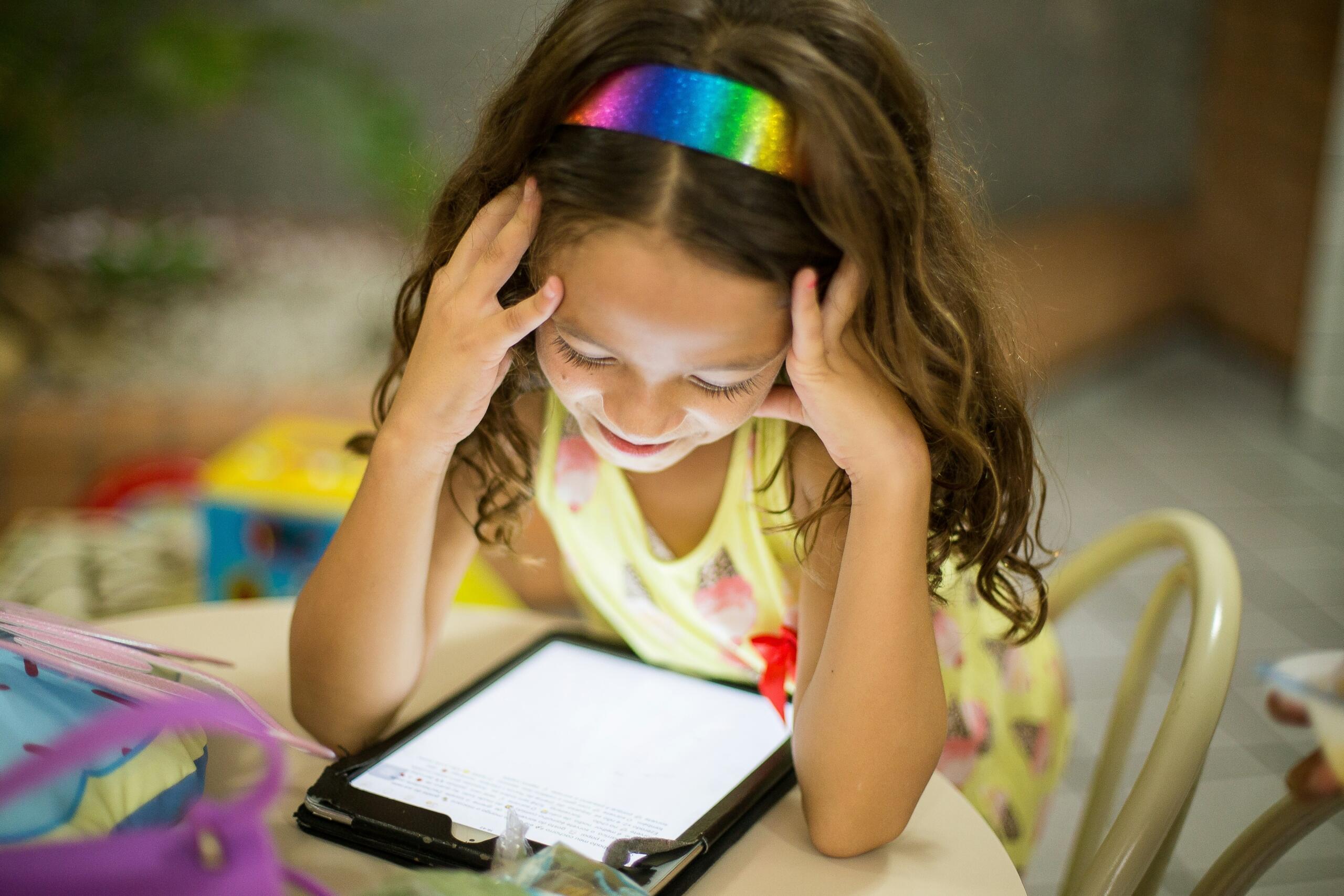
Several platforms are particularly relevant to South African learners and readers;, and we'll explore these below.
| Platform | Main focus |
|---|---|
| FunDza | Reading for teenagers and young adults, locally relevant stories, articles and online learning |
| Snapplify | Digital educational content, e-books, textbooks and learning resources |
| African Storybook | Free picture storybooks in African languages for young children |
| Nal'ibali | Reading for enjoyment, storytelling and multilingual literacy resources |
| Book Dash | Free children's picture books, including books translated into South African languages |
FunDza
FunDza Literacy Trust operates FunDza.mobi as a mobile reading platform. Its reading programme provides a new story each week alongside blogs, articles and other content. FunDza also provides free online courses and training for teachers and reading group facilitators.
FunDza has also experimented with mobile storytelling since the earlier Yoza Cellphone Stories project. Yoza published mobile novels, poems and Shakespeare plays in English, Afrikaans and isiXhosa.
The project demonstrated one way in which mobile phones could be used to distribute longer-form reading material. Its early experiment included Kontax, a teen adventure story set in Cape Town.
Snapplify
Snapplify focuses on digital education and provides access to local and international educational content. Its platform includes e-books, textbooks, study guides and other resources, and its app includes features such as text-to-speech, font resizing and offline reading.
These features mean that digital reading can incorporate tools that are not available in a conventional printed book. For example, a learner can adjust the size of text or listen to text using a text-to-speech function where that functionality is available.
Snapplify also states that it offers zero-rated access in South Africa and several other African markets. This means users can access the platform without mobile data charges under the applicable arrangements.
African Storybook
African Storybook was launched in 2014 as an initiative of Saide, a South African non-profit organisation based in Johannesburg. Its purpose is to provide open access to picture storybooks in African languages.
The platform allows users to read, download and print storybooks. It also provides tools for creating, translating and adapting picture books. Its Reader App allows downloaded books to be read offline.
African Storybook is therefore particularly useful for early literacy and multilingual reading. The platform is designed primarily for children from early childhood through the first years of primary school.
Audiobooks and Accessibility
Audiobooks provide another form of digital reading. Instead of reading the text on a screen, the listener hears a recorded narration.
This can be useful for learners who find decoding written text difficult, although listening to an audiobook is not identical to developing independent reading skills. Audiobooks can instead be used alongside conventional reading, allowing learners to listen to a text while following the written words.
Digital platforms can also provide accessibility features. Snapplify's app, for example, includes text-to-speech, font resizing and a dyslexia-friendly font.
These functions can give some learners additional ways to interact with written material.

Text-to-speech can also allow learners to hear pronunciation while looking at the written word, which may be useful when learning an additional language.
Reading Support
A tutor can combine listening and reading by asking a learner to follow a digital text while it is read aloud. The tutor can then pause to discuss vocabulary, pronunciation or comprehension.
This approach can be particularly useful for longer texts. Instead of expecting a learner to decode every word independently, the tutor can use audio as an additional support while continuing to work on reading skills.
Language Learning
Digital reading can also support language learning by exposing learners to written and spoken forms of a language.
For example, a learner studying an additional language can listen to a story while following its written text. A tutor can identify unfamiliar vocabulary and ask the learner to use new words in sentences.
Where multilingual digital books are available, learners can also compare versions of a story in different languages. African Storybook's platform supports story translation and provides books in numerous African languages.
Challenges of Digital Reading
Digital reading provides additional opportunities, but it does not eliminate the practical barriers associated with accessing reading material.
Data Costs
Internet access can involve mobile data costs, particularly for households that depend on mobile broadband. Although 82.1% of South African households had internet access through at least one means in 2024, only 17.4% had fixed internet access at home.
This means that many households depend on mobile connectivity. Digital reading platforms therefore need to consider the amount of data required to access their content.
Some organisations have responded to this issue through zero-rated or data-light services. FunDza describes its fundza.mobi platform as mobile-friendly and data-light, and the organisation has also made its content available through services that provide data-free access under certain network arrangements.
Device Access

Having internet access does not necessarily mean that every family member has their own device. A single smartphone may be shared among several people in a household.
Device size can also affect the reading experience. A long text may be easier to read on a tablet or computer than on a small smartphone screen. Digital platforms therefore need to be designed for different screen sizes and circumstances.
Connectivity
Internet access also varies geographically. Statistics South Africa reported that 82.1% of households had internet access through any means in 2024, but the figure ranged from 92.0% in the Western Cape to 70.3% in the Northern Cape and 70.7% in the Eastern Cape.
Mobile connectivity has helped extend internet access beyond households with fixed broadband. Nevertheless, intermittent connectivity can make online-only resources difficult to use.
This is why offline functionality can be particularly valuable. African Storybook's Reader App allows users to download stories and read them without an internet connection, while Snapplify also supports offline reading for downloaded content.
How Tutors Can Use Digital Reading Tools
Digital reading resources can be incorporated into tutoring sessions in several ways, as shared in the examples below:
A tutor can select an age-appropriate digital story and ask the learner to read it before answering questions. Questions can focus on characters, setting, events, vocabulary and the main idea.
For younger learners, African Storybook provides picture storybooks that can be read online or downloaded for offline use.
Where audio or text-to-speech is available, a tutor can allow the learner to listen while following the written text. The tutor can then ask the learner to read selected sections independently.
This allows listening and reading activities to take place around the same text.
A tutor can ask the learner to identify unfamiliar words in a digital story and create a vocabulary list. The learner can then define each word, identify synonyms or use it in a sentence.
This activity can be carried out in either the learner's home language or an additional language.
South Africa's multilingual environment provides opportunities for bilingual reading activities. Where a story is available in more than one language, the tutor can compare vocabulary and sentence structures.
African Storybook allows users to translate and adapt storybooks, and its collection contains stories in numerous African languages.
Digital platforms can make it easier for learners to choose reading material for themselves. FunDza, for example, publishes new content regularly, while African Storybook provides a large collection of picture books.
Allowing learners to select subjects and stories that interest them can make digital reading part of their routine rather than limiting it to formal tutoring exercises.
Allowing learners to select subjects and stories that interest them can make digital reading part of their routine rather than limiting it to formal tutoring exercises.
Digital Reading Does Not Have to Replace Printed Books
Digital and printed books can be used alongside one another. A child might read a physical library book at home and use a digital story on a mobile phone while travelling. A teenager might read a FunDza story online while using a printed textbook for schoolwork.
The appropriate format depends on the reader, the available resources and the purpose of the reading activity.
For some families, digital books can provide access to material that would otherwise be difficult to obtain. For others, physical books remain more convenient or comfortable. Libraries, schools, tutors and families can therefore use both formats rather than treating them as competing alternatives.

A Growing Digital Reading Landscape
South Africa's digital reading landscape is developing alongside wider changes in internet and mobile access. The General Household Survey 2024 found that 96.1% of households had at least one mobile phone and that 82.1% had internet access through at least one means. Mobile broadband was significantly more widespread than fixed internet access at home.
For literacy, this creates both opportunities and challenges. Mobile devices can provide a route to stories, e-books and educational material, but data costs, device availability and connectivity can still affect who can access these resources.
South African platforms are responding in different ways. FunDza provides mobile-focused reading for teenagers and young adults, Snapplify provides digital educational resources, and African Storybook provides openly licensed picture books in African languages.
For families and tutors, the important point is that digital reading is not one particular activity. It can involve reading a short story on a phone, downloading a children's book for offline use, listening to text, working through an e-book or using an educational platform with a tutor.
When these resources are combined with access to printed books and appropriate literacy instruction, digital tools can provide another way for South African learners to read, practise language and discover new stories.
Do you prefer physical books or digital reading?
References
- Statistics South Africa: General Household Survey 2024: current national data on mobile phones and internet access - https://www.statssa.gov.za/publications/P0318/GHS%202024%20Presentation%20v2.pdf
- FunDza Literacy Trust: information about FunDza's mobile reading platform and reading programme - https://www.fundza.co.za/our-programmes/reading/
- Snapplify Education: information about Snapplify's digital education platform and resources - https://education.snapplify.com/about/
- African Storybook: open-access picture storybooks in African languages, including offline reading options - https://www.africanstorybook.org/
Summarise with AI:
Enjoyed this article? Leave a rating!

 Loading...