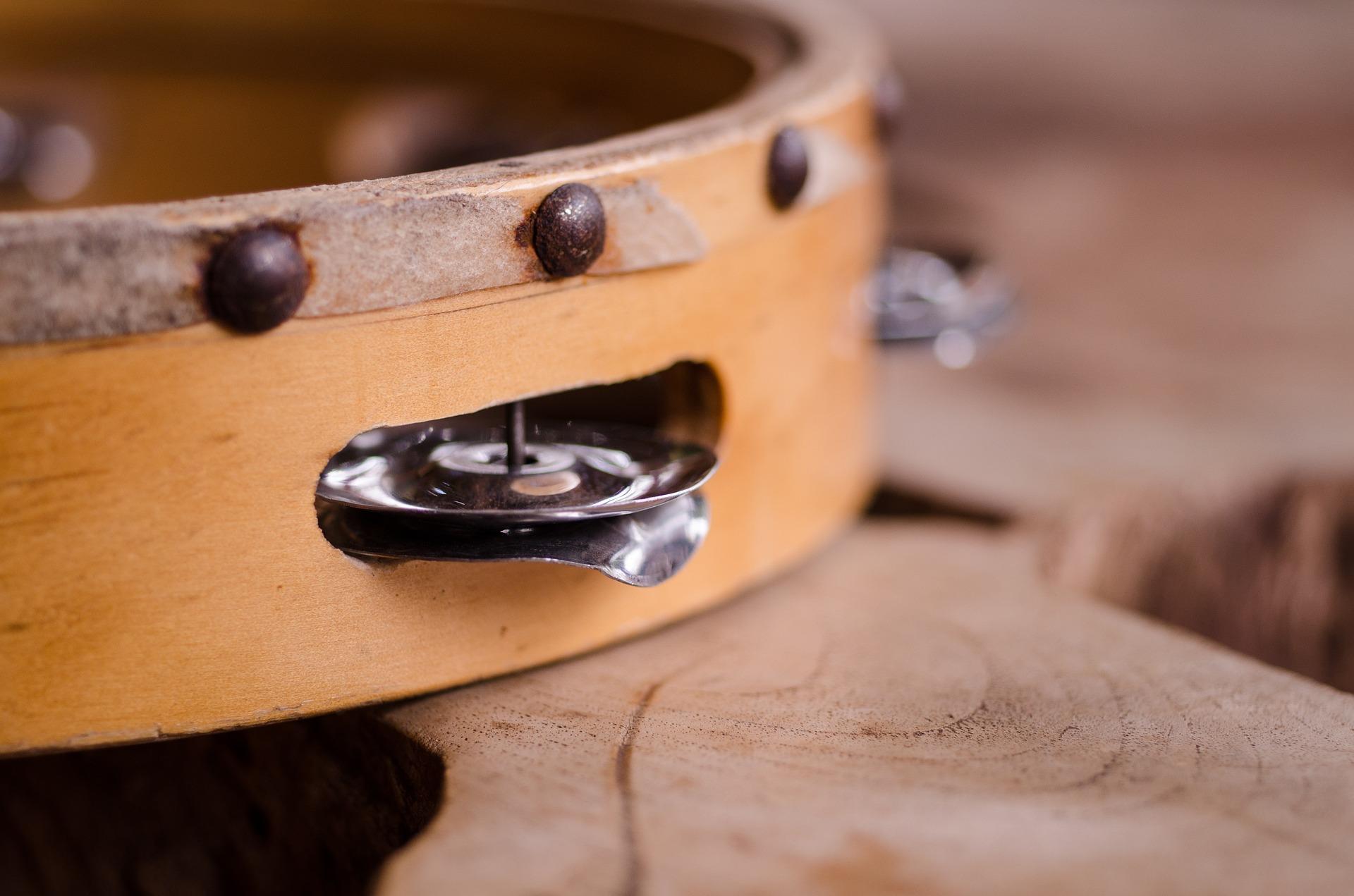

I figured what to do with my hands ... onstage. I'm a percussion player so I grab the tambourine as much as I can. Taylor Hanson
Yes, you have at some point or other heard the jingle of a tambourine. However, have you ever watched a band or an orchestra performance and actually taken the time to fully appreciate the sounds that resonated from the tambourine?
The tambourine's jingling sounds can uplift any musical piece, providing lively accompaniments to songs and dances. It’s also relatively easy to learn to play, which means it’s accessible to musicians of all skill levels.
So, whether you're performing on stage with a band, adding some extra flair to a musical production at your community centre, or simply dancing around your living room, the tambourine can be a charming and effective choice for adding rhythmic dimension and excitement.
Playing the tambourine can add a delightful rhythmic element to music, enhancing its overall sound and energy. It's a versatile instrument that can be played in various musical genres, everything from folk to rock to traditional music like Morris dancing.
The tambourine is an instrument from the percussion instrument family that often gets overlooked. But once you start paying attention, you will notice just how much life it can bring to any musical piece.
Let your hands have something to do, grab the tambourine, and let's get started by learning how to play this instrument.
It is an easy instrument to learn how to play but let's give credit where credit is due, it is also a percussion instrument that deserves some respect. So in tracing the the tambourin's historical trajectory, and its present-day uses, we can understand why we should take our hats off to this instrument.


What is a Tambourine?
You may have seen a tambourine before but how does it sound?
The tambourine is a circular instrument. The word tambourine originated from the French word, "tambour" which means drum. Therefore the tambourine is a percussion instrument that is much like a drum.
Some tambourine instruments even have drum heads or drum skins. However, there are many variations of the tambourine and some have no drum head at all.
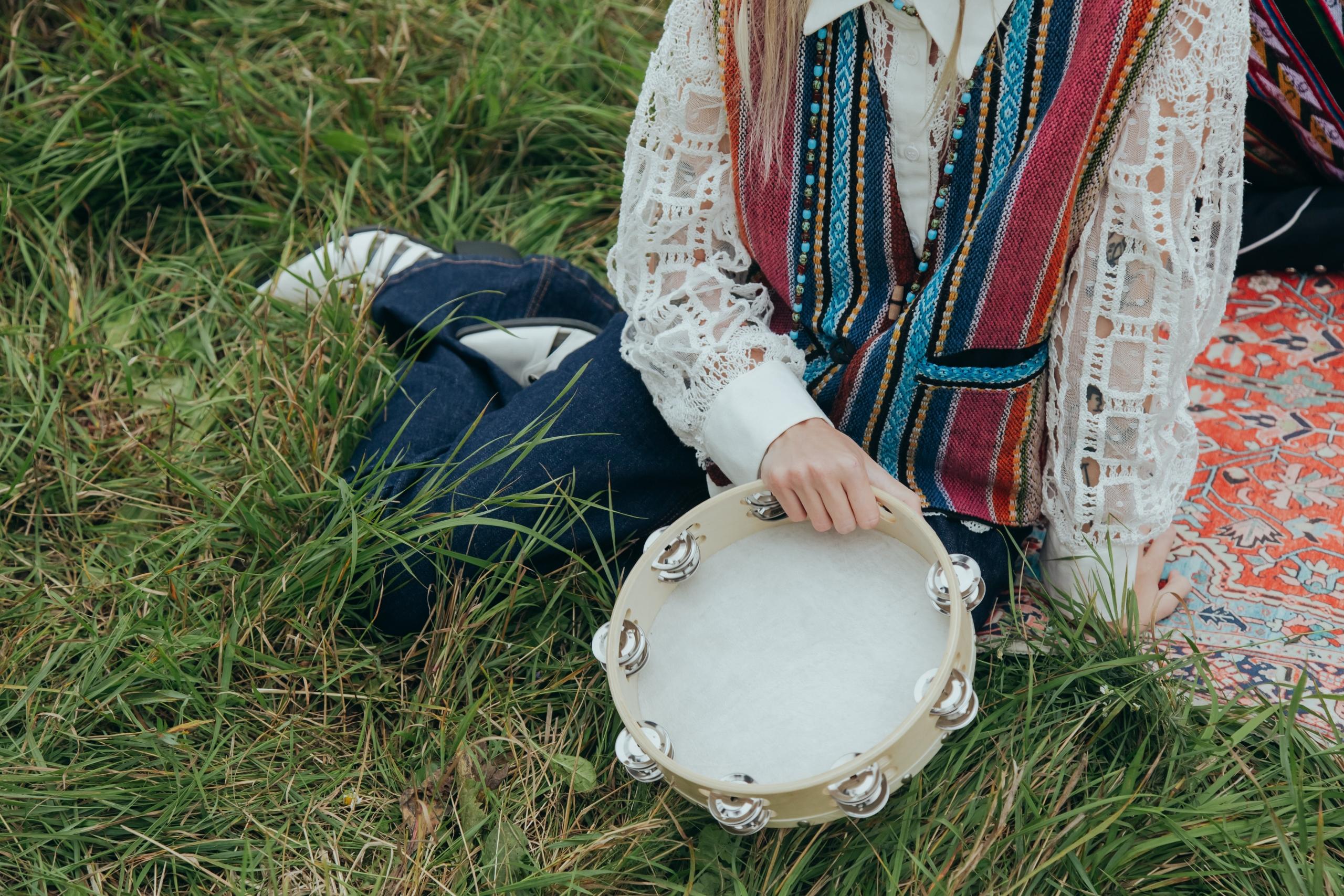
The main element that makes tambourines look similar is the wooden or plastic frame, which contains metal pieces that produce a jingle when they are struck.
So, how do you shake a tambourine?
You'll be pleased to hear that there is more than one way to play the tambourine.
This is yet another exciting feature of the tambourine. If you look around, you may see this instrument in many places. You may even notice that the drummer from your favourite band has a tambourine on his drum kit.
Tracing the historical trajectory of this instrument may prove to provide valuable information about this instrument that is still loved around the world today.
Music touches us emotionally where words alone can't. Johnny Depp
Let's start the music by identifying where exactly in the past the sounds of the tambourine could be heard. If the tambourine doesn't tickle your fancy, and make you think of life as a grand, sweet song, read about another percussion instrument, the xylophone.
Tracing the History of the Tambourine
It is hard to pinpoint the exact origins of the tambourine, but historical writings about the tambourine date back to 1700 BC.
The use of the tambourine can be traced back to ancient Sumer, where large frame drums were used during rituals in temples. Smaller tambourines were played in other parts of the world, like Egypt, Mesopotamia, Greece, Rome, and Israel.
The tambourine was later brought to Europe by the Crusaders in the 13th century. At the time it was called a tabret or timbrel, and was mostly played by women. The Janissaries of the Ottoman Empire introduced the modern tambourine to the European continent in the 18th century, and over time it started forming part of opera scores. The tambourine started being used widely in orchestras in the the 19th century.
Per the depictions of the instrument in religious scriptures, it seems like the tambourine's style and appearance remained unchanged, however the name by which this type of instrument was called differed from time to time. In Ancient Egypt, the Hebrews called the tambourine the, "tof." During the 18th century in medieval Britain, the instrument was called the, "tabret".
Eventually it was the French, who using the Persian name for drum called this instrument the tambourine.
In Biblical work, angels have been seen playing the tambourine and perhaps that is the reason for the angelic sound that the instrument produces.
The Romani people used the tambourine as a percussion instrument particularly to entertain audiences. They would then pass the instrument around to collect money for their performance. Do you think the depiction of Esmerelda in the fairytale The Hunchback of Nôtre Dame aligns with this image of the Romani people, who relied on their tambourines as a source of income?
Today the tambourine is prominent in Middle Eastern folk music, and different varieties, including the duff, dāʾirah, ṭār, bandīr are used.
Learning more about the historical movement of the tambourine may have enticed you to want to learn more about this instrument or even to learn how to play the tambourine. If so, why not read up on all the different types of percussion instruments?
How to Play the Tambourine
If you are ready to commit and learn how to play the tambourine well, you need to think about all the many ways that you can do so.
One way to play the tambourine is to strike the drumhead or a drum skin that is stretched across the frame. You will hear the sound bounce off the drumhead if you play your tambourine in this way.
But, remember, there are certain types of tambourine that do not have a drum head at all.
For these types of tambourines, you need to strike the frame either with your hands or some part of your body. You may already have noticed musicians striking a tambourine against their legs.
The frame of a tambourine contains many metal pieces because this is what gives the instrument rhythm and beat. The metal pieces are what give the tambourine its full percussion effects.
Another suggestion for playing the tambourine is the same way most drummers or percussionists play their instruments. You can place your tambourine on your drumkit and strike it with drumsticks!
Often, band members are striking a tambourine on their drumkits during a performance and you may be fooled into thinking they are playing the drums. This is perhaps why many people often think of only the drum when they think about percussion instruments.
While everything about playing the tambourine seems relatively easy, this is not the case.
How to play the tambourine well is not as clear-cut for beginner tambourine players. That is why in order to create the right rhythmic effect, you really need to persevere and keep going. While banging the tambourine against your wrist can create a sound, you need to try more sophisticated playing techniques if you would like to play the instrument well.
Producing a Tambourine Sound
You can try either the drum roll or the thumb roll techniques. These techniques can be learnt from a percussion instrument teacher.
The drum roll is when you create a drum roll sound by rotating your wrist at a fast pace. You combine this rapid movement with a strike of the instrument as well.
A thumb roll is a sound at a lower pitch. You make this movement by moving the thumb over the surface of the drum head or exterior and this will cause the metal pieces to jingle and shake, creating a desirable gentler sound.
What's the Best Tambourine for Me?
One should always act from one's inner sense of rhythm. Rosamond Lehmann

You may be surprised to learn that there are many different types of tambourines. If you're wondering, how do I choose a good tambourine, let us look at the most common tambourines that you could consider playing.
Headless Tambourine
The ‘headless’ tambourine is as the name of the instrument suggests without any head or drum skin. The frame is ideally what you need to strike in order to create sound effect.
The headless tambourine can also be given a shake to produce exciting sound effects. It is clear that the drum head is not necessary for this instrument to make sounds.
Half-Moon Tambourine
Another type of headless tambourine is known as the half-moon tambourine. With this type of tambourine, the handle is inverted so that it sits inside the circle of the instrument forming a half-moon shape.
A perk of using a half-moon tambourine is that it can be held more easily.
Mounted Tambourine
The mounted tambourine is used by percussionists playing multiple percussion instruments and who want to move between these easily. Mounted tambourines are usually placed on the musician's drum kit and struck with drumsticks.
Since there are many tambourine options available, you need to decide which tambourine type is best for you. Once you learn how to play the tambourine, you can learn how to play other percussion instruments like the triangle or the steel hang.
Ready to add an extra bit of zest to the music?
Playing the tambourine isn't just about keeping the beat; it's about injecting some joy and spirit into the melody. It's like being the heartbeat of the music, adding that touch of magic that gets people tapping their toes and swaying along.
So, why not give it a go?
Embrace the tambourine, and let your inner rhythm shine through. You'll find it's a delightful addition to any musical ensemble, and who knows, you might just discover a newfound passion for percussion.
Summarise with AI:
Enjoyed this article? Leave a rating!

 Loading...