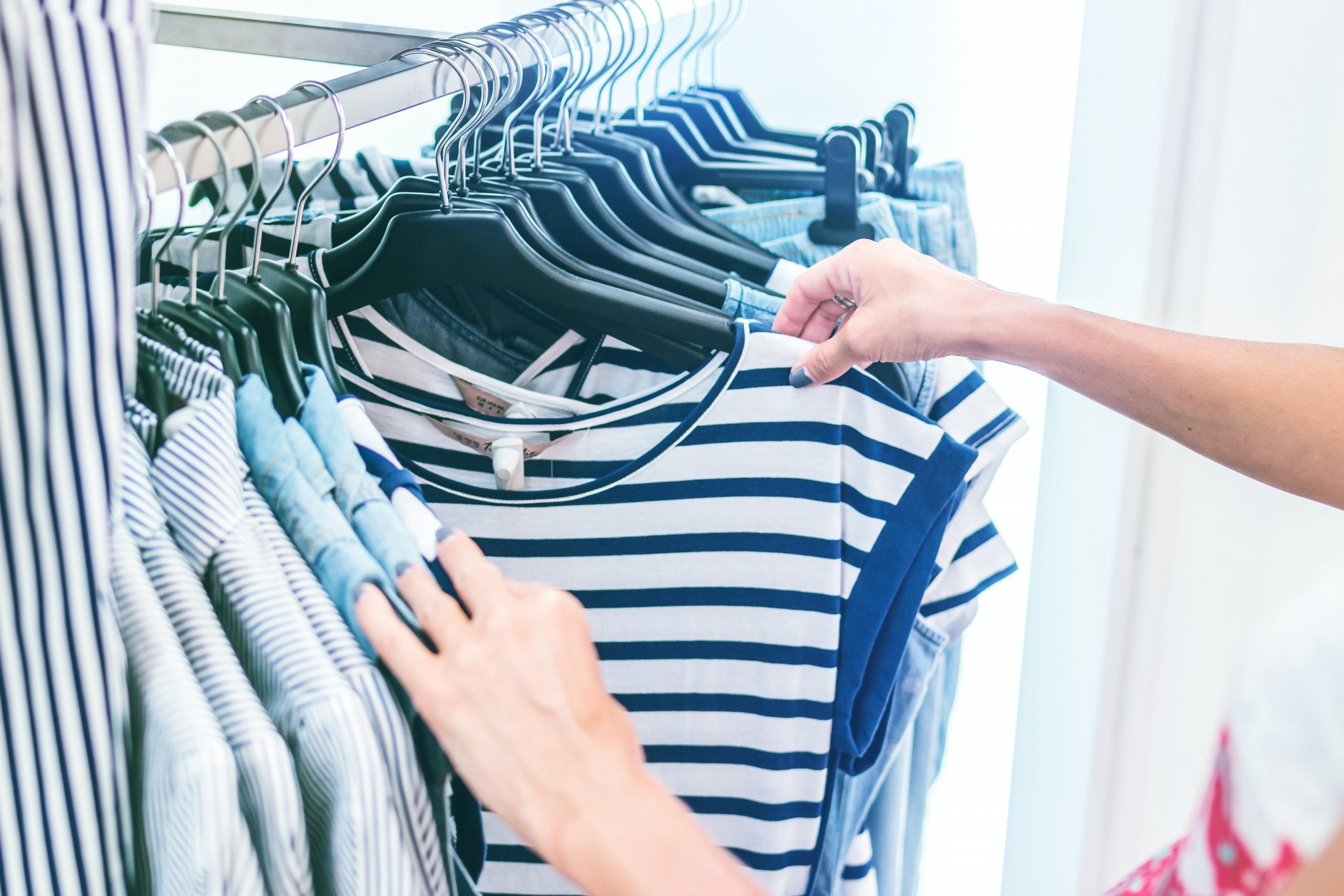

In another article in this series, we how the fast fashion phenomenon has significantly affected the clothing industry. Now, the question arises: how can we identify a fast fashion brand?
If you are looking for a definition of fast fashion brands, it refers to the distinctive approach taken by certain clothing industry models.
It involves swiftly reproducing high-fashion trends through large-scale manufacturing that results in products that are remarkably affordable or offered at a low price point.


The History of the Fast Fashion Brand
The task of pinpointing the precise origin of the fast fashion brand is challenging.
Nevertheless, when you take a retrospective glance at the brands that have played a pivotal role in its inception, it helps to shed light on how this phenomenon evolved into the colossal fashion industry it is today.
The fast fashion model burgeoned during the 20th century, propelled by the convergence of more affordable manufacturing methods and soaring consumer demand.
The reduction in prices was catalysed by the advent of novel materials like polyester and nylon, which revolutionised clothing creation. Simultaneously, the confluence of cost-effective labour, streamlined supply chains, and smaller, more agile manufacturing practices empowered retailers and fast fashion labels to flourish, expanding their footprint across the globe.
Among these trailblazers is Amancio Ortega, the visionary behind the global powerhouse Zara. In 1963, Ortega established his clothing venture in Galicia, pioneering a store concept that combined budget-friendly imitations of upscale fashion pieces with his own original designs. Ortega's enterprise gained momentum with the inauguration of his inaugural European retail outlet, which later expanded to New York.
At the core of fast fashion lies the concept of the swift imitation of runway ensembles and trendsetting items for rapid sale. This generates a sense of urgency among consumers, as these items become unavailable once the season concludes. Integral to the fast fashion ethos is its competitive pricing, a stark contrast to the exorbitant rates associated with original high-end brands.
This phenomenon found fertile ground post the Industrial Revolution, which introduced advanced sewing and textile machinery. Additionally, the introduction of ground-breaking textiles like nylon and polyester further catalysed its evolution.

There’s no doubt, the 21st century marked the full-scale operation of the fast fashion brand. By this time, the industry had solidified its presence and established robust supply chains to satiate the surging demand.
What is the Presence of Fast Fashion Brands in South Africa?
- Zara: A flagship entity of the Inditex Group, Zara is a Spanish retail powerhouse renowned for its distinctive approach. In addition to its own designs, the crux of its strategy revolves around swiftly replicating high-fashion garment concepts within a remarkable 15-day span. Situated in close proximity to its corporate base in A Coruña, Spain, more than half of Zara's production facilities are strategically dispersed across locations such as Turkey, Portugal and Morocco. The brand's global reach extends to 2 138 stores across 96 countries, a footprint that is further bolstered by its robust online presence.
- H&M: Established in 1947, the Swedish giant H&M (derived from Hennes & Mauritz) stands as one of the pioneers in the fast-fashion domain. Operating across 74 countries, H&M boasts a vast network of over 5 000 stores under various brand umbrellas, including the slightly more upscale COS. Distinguishing itself, H&M endeavours not solely to mimic prevailing styles but to craft original innovations. This ambition materialises through acclaimed designer collaborations with prestigious labels such as Alexander Wang and Giambattista Valli, which emphasises H&M's commitment to innovative fashion. An example of this is its 2021 launch featuring a collection designed by Simone Rocha.
- And the list goes on: The tapestry of fast-fashion influence encompasses a myriad of names, including Rip Curl, GUESS, Victoria's Secret, GAP, Mango, Shein, and many others. Each entity contributes to the dynamic fabric of the fast-fashion landscape, collectively shaping trends and swiftly responding to evolving consumer preferences.
Some Local Fast Fashion Brands
- Mr Price
- The Fix
- Legit
- Jet
- Rage
When it comes to the fast fashion brand the list is long. To really understand the fast fashion brands meaning of each supplier, it is recommended that you do individual research on their production and supply chains.
Big fast fashion brands are an influential business in the world. As you can see fast fashion brands in South Africa do exist too.
How do Big Fast Fashion Brands Thrive Today?
The fast fashion brand thrives in today’s economy because it is able to create a business model that is well adapted to fast consumer demand at very cheap prices. This, of course, has mass consumer appeal.
The Survival of Fast Fashion Brands
Fast fashion brands operate within a supply chain and operational framework that yields substantial social, economic, and environmental repercussions. This encompasses practices like offering meagre wages to their workforce, allowing subpar working conditions, and cultivating an environment of job insecurity, among other detrimental aspects. Notably, research indicates that women constitute a significant portion of this employed workforce, rendering them particularly susceptible to the repercussions of this operational standard.
Equally significant is the ecological footprint caused by the production of fast fashion attire. This includes a range of processes such as textile manufacturing, packaging, dyeing and transportation, each of which wields a toll on our planet. These aspects collectively contribute to an array of environmental challenges, which span from carbon emissions and wasteful water consumption to land and air pollution. The domino-like effects of these issues ripple through the global framework, affecting not only the workforce but also the consumers at large.
In essence, these points emphasise a fraction of the extensive environmental impact intrinsic to fast fashion production. This impact echoes across various tiers, illustrating the gravity of the situation and its overarching consequences on a global scale.
How to Recognise Big Fast Fashion Brands
Now that you understand a bit more about what fast fashion brands are, how will you recognise those fast fashion brands in South Africa? One way to check is to look at the label for the following information:
What is the production origin of the garment?
Typically, garments are manufactured in regions such as South East Asia, which include countries like Pakistan, China, and Vietnam. Other countries include Turkey, Morocco, Mexico and Bolivia.
What is the brand's origin?
Discrepancies between a brand's origin and the production location often signify the outsourcing of materials and labour from other nations. This is a hallmark characteristic of fast fashion entities.
What materials constitute the garment?
The prevalent use of non-organic or non-recycled materials like nylon, polyester, and conventional cotton is a hallmark of fast fashion. Information like this can be conveniently gleaned from clothing tags.
Evaluating garment quality:
If you've ever purchased items from fast fashion brands, you might have observed their subpar quality. This often leads to a short lifespan of a year or two despite minimal usage. This diminished quality is a key attribute of fast fashion products and differs notably from the durability of higher-quality alternatives.
Research or opting for ethically-produced clothing may demand time, yet the endeavour proves invaluable in promoting sustainable and socially responsible consumption. Recognising the products you purchase for their sustainability and their compliance to fair labour and social conditions emphasises our role as consumers to make ethical decisions.
As conscious consumers engage in daily product and fashion choices, we shoulder the responsibility of our consumption habits. It is incumbent upon us to delve into the impacts of fast fashion and explore diverse subjects and areas of study to broaden our awareness. Furthermore, advocating for awareness within your social circle can amplify the ripple effects of understanding the ramifications of fast fashion on labour practices and the environment, fostering a collective journey toward more ethical consumption practices.
The Future of Fast Fashion Brands: South Africa
It’s certain, the surge of fast fashion has amplified its impact on both our lives and the environment. The commercial success of the fast fashion model played an essential role in doubling the size of the fashion industry from 2000 to 2014.
This trajectory shows how important it is for the consumer to be aware and make well-informed choices. Alternatively, you could engage differently with different aspects of the fast fashion supply chain which would also contribute to improved industry ethics.
For individuals pursuing studies in fashion, or envisioning a career within the fashion realm, there lies immense value in honing skills that address the challenges posed by fast fashion. This encompasses areas such as labour and human rights, sustainable and recycled textile production, as well as localised clothing manufacturing. Imparting values into the brands we buy or simply aspire to, provides the potential to contribute to a more radiant and ethical future in fashion.
Another avenue to consider involves understanding the art of crafting clothing and recycling materials. If this sounds like your version of fashion creation, platforms like Superprof provide access to sewing tutors who can nurture your capacity to give life to your unique fashion visions. Embracing creativity and crafting your own attire embodies the zenith of a fashion statement—one that resonates with sustainability and individuality.
Summarise with AI:
Enjoyed this article? Leave a rating!

 Loading...