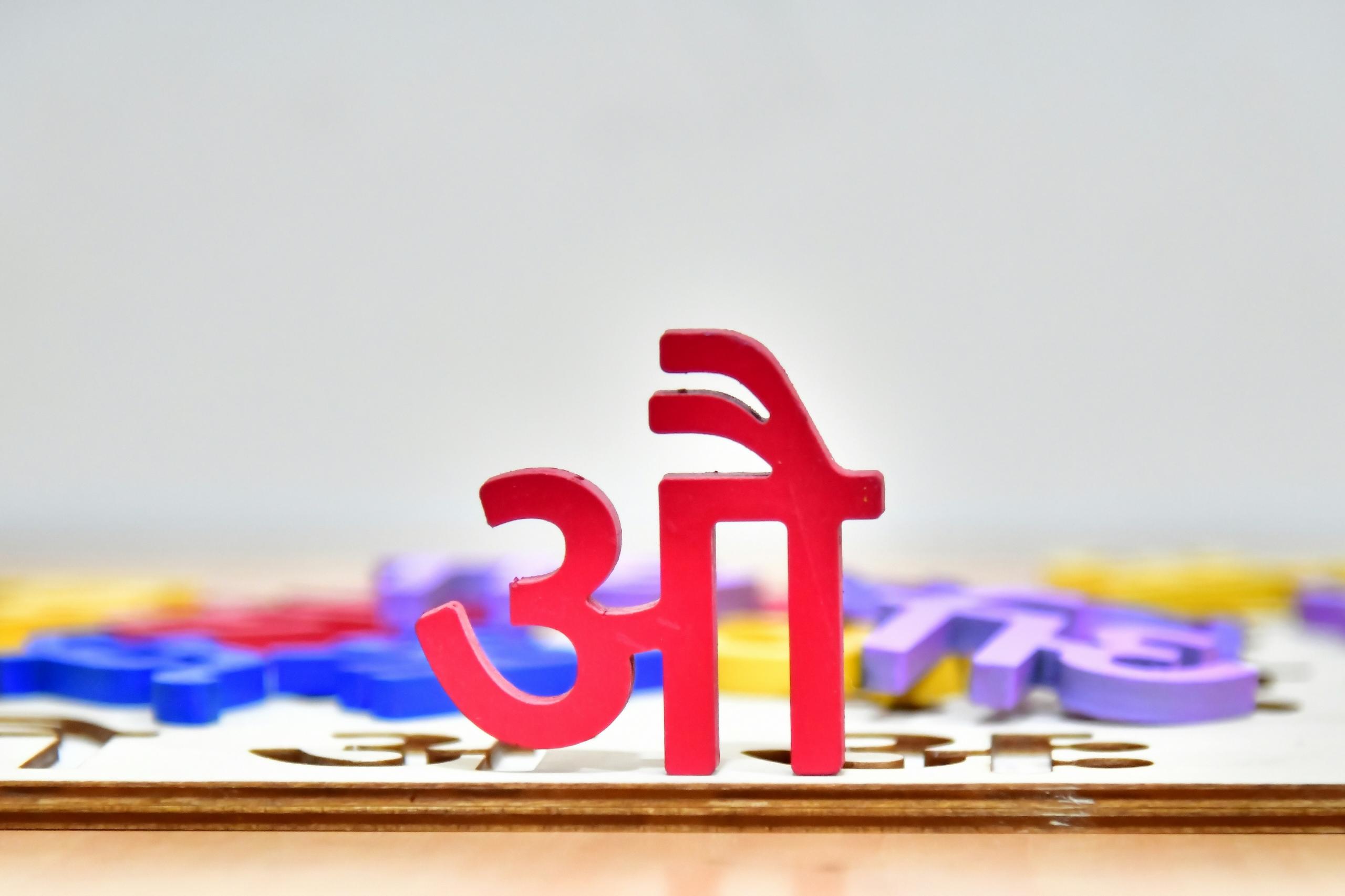

Despite Hindi boasting 250 million speakers in North India, and being spoken extensively across many other countries —including over 200 000 speakers in South Africa— its limited availability in western schools is surprising. Around the globe, 571 million people speak Hindi as their first language and millions more learn Hindi as a second. The stark contrast between these numbers and its accessibility within educational curriculums is questionable.


India in a Nutshell
India, the world's most populous nation, holds significant status in Asia. A diverse, multilingual country, it boasts formidable military power, boasts rich wildlife and many unique reasons, across its 29 states to attract visitors and people who want to learn how to speak Hindi.
The Importance of Hindi
Before venturing into India, wouldn't it fascinate you to delve into its culture, languages, and the significance of Hindi?
Embracing aspects like spirituality, food, art, and industry is helpful if want to know how to learn Hindi. Despite English prevalence, Hindi learning for beginners can be a help to the conversation and open doors to Sanskrit, Urdu, Nepalese, Bengali, and Gujarati—all of which are linguistic gateways worth exploring.
How to Learn Hindi
Finding places that offer Hindi learning for beginners could mean endless online searches and enquiries at educational institutions. Alternatively, you could head straight to an international tutoring website like Superprof that offers tutors who help you learn how to speak Hindi. Here you could opt for group or one-on-one sessions that are either face to face or online.
When you learn how to speak Hindi as a beginner, you can expect to gain a comprehensive vocabulary as well as phrases and other skills to improve your conversation, reading and writing in Hindi.
When using Superprof, check out the platform’s location tool to find out if there are any tutors to help you learn how to speak Hindi near you.
The Cost of Hindi Learning for Beginners
In South Africa, the cost of Hindi learning for beginners depends on tutor experience and lesson frequency. Average hourly rates range between R150 and R400 which means that beginner to intermediate lessons can total R4 500 to R12 000 for comprehensive proficiency that is typically spread across 30 lessons.
To learn how to speak Hindi as an advanced student, you may need to invest slightly more, but all of this is flexible and can be done at the pace of your cash flow and budget. In addition, Superprof offers flexible scheduling and personalised approaches suit individual preferences.
Why Learn Hindi?
So, why learn Hindi?
Learning Hindi presents a gateway to a vibrant cultural tapestry and an expansive world of opportunities, making it a compelling choice for language enthusiasts. With over 600 million speakers worldwide, predominantly in India but also across various diasporic communities globally, the question, why learn Hindi, has many answers and benefits.
Firstly, Hindi serves as a bridge to India's rich cultural heritage. As one of India's official languages, it unlocks access to a treasure trove of literature, poetry, music, cinema, and art. From the eloquence of Hindi literature that encompasses works by renowned authors like Munshi Premchand and Harivansh Rai Bachchan, to the mesmerising melodies of Bollywood music, learning Hindi opens doors to understanding and appreciating the wonderful nuances of Indian culture.
In addition, India's burgeoning economic prominence amplifies the practical advantages of learning Hindi. As a rapidly growing economy with a thriving job market, proficiency in Hindi can be a valuable asset for career prospects.
So, why learn Hindi to boost your career?
Numerous multinational corporations seek to establish a foothold in India, creating a demand for individuals fluent in Hindi to navigate business dealings and build relationships within the Indian market.
Furthermore, Hindi fluency facilitates seamless communication and connections within the vast Indian diaspora scattered worldwide. Communities in countries like the United States, Canada, the United Kingdom, and South Africa cherish Hindi as a link to their roots. Mastering Hindi encourages a sense of belonging and facilitates interactions between these communities.
Besides this, it is well known that bilingualism enhances cognitive functions, including improved multitasking abilities, enhanced problem-solving skills, and better decision-making. Learning Hindi, with its script and diverse linguistic structures, challenges the brain and sharpens cognitive abilities to nurture a deeper understanding of language structures.
Embracing Hindi builds a sense of global citizenship that opens doors to empathetic connections by breaking language barriers and encouraging the understanding of diverse perspectives.
In conclusion, if you have asked why learn Hindi, reasons extend beyond language proficiency to offer a myriad of opportunities and deep experiences.

Is it Easy to Learn How to Speak Hindi?
Hindi diverges from English in numerous aspects, yet its learning curve is not necessarily daunting. Like English, Hindi adopts a left-to-right script familiar to English speakers, simplifying the reading process.
Its phonetic nature allows learners to grasp sounds in clusters rather than individual words, which reduces the need to memorise countless exceptions to grammatical rules.
Another advantage of Hindi lies in its absence of articles ('the' or 'a'), instead, nouns come with genders much like French grammar. Though, initially daunting, mastering these genders gradually becomes intuitive through practice.
Like anything new at first, Hindi's structures and nuances gradually become familiar and even second nature for those who are committed to learn how to speak Hindi.
How to Learn Hindi by Self-Teaching
Mastering a new language independently poses a challenge, but armed with determination, a few tips can smoothen the journey.
- Seek Free Resources: Acquiring a language demands resources. If splurging on books isn’t your plan, free options like those found on YouTube can help to orientate you. Free resources are most effective when they are recommended by a private tutor who understands your level of ability and the goals you are aiming for. In between tutoring sessions, resources can help you to apply what you have learnt and provide revision tools for the phrases, the alphabet and much more. For an immersive experience, you could delve into Hindi community newspapers which can be a valuable aid for Hindi learning for beginners.
- Listen to Spoken Hindi: Beyond written resources, audio aids can be extremely useful. Listening to native speakers conversing in Hindi will add to your pronunciation and comprehension abilities. To do this, find Indian radio stations or TV channels that cater to Hindi speakers, as they offer authentic exposure to the language. Remember to maintain consistency when choosing to study a specific Hindi dialect to effectively grasp nuances.
To embark on a self-teaching language learning journey you will need the right resources. A good idea is to have a few sessions with a private tutor who can provide you with a road map to make it easier.

Don't Give Up When you Learn Hindi
It is not uncommon for learners to feel disheartened or doubt their language acquisition abilities at first. Don’t let a slow start discourage you.
If grappling with key phrases, taking a step back and deconstructing the language into smaller, manageable sections can prove beneficial. Start by focusing on verb conjugation, revisiting nouns and their genders, and then, gradually build on this foundation.
Reflect on your childhood language acquisition—what were the initial steps in learning your native tongue or the basics when you learnt a foreign language like French or Italian?
While Hindi's sentence structure differs from English and other European languages, prioritising fundamental elements is crucial.
It is normal for learners to encounter moments of self-doubt, especially when self-teaching.
Travel to India
Experiencing immersion in India offers unparalleled opportunities for language and cultural enrichment, even surpassing a dozen formal lessons. Stepping into a village in northern India, for example, can immerse you in the vibrancy of conversations, and expose you to Hindi signage, and local customs. These unique encounters are impossible to replicate elsewhere.
The age-old belief that children grasp foreign languages more easily holds true, but openness to learning is the most crucial thing, regardless of age. By embracing the chance to communicate with locals, despite potential embarrassment, any language acquisition, including the ability to learn Hindi, is significantly expedited.
Of course, a step like this entails logistics and courage, however, to plunge into an unknown country lays the groundwork for swift language absorption. There is no doubt that irreplaceable magic exists amid the daily life of an Indian village which can offer a holistic educational experience that surpasses any traditional lessons.
Summarise with AI:
Enjoyed this article? Leave a rating!

 Loading...