
Whether you're a novice just dipping your toes into learning breaststroke, or an intermediate swimmer looking to refine your swimming strokes or swimming technique, this article is filled with tips on where to start.
From how to learn breaststroke as a beginner to swimming in the ocean, there are many techniques to mastering how to swim. You can also find swimming lessons cape town if you prefer in-person coaching.
As one of the most popular swimming strokes and one of the three standard styles of swimming learnt by beginners, breaststroke is the most unique in terms of technique and complexity.


The Breaststroke Swimming Technique for Beginners
When you learn breaststroke, it can seem a little unintuitive at first, however with practice, it can quickly become clear why it is one of the most popular styles of swimming, especially as an alternate style for swimming in the ocean.
Breaststroke may take more time than freestyle and backstroke to master, but soon enough, you’ll be good enough to be gliding through the water like never before.
There are essentially three main components to the breaststroke swimming technique, while a fourth step links them all together as follows:
It is advisable to practice the initial three steps individually before attempting to connect them seamlessly. Fortunately, once you have mastered each component correctly, they should all naturally fall into place.
Practice is the greatest of all instructors.
Publilius Syrus
The most effective approach to learning breaststroke is by diligently honing each aspect of the technique until it becomes as instinctive as walking.
Core and Body Technique to Learn Breaststroke
One of the most important keys to the breaststroke swimming technique is the core position which is essential to master so that the still parts of the body can anchor the moving components. While relatively uncomplicated in concept, achieving comfort in this position is the first essential step to learning breaststroke correctly.
To assume the core position, start by laying horizontally in the water. Extend both your arms above your head, then, reaching out with your hands, align your fingers in the direction you intend to move. Simultaneously, extend your legs straight behind you, and point your toes in the opposite direction of your outstretched fingers. This alignment creates a perfectly straight line from the tips of your fingers to the ends of your toes.
Be sure that your face is directed downwards while you gaze at the pool's bottom. This is important because when you raise your head above the water to breathe, your torso will naturally sink slightly, potentially disrupting your position.
In summary, the core position's key components are:
Facing downward to maintain a flat body orientation.
Ensuring a straight line from fingertips to toes.
Taking brief, efficient breaths to maintain stability.
This core position serves as the foundation for all subsequent steps in the breaststroke technique. While we'll delve into breathing techniques later, the primary focus at this stage should be on maintaining quick, efficient breaths to preserve the position's stability. Mastery of this fundamental swimming technique lays the groundwork for successful breaststroke swimming.
Keen to learn more about a breaststroke master? Then read our article about SA's swimming champions!
The Leg Kick for Learning Breaststroke
Despite serving as the most effective way to propel you forward, the leg kick is arguably the least intuitive aspect of how to learn breaststroke.
Whether you will be swimming in the ocean or a pool, breaking down the leg kick into two distinct phases clarifies the process.
Firstly, there's the leg retraction. Starting from the core position, begin by tilting your legs outward, orienting your feet parallel to the water's surface. Then, raise your heels towards your torso, while striving to keep your feet as level as possible with your shoulder line. This adjustment, which resembles the posture of an open-legged squat, prepares your feet to generate a greater thrust later.
The second phase of the motion is where the actual forward motion originates. Swiftly and explosively, thrust your legs backwards in a slight V shape, as if you were pushing off from the water behind you.
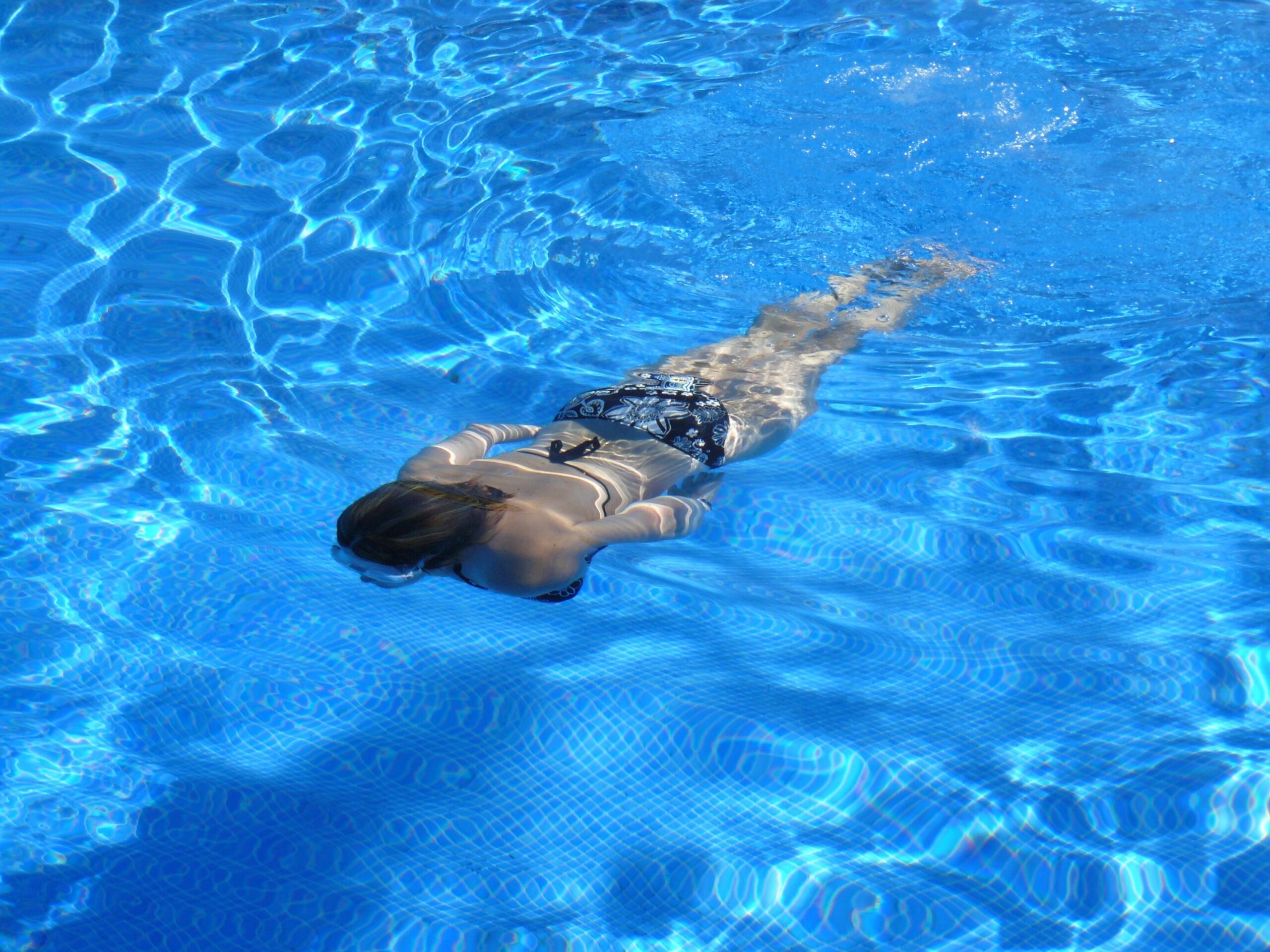
Maintaining your feet at a relatively constant level with your shoulders, ensures you apply force over a larger water surface area to maximise your forward motion. To complete the cycle, bring your now-extended legs back together to return to the core position.
In summary, the leg kick entails:
Tilting your legs outward from your body.
Elevating your heels towards your torso.
Vigorously pushing your legs backwards.
Bringing your straightened legs back together.
This leg kick represents the primary source of forward propulsion in breaststroke which emphasises the need for precise practice. For added stability and technique refinement, consider using the pool's side or a float during your training sessions. If you train locally, services such as swimming lessons in johannesburg can connect you with qualified coaches.
Interested in poetry in the water? Then read our article on artistic swimming.
The Swimming Technique for Breaststroke Arms
In the art of breaststroke, the role of your arms is just as vital as that of your legs. Luckily, the arm motion is somewhat more straightforward than the leg movement, with the primary challenge lying in knowing how to synchronise the two. For now, our focus will centre on the precise execution of the arm motion.
The arm motion commences from the core position, with the initial step involving a pivotal rotation of your palms facing outward, directing them away from the centreline of your body. Once this positioning is achieved, maintain a straight arm and sweep your arms backwards in a graceful arc until they form a T shape with your torso.
Following this, bend your elbows, and continue the arc with your fingers curving inward toward the centre of your body. Bring your hands together and propel them past your face to seamlessly return them to the core position.
Another crucial aspect of arm motion is the timing of your breath. The ideal moment for inhalation coincides with the initial phase of the motion, precisely when you transition your arms from the front position to the T shape. To maintain proper form, ensure you raise only as much of your head out of the water as required for a single inhalation. For maximum efficiency, exhale once your head re-enters the water. This action prepares you to breathe in again as you reach the same point in the subsequent cycle.
Remember the following when executing the arm motion:
Putting the Motion Together
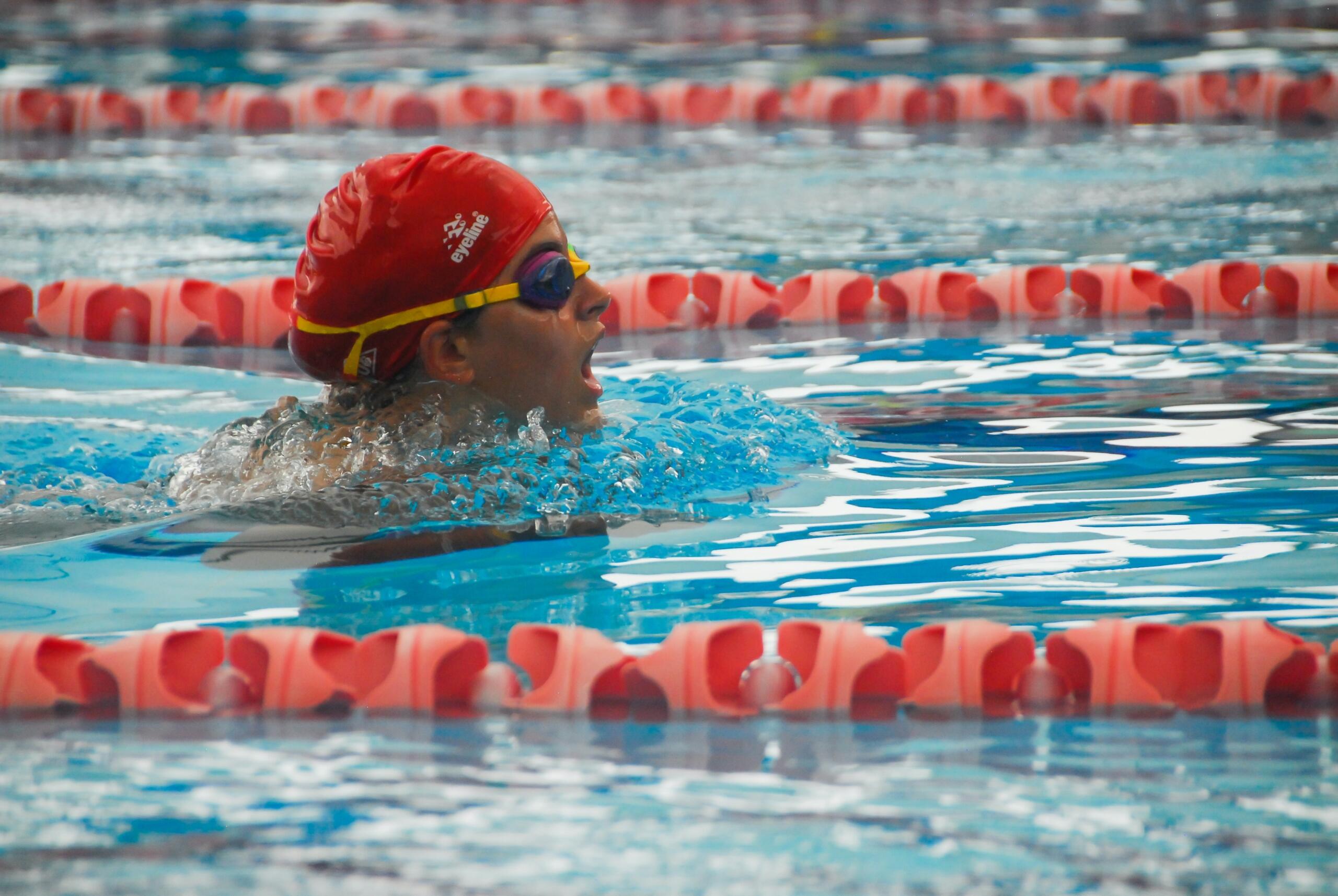
The final step in this crash course on how to breaststroke properly is taking the three parts we have learned and bringing them together. In this case, there are several right answers, but for beginners, the generally accepted best way is to start with the leg motion, then follow with the arm motion after a short gap of gliding in the core position.
There is more than one way to time your breaststroke rhythm, so you may find yourself tweaking the timing on it until it feels comfortable. In addition, if you are swimming in the ocean or other open water, using the breathing and motion of this stroke is a helpful way to see where you are going!
Breaststroke is classified as a power stroke in the realm of swimming which emphasises the importance of building muscle mass for optimal efficiency. Therefore, one of the most straightforward steps you can take to enhance your breaststroke performance is to engage in gym workouts.
Cross-Training Muscles Needed for Breaststroke
For most people who aim to enhance their breaststroke technique, the primary muscle groups to focus on are the biceps and triceps. You could incorporate a variety of effective gym exercises into your fitness regimen to strengthen these specific muscles, including bicep curls and tricep pushdowns.
Tricep pushdowns, using a cable machine, provide an excellent method for targeting and training these muscles, and they are relatively easy to learn. Stand in front of the cable machine (adjust the pulley to a higher position if it's adjustable) and grasp the bar with both hands. Maintain your elbows close to your sides as you pull the bar down until your arms are fully extended. Then, with controlled movement, curl your arms back up while keeping your elbows stationary. Aim for 10-12 repetitions for three sets.
Bicep curls are even simpler to perform. Hold a dumbbell of equal weight in each hand, with your arms fully extended and hanging straight down at your sides. Lift the dumbbells one at a time, raising them to shoulder level while maintaining a straight and forward arm motion. Repeat this exercise for three sets of 10 repetitions on each side, totalling 20 repetitions in a set.
Regardless of your initial level of proficiency in breaststroke, we hope that you have gained knowledge that can elevate your performance in a pool or for swimming in the ocean. Now, go and apply your newfound skills to move gracefully and efficiently through the water! To continue your progress, search for swimming lessons near me to find local tutors and practice sessions.
Summarise with AI:
Enjoyed this article? Leave a rating!

 Loading...