

You would not be alone if you were fascinated by both the horrors and redemptive stories found in the realm of science fiction. These are not too different to many of the modern medical discoveries and almost unbelievable advances in modern medicine that we see today.
Consider stories where bionic eyes restore sight to the blind or where medical innovations and scientific advances enable paralysed veterans to walk again. Remarkably, narratives like these are becoming reality. Recently, a cyclist paralysed for over a decade regained mobility through advanced technology. Similarly, a man blind for 40 years recently had his sight restored. Perhaps sci-fi enthusiasts have been reading the facts of science all along – just years ahead of their time.
There’s no doubt, modern medical discoveries are turning extraordinary medical theories into reality. With unprecedented data and computing power, the medical and scientific communities are achieving remarkable advances in modern medicine. Most notably, the past decade has seen significant medical innovations and scientific advances in the following fields:
- Vaccine technology and formulation
- Genetics and genome-based research
- Bionics, including technology-enhanced artificial limbs
- Wearables and the Internet of Medical Things (IoMT)
- Artificial Intelligence (AI) and personalised medicine.
Each of these fascinating, most recent medical breakthroughs are worthy of further explanation. Keep reading.


Wearables and IoMT
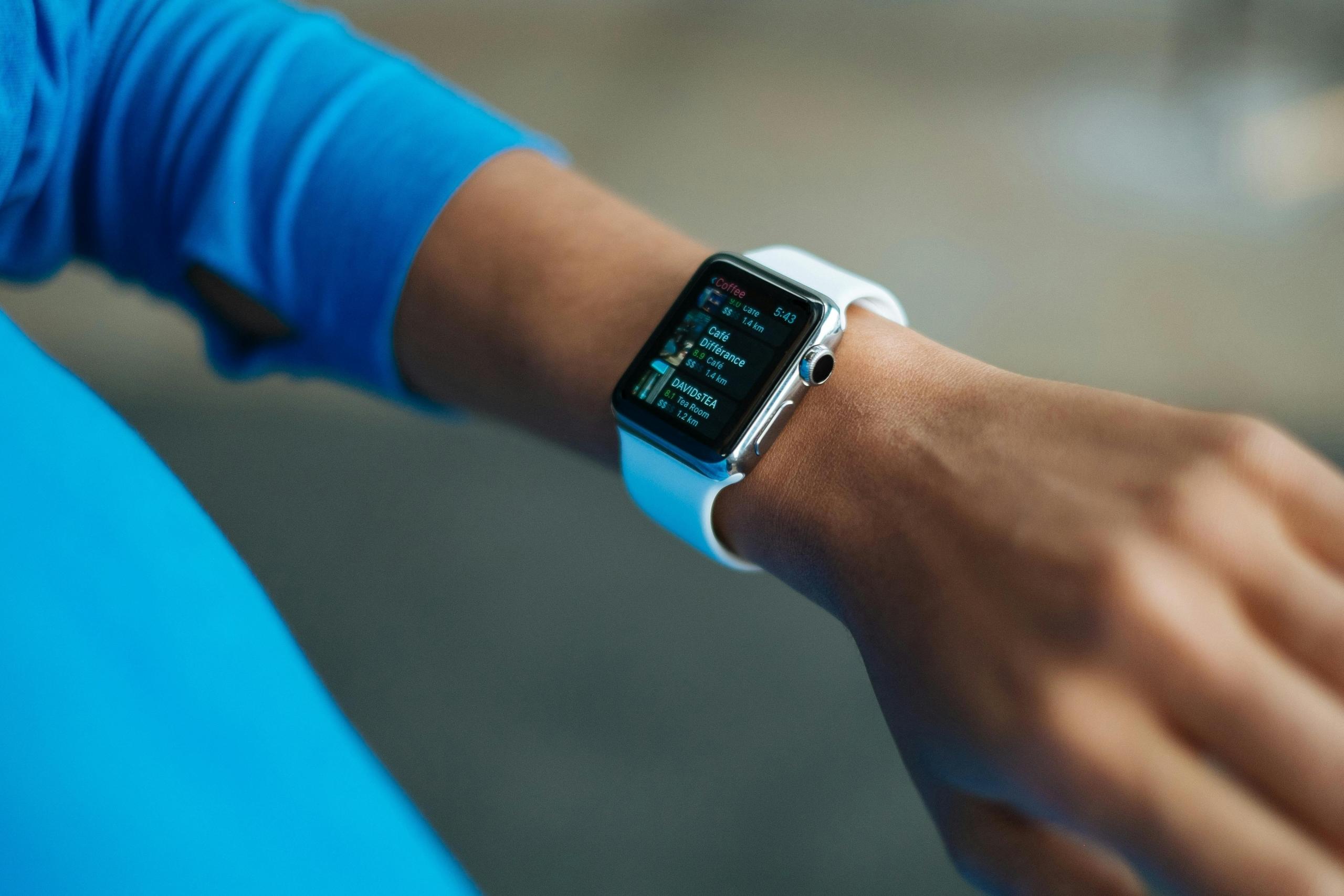
In 2009, Healthy Metrics Research, Inc., a San Francisco-based company, launched a wearable fitness monitor. This product, known as Fitbit, quickly became a hit, prompting the company to rebrand itself as Fitbit, Inc.
Initially, the Fitbit functioned primarily as a pedometer. However, in 2014, it connected to a platform via Bluetooth to further enhance its capabilities. New features included a heart rate monitor, a food diary, and an activity log and subsequent models enabled users to set fitness goals and track their consumed and burned calories.
Data from Fitbit devices contribute to the Internet of Medical Things (IoMT), a subset of the Internet of Things (IoT). IoMT aims to facilitate remote health monitoring through wearables like Fitbit and other devices, including pacemakers and cochlear implants.
Despite the benefits, this technology raises significant concerns about data security and personal privacy. Users worry about potential hacking as well as who controls their data. Nevertheless, since 2018, the healthcare and insurance industries have increasingly adopted these technologies, with some companies requiring wearables and IoMT for clinical diagnoses and treatment plans.
Understanding these advances in modern medicine can seem overwhelming, however, a skilled medicine tutor can break down these advanced concepts using the most recent medical research articles. These can make even the most complex medical innovations and scientific advances easier to understand.
Find out about the role of nutrition in living well.
Vaccine Technology and Discoveries
In 2020, the world came to a standstill as lockdowns were implemented globally to curb the spread of the SARS-CoV-2 virus. We all experienced it firsthand. However, one of the most astonishing aspects of that period was the rapid development of a vaccine. Historically, creating an effective vaccine took years of meticulous research and numerous trials. For instance, more than two decades elapsed between the initial efforts to develop a polio vaccine and its successful formulation.
Today, the swift creation of the COVID-19 vaccine is a testament to medical innovations and scientific advances. Yet, even more remarkable is the development of the Ebola vaccine. The Ebola virus, identified in 1976 during outbreaks in two African regions, is highly contagious and often fatal. Since its discovery, Africa has endured 24 outbreaks, with over half of those infected succumbing to the disease. The most devastating outbreak occurred between December 2013 and January 2016, resulting in over 11,000 deaths.
In 2003, scientists at the Public Health Agency of Canada applied for a patent for their Ebola vaccine. However, it remained untested on humans until the 2013 outbreak. Given the high mortality rate, the World Health Organisation (WHO) approved it. The vaccine proved effective, marking a significant milestone in medical research and demonstrating the power of scientific innovation to combat deadly diseases.
Exoskeletons, Prosthetics and Implants
While we still lack an effective vaccine against human immunodeficiency viruses (HIV), advances in modern medicine have made tremendous strides in restoring limb, organ, and sensory functions.
Did you know that human body parts, including organs, can now be 3D printed?
Once 3D printing technology reached its potential, medical researchers quickly began exploring its capabilities.
One of the most impressive applications is the printing of prosthetics. Even more noteworthy is that the blueprints and sizing instructions for these prosthetics are open-source. Anyone in need of a new limb can access e-NABLE, download the necessary design, and print a hand or leg —assuming they have access to a 3D printer.
Since 2018, fused deposition modelling (FDM) has emerged as the most cost-effective and thus the most popular 3D printing technique for these purposes. The printed prosthetics are lighter, though more fragile, compared to traditional options, and they are significantly more affordable than exoskeletons.
Much like detectives piecing together clues, a medicine tutor and student can explore modern medical discoveries to uncover the intricate story of life's advancements. This exploration showcases the remarkable advances in modern medicine to enhance the quality of human life through innovative technologies like 3D printing.

Similarly, the first functional exoskeleton was introduced in 2011, equipped with wrist-mounted controls that enabled individuals with paraplegia to stand, walk, and climb stairs. This innovation quickly attracted attention, and by 2019, exoskeleton technology had advanced to the point where it could interpret brain activity and translate it into movement.
However, the future of exoskeletons appears uncertain given the most recent medical breakthroughs in implant technology. We've already seen brain implants restoring vision to the blind and spinal implants enabling those with paralysis to walk. Now, Neuralink, a US company, aims to develop brain chips with even more extensive capabilities. Given these advances in modern medicine, it seems that the future of human enhancement is likely to be driven by implantable technology rather than external exoskeletons.
Gene Editing and Genetic Research
The Human Genome Project, initiated in 1990 and concluded in 2003 with 92% of the genome mapped, reached a complete assembly in January 2022. Yet, this extensive mapping may not have been essential for one of the most recent medical breakthroughs in recent times. In 2012, scientists discovered how to edit genomic DNA, leading to the rise of CRISPR in 2014. This revolutionary tool allows for gene editing in living individuals and embryos which has sparked significant ethical debates.
In addition, genetic research, including CRISPR, provides insights into disease mechanisms which helps to explain why certain illnesses affect specific populations. For instance, why sickle-cell anaemia predominantly impacts individuals of African descent. Understanding these genetic factors is crucial in addressing why some people are more susceptible to particular diseases and does well to guide targeted medical treatments and interventions.

AI and Personalised Medicine
Recent medical research articles reveal that the positioning of genetic research at the core of personalised medicine, cancer diagnosis and treatment has made significant advances in modern medicine. Traditionally, doctors have had to use a 'one size fits all' approach, treating diseases rather than individual patients. This often involves aggressive therapies, especially for cancer, where surgery, radiation, and chemotherapy are common. Unfortunately, these gruelling regimens sometimes fail to prevent a recurrence, indicating that cancer is more deeply rooted than visible tumours.
A private medicine tutor can help you delve into any aspect of the subject, addressing all your questions and exploring the latest scientific advancements. One such advancement is the integration of AI into diagnostics. By training on millions of diagnostic scans, AI can now identify cellular abnormalities with remarkable accuracy, matching the expertise of seasoned technicians. Combining this AI capability with genomic knowledge has produced impressive outcomes.
Personalised medicine tailors treatments based on an individual's genetic profile. Along with pharmaceutical data, AI can analyse this information to recommend the most effective therapies. It can also assist patients by reminding them to take medications, advise them on refills, and even schedule follow-up appointments.
However, despite this, many recent medical research articles express concerns about the accessibility and fairness of personalised medicine. The costs of implementing such advanced systems are immense which poses a challenge for poorer nations who may lack the necessary funds, infrastructure, and facilities. Of course, this raises the risk of widening healthcare inequalities as expensive treatments like stem cell therapy, gene therapy, and brain implants might only be available to wealthier countries and individuals.
Despite these challenges, medical innovations and scientific advances have a way of crossing boundaries. Even if everyone cannot directly access cutting-edge treatments, the broader impact of modern medical discoveries will still benefit humanity on the whole. For example, telehealth systems, already in use today, will play a crucial role in personalised medicine, extending its reach and making advanced care more accessible to a wider population.
If you do not know how to access recent medical research articles, then a private biology tutor could show you how.
Summarise with AI:
Enjoyed this article? Leave a rating!

 Loading...