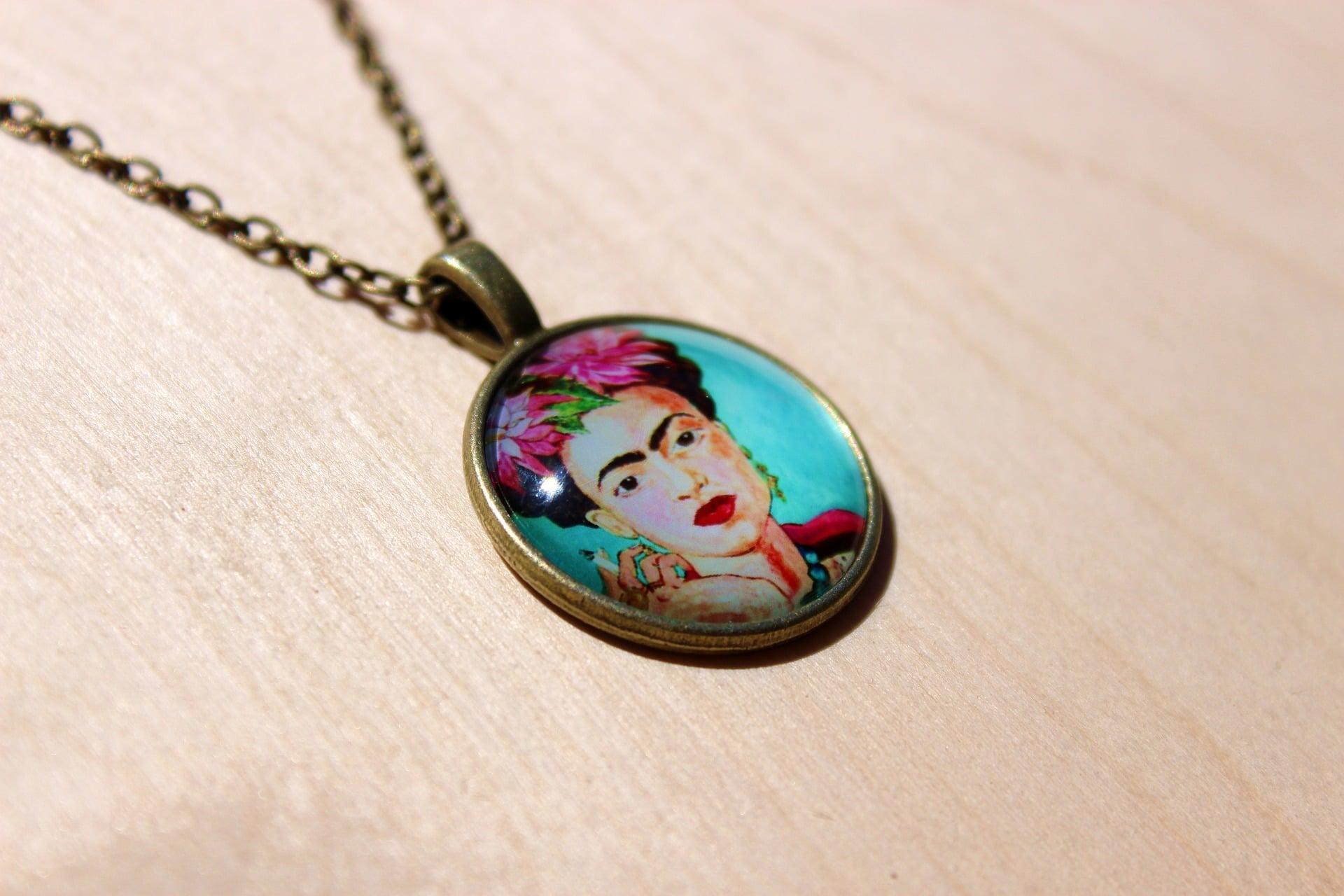

If you are wondering who is Frida Kahlo – it is likely that you have seen her work even if you do not know her name.
Frida Kahlo artwork is surely some of the most famous in the world. In this article, we will explore the life, challenges and tragedies of this remarkable female artist.
Sadly, her life was cut short, but the Frida Kahlo paintings live on to tell of her essence.
Want to give private lessons?
Join the Superprof community and share your knowledge with inquiring and motivated students.
Early Life: Who is Frida Kahlo
Christened Magdalena Carmen Frida Kahlo y Calderón which was awfully long name for Frida who was born on 6th July in a small village near Mexico City.
Like Pablo Picasso, her name followed the Spanish tradition of listing both parent’s last name but instead of calling her by that, she was simply known as Frida.
Frida, was the youngest in what could be described as a sad home where she grew up with a fairly well-known photographer father who had epilepsy. Unfortunately for Frida and her sisters they were witnesses to his illness.
Even though Frida described her mother as intelligent and kind, she was also fanatically religious and cruel. This caused tension, but evidently, Frida got on well with her father. Perhaps this was because they both lived with a disability.
Sadly, when Frida was only six she fell ill with polio. This left her right leg incapacitated, but her father who was desperate for her to recover thought that encouraging her to run and do sports would help her.
Her illness, which contributed to her small stature and delayed her enrolment in school resulted in much school bullying. Perhaps it was this or her hard life at home, but Frida developed a fiery temper.
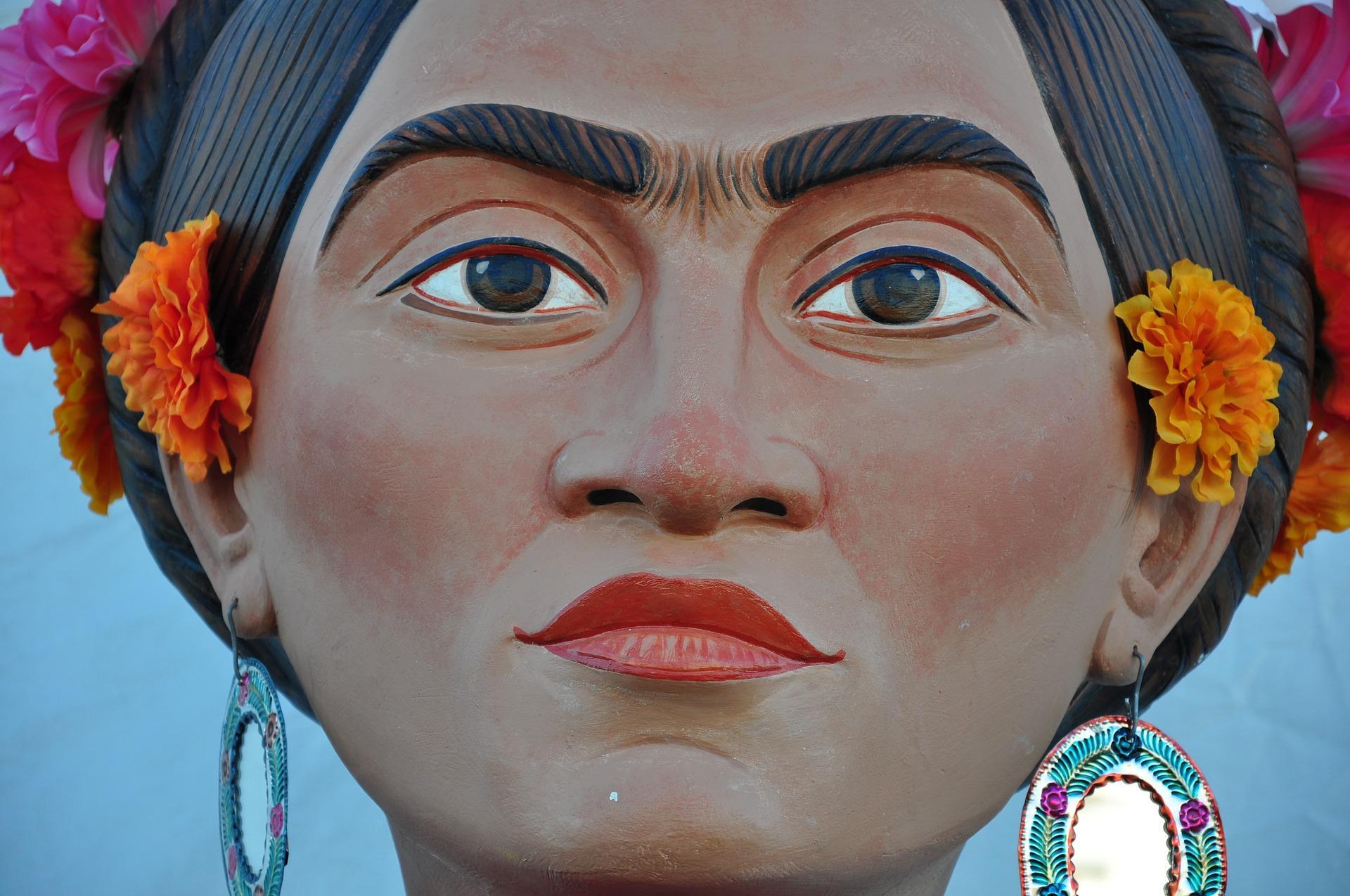
Frida’s penchant for mischief and rebellion resulted in her expulsion from the German school selected by her father. Determined to see his beloved daughter well educated, her father then enrolled her in a vocational school, however, she sadly left there too after suffering abuse by a teacher.
All the extra time was used to help her father colour, retouch and develop photographs in his studio. It is presumably this time that ignited the flame that would later become Frida Kahlo artwork.
Later, Frida enrolled in the oldest and most esteemed prep school in Mexico which had only recently begun to accept girl. In 1922 when Frida joined there were only 35 females in a school of 2000 pupils.
At this point, Frida did not study art as she wanted to study to become a doctor. She applied herself diligently and also tried hard to fit in with the student revolutionaries.
In studying the Frida Kahlo biography it is clear that she was an outlier in every way and very different from other famous female artists like Helen Frankenthaler.
It was while she was studying with her sights on eventually becoming a doctor that a terrible accident changed the course of her life and ultimately the Frida Kahlo biography.
Total Incapacitation
Frida was involved in a terrible accident while travelling on a bus with her boyfriend. Tragically the bus collided with a tram resulting in lost lives and many injured passengers, including Frida.
A shattered pelvis and two fractured legs resulted in a long hospital stay and extended rehabilitation at home.
Frida tried to return to her normal life but she was in constant agony. X-rays revealed that three of her vertebrae had been displaced which meant that had to abandon her studies and be confined to a bed and a plastic corset.
Her fate was the beginning of Frida Kahlo paintings for the world. Bedridden, Frida requested that a mirror be hung on the ceiling above her bed. She then fashioned an easel and painted her own Frida Kahlo portrait, over and over.
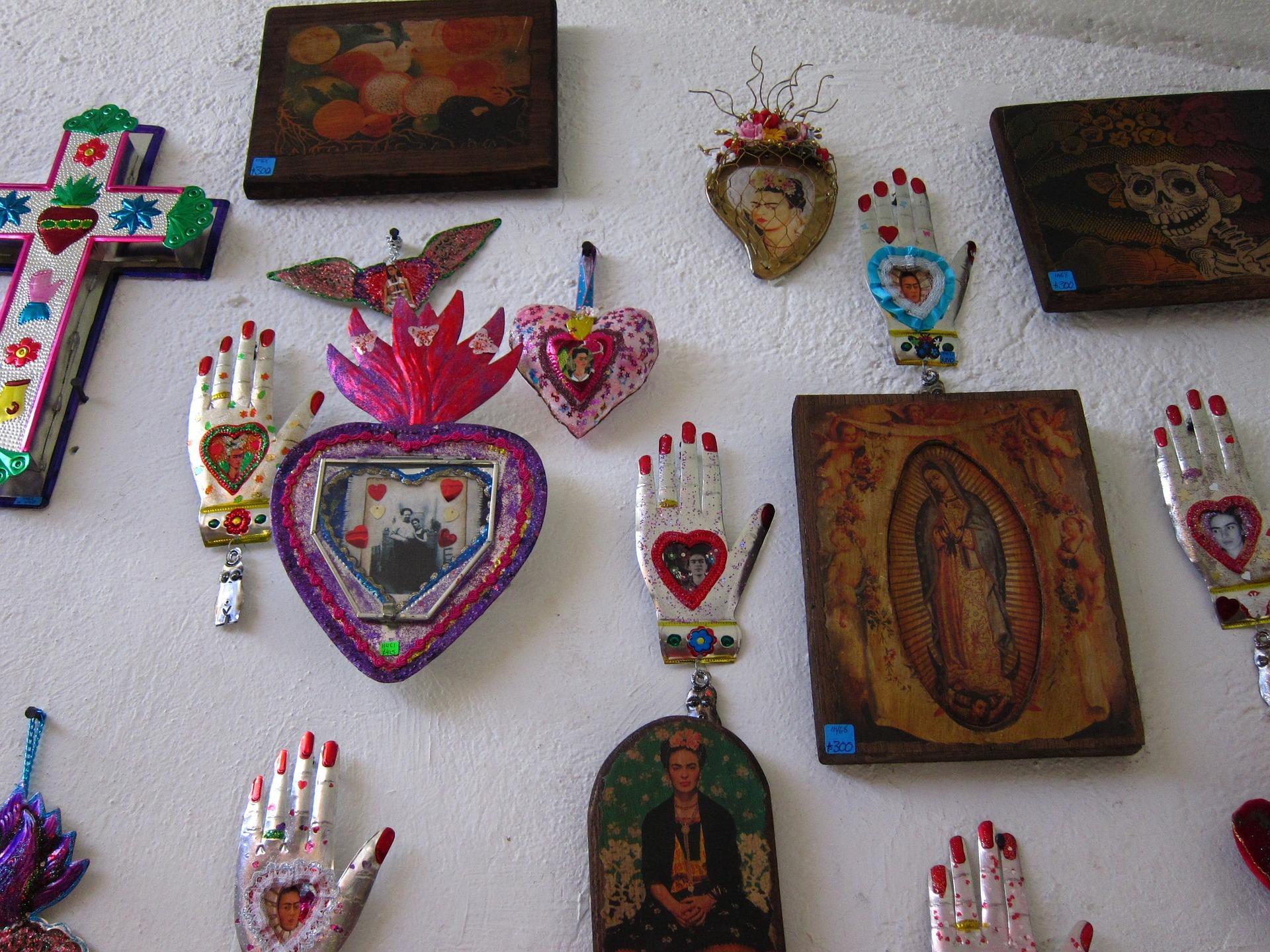
From here, Frida joined the ranks of famous women who paint.
Three years after her accident, even though she would suffer pain and discomfort for the rest of her life, Frida met Diego Rivera a well-known muralist and asked him to critique her work.
To Diego, it was obvious that Frida had enormous talent and it was this first professional opinion of Frida Kahlo paintings that became an important milestone in her incredible journey.
Diego and Frida began a romance that would endure for the rest of Frida’s life, however, it was not a bed of roses. Sadly, a disconnect in personal and social values resulted in betrayal, jealousy and much heartbreak.
During the beginning of their relationship, in fact, soon after their wedding, Frida took a backseat to Diego’s work. They moved to a rural part of Mexico where Diego was commissioned to paint murals and it was here that Frida, previously quite cosmopolitan, became in touch with her heritage.
Discarding her fashionable skirts to dress in the more colourful traditional styles of the locals, it was here that the Frida Kahlo biography took another turn.
From here, her work began to answer her reverence for Mexican culture which is an important point that answers the question of who is Frida Kahlo!
Some of the famous Frida Kahlo artwork to result includes:
- Portrait of a Girl with a Ribbon Around her Waist
- The Bus
She became famous for her Frida Kahlo portrait, especially her self-portraits.
- Self-Portrait with Necklace
- Self-Portrait with Curly Hair
- My Grandparent, My Parents and Me
As an artist who pushed boundaries, Frida Kahlo paintings were also known for their different media.
The Bus was painted with oil on canvas but My Grandparents is painted with oil and tempera on zinc while Curly Hair is oil on tin. Frida Kahlo paintings are diverse!
Even though she never tried sculpting – perhaps because of her lack of strength, she did fresco her image onto Masonite titling it ‘very ugly’.
Find painting courses on Superprof.
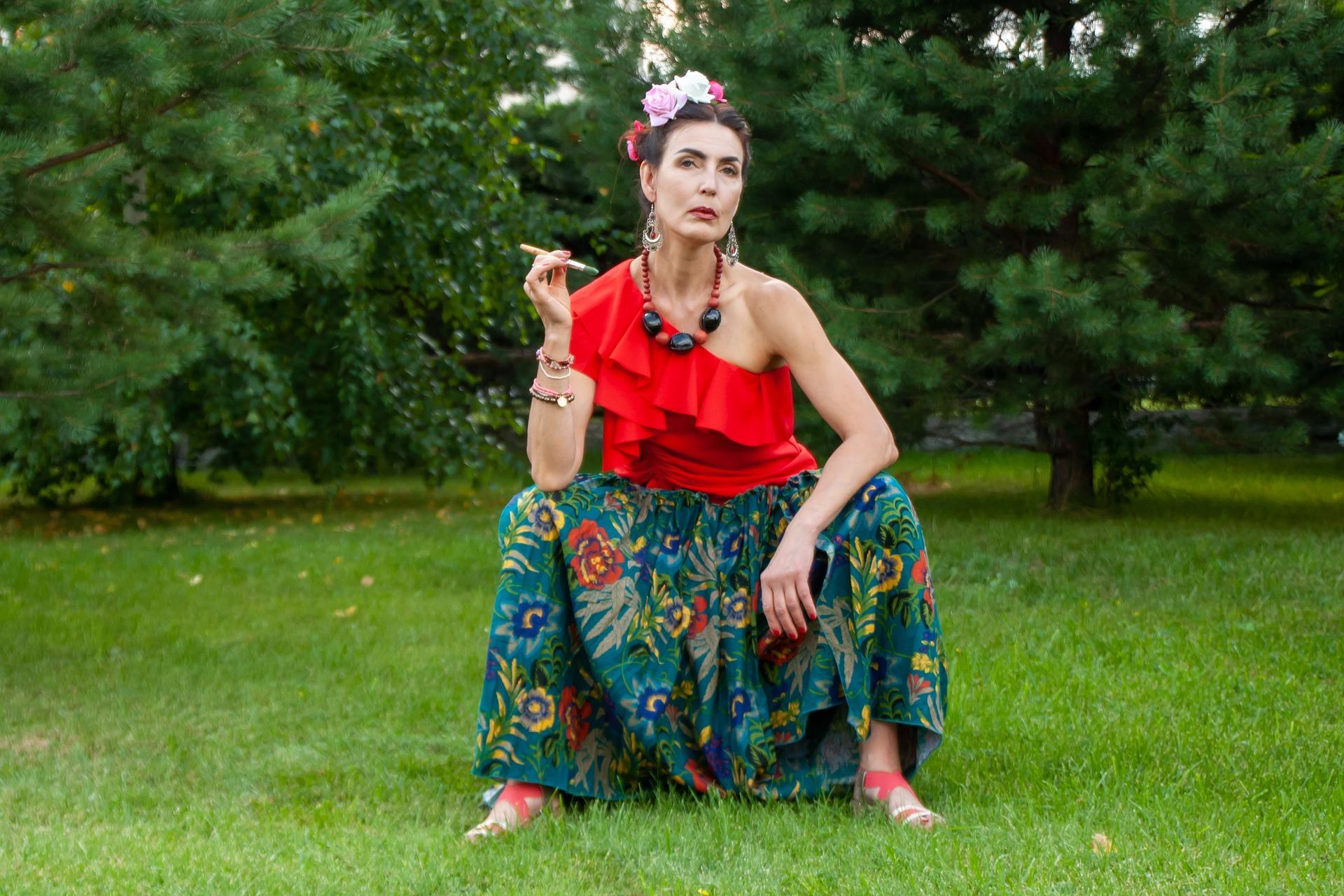
The Distinguishing Style of Frida Kahlo Artwork
For many, Frida Kahlo paintings seem cartoonish – a notion that did not match the seriousness of her personality.
So who is Frida Kahlo as an artist?
Frida was influenced by three main genres: European renaissance artists, Mexican folk art and avant-garde painters. Together, this mix resulted in the unique Frida Kahlo artwork and famous Frida Kahlo portrait, Self Portrait with Thorn Necklace and Hummingbird.
She explained her vast interpretations of her own Frida Kahlo portrait, repeated in many disguises, as a result of having other subject matter because of her loneliness.
There are art historians who will debate whether Frida Kahlo artwork is surrealism, vivid realism or a movement all of its own.
Surrealist expert, Andre Breton was an early supporter of Frida Kahlo paintings, however, Frida rejected the category of surrealism even though she exhibited at surrealist exhibitions.
It is interesting to compare Frida’s feisty attitude with the impressionist painter Mary Cassatt, who would have enjoyed such argument over her work.
Whether it was a Frida Kahlo portrait or something else, Frida believed that every piece of her art was representational.
In some ways, when asking who is Frida Kahlo, she can be compared to Vincent van Gogh, not for his art, but for their determination to paint (rather brightly) what they saw, against all odds.
But Impressionism does not adequately describe Frida’s assault on the senses.
There is no doubt that Frida Kahlo paintings have an ‘in your face' kind of quality to them. In a way they somehow dare you to look beyond the canvass and paint to see the passion and soul of the artist behind them.
In looking at a Frida Kahlo portrait, it seems obvious that she was indeed a realist.
Unfortunately, much of Frida’s work is lost due to her habit of making and destroying it if it did not please her.
Even so, she has made a certain mark amongst female artists and as a teacher until her health prevented it.
Most notably, in answering the question, who is Frida Kahlo, she was the first Mexican artist to exhibit at the Louvre and The Frame, another Frida Kahlo portrait of herself is now housed at Paris’s Museum of Modern Art. Other art museums that display Frida Kahlo paintings include the National Museum of Women in the Arts in the USA and Mexico City as well as the Museum of Fine Arts in Boston.
Frida Kahlo has made a significant contribution to women artists, western art and is certainly an icon for the feminist movement too.
By contrast, Artemisia Gentileschi, the female post-Italian Renaissance painter, made less of an impact during her life and only became famous centuries after her death.
Frida Kahlo’s style of painting may challenge classification but one thing is for sure: she still takes a front-row position among the best women painters, not just for her techniques and for highlighting the colourful Mestizo culture, but also for her depiction of anguish on canvas after canvas.
Have you heard of Georgia O’Keeffe another great female artist who has made our world more beautiful her art?
Want to give private lessons?
Join the Superprof community and share your knowledge with inquiring and motivated students.
Summarise with AI:
Enjoyed this article? Leave a rating!

 Loading...