

The Japanese Kanji writing script is difficult to master, not only in its art form but also because of the sheer quantity. There are over 45 000 Kanji to learn and one ideogram can consist of up to 20 unique strokes.
Learning Japanese Kanji symbols can be a dizzying exercise especially given the enormous extent of the writing system and that it is only one of three scripts used in Japanese writing.
Don’t let this dishearten you. Even though it can be more challenging than the Katakana and Hiragana scripts, it is also the most rewarding.
In this article, we will attempt to demystify the extraordinary Kanji alphabet by providing you with its history, most common uses, and recommended resources for getting to grips with the Kanji dictionary, its symbols, and of course how to write them!


The History of Japanese Kanji Symbols
Before we leap straight into today’s usage of Japanese Kanji symbols, let’s look at how this fascinating system of writing came into being.
The most interesting fact is probably that the Japanese Kanji alphabet did not originate in Japan!
Japanese Kanji symbols were first borrowed from the Chinese and simply adapted for Japanese pronunciation. While this is odd so are the origins of the other two writing systems too!
Many linguists are baffled by the fact that the roots of a language for such a major nation are difficult to pin down!
One of the challenges of borrowing the kanji alphabet from Chinese is that each symbol can have a number of different meanings and pronunciations which can be confusing for language students.
Breaking Down Japanese Kanji Symbols
Unlike Hiragana and Katakana, the other two writing systems in Japanese, Kanji characters represent words and ideas as opposed to just syllables and sounds.
This means that each symbol you come across will have a uniquely distinct meaning, and can make up a solid building block for the Kanji language.
Using the Kanji Alphabet
Try looking at Kanji as the structure or foundation of the Japanese language.
By knowing the symbols alone, you can produce a picture in a fellow Japanese speaker’s mind to convey the meaning of what you are saying. In fact, you can communicate just about anything using Kanji.
Where Kanji can fall short is in the nuances and the smaller details. For example, while there is a symbol for the verb ‘to watch’, you will not find one for ‘watching’ in the Kanji dictionary.
To transfer the exact implication of what you want to express, you may need to use the Hiragana script to help you as it is the one that provides suffixes to Kanji stems.
This applies to all nouns, adjectives, verbs, and adverbs in the Kanji dictionary that will require suffixes.
This is one of the main differences from Chinese, which can be completely written in Kanji.
One of the best ways to familiarise oneself with the symbols in the Kanji dictionary is to study the Kanji charts or have them handy to provide the more common ideograms at only a glance.
Kanji charts are divided into themes which makes it convenient to learn places, objects, verbs, and numbers.
How Important is the Japanese Kanji Alphabet?
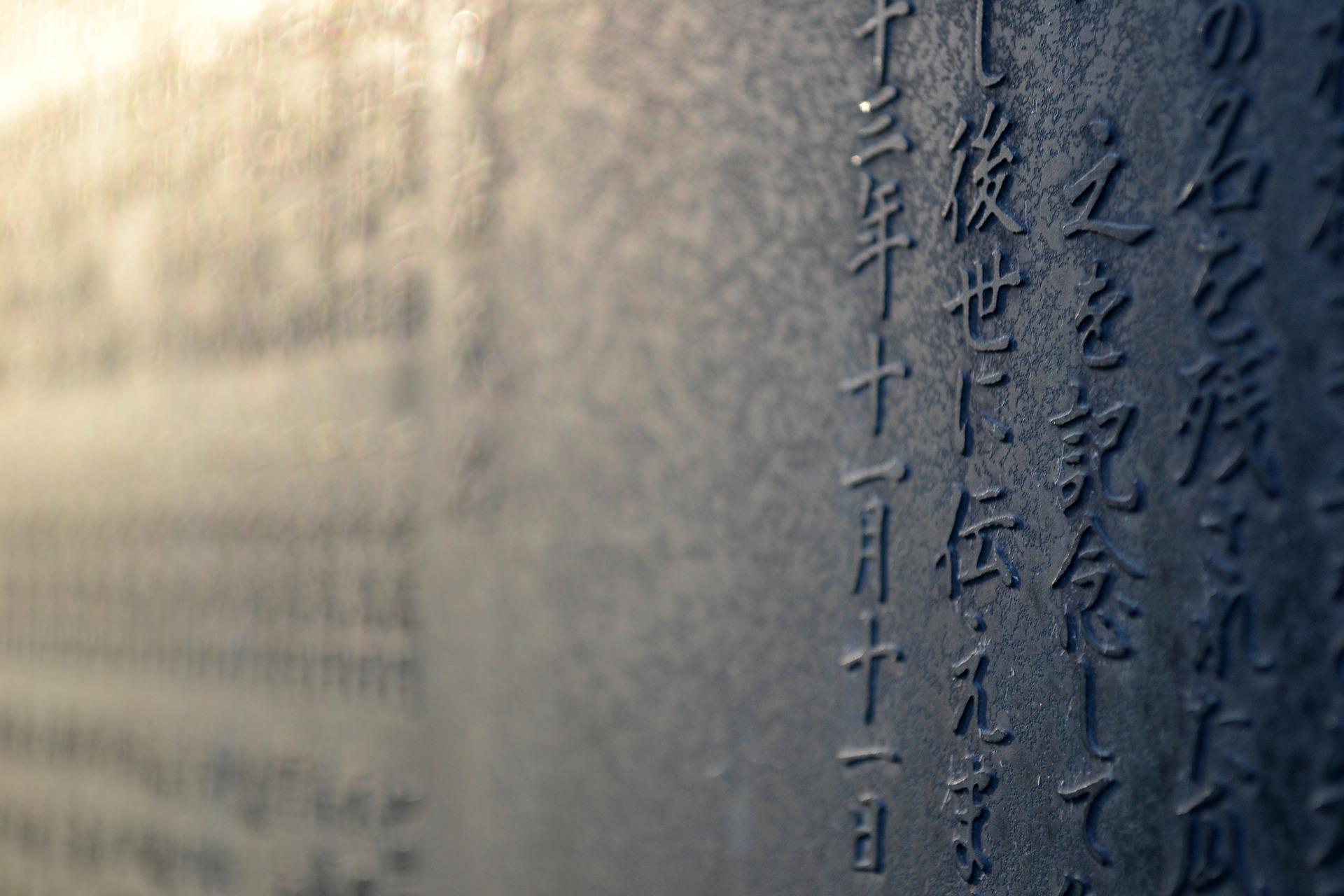
We’ve already determined that Kanji symbols are used for different speech parts, however, is it important that you learn them if you are studying Japanese?
In short, it’s crucial.
The Japanese Kanji alphabet appears more often in text than the other two writing systems, therefore knowing the most common symbols can exponentially accelerate your progress.
So if you’re looking for a hack to master the complexity of Japanese in record time, then we recommend that you invest your time in learning the most common symbols in the Kanji dictionary!
When you know the most common 100-200 Kanji symbols, they will become recognisable in text. You could go a step further to learn as many as 3000 symbols. Using these, you be able to grasp just about every word you come across which will make your reading comprehension just about perfect.
Knowing this should be instantly empowering especially because the prospect of learning over 45 000 Japanese Kanji symbols could leave you feeling defeated!
So grab your Kanji dictionary or charts and commit to learning the common symbols. Doing this will ensure that you are on your way to better reading, writing, and comprehension in Japanese. Remember that you will need to factor in time to learn the other two scripts too as they are also important for Japanese writing.
Production
Once you’ve accomplished the great achievement of committing most of the so-called Japanese Kanji alphabet to memory, your next step will be to learn how to produce them yourself.
Of course, learning to write any foreign language is daunting, but when it comes to nailing Kanji, you should buckle your seatbelt. Remember that every character is a complex ideogram which means that it could take time to learn how to write a single character. This is why even though Japanese writing looks beautiful and is worthy of recreating through calligraphy, the Kanji alphabet is a challenge.
Each symbol can have somewhere between 2-20 strokes, so get comfortable as it could take some time!
Stroke Order
Before you attempt to write a character, find it in the Kanji dictionary because not only will you discover the meaning, but also the stroke order.
One general rule worth remembering is that horizontal strokes come before vertical ones.
Of course, like all languages there are exceptions. For instance, the Kanji for both ‘tree’ and ‘water’ will require that you write the vertical line first. The reason for this is that it makes sense that horizontal lines branch off the main vertical line.
Also, right to left diagonals come before the left to right diagonals.
Finally, on stroke order, the dots and dashes are the last things you draw for any Kanji.
Technique
When it comes to technique, firstly, make your horizontal strokes from left to right and your vertical strokes from top to bottom.
Secondly, when you draw a box, do it with only three strokes. While this may not make sense, it’s easy once you actually get the hang of it.
As for the Kanji characters enclosed within boxes, make the boxes outside walls first using two strokes, then draw inside as normal. Your last stroke should be the one that draws the base of your box.
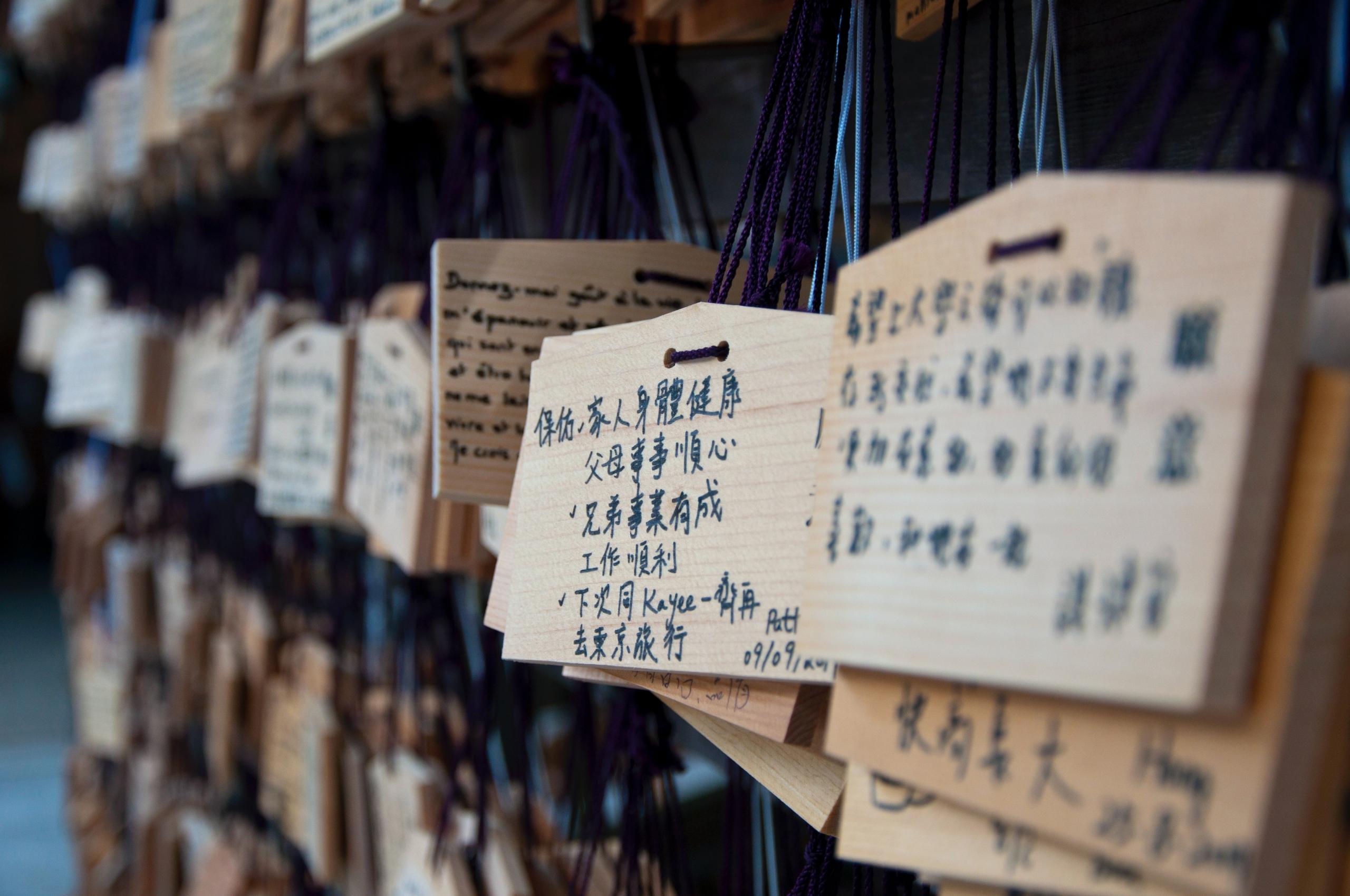
Resources to Learn Kanji
Learning Kanji is critical to improving your Japanese, but also incredibly challenging.
Given this, it is wise to use as many of the good resources available to make your Kanji journey both easier and entertaining.
Before searching for fun multimedia resources, your first step should be to invest in a good Kanji dictionary.
It’s likely that you will consult with the dictionary regularly, not only for the meaning but also to find a reference of how the ideogram looks, as well as how to produce it using the correct stroke order.
Having a dictionary will give you a reference to which to return any time you have any doubts.
Best Books
- Kanji in Context
One of the most highly recommended books you can get for learning Kanji is the textbook Kanji in Context.
This course in a textbook outlines everything you need to know in order to know about 2000 Kanji characters!
It provides a detailed description of each symbol in two different colours so that you can get the information as quickly as possible. In addition, there is a helpful workbook for practising your writing.
- Kanji Pict-o-Graphix
This innovative book uses the visual characteristics of Kanji to provide useful mnemonic devices to aid in memorisation.
Providing visual depictions that mirror the Kanji, you can pick up the meaning of each symbol without remembering the specific stroke structure.
The book is carefully arranged according to many different themes like sun and travel so that you can easily find what you need and group common words together as you learn.
YouTube Channels
- That Japanese Man Yuta
This popular channel on YouTube is both entertaining and informative. It gives plenty of insight into Kanji as well as the grammar of the Japanese language, and even life in Japan.
- JapanesePod101
This channel appeals to lots of Japanese language learners with an easy-to-follow style and detailed descriptions that are accompanied by great on-screen visuals.
Online Resources & Apps
- Jisho.org
This excellent website should become your one-stop-shop for everything related to Kanji.
Through its far-reaching database, you can find just about any Kanji word, as well as an audio clip of its definition, and various forms.
It is a lot like a dictionary except you don’t need to flick through it when you are in a rush.
- Anki
Anki is a wonderful app for any language that you are learning.
It is especially helpful for Kanji though because of its use of the spaced repetition technique for effectively practising memorisation.
Summarise with AI:
Enjoyed this article? Leave a rating!

 Loading...