
Do you absolutely love watching tennis? Does your world stop when Wimbledon comes around?
Despite your keen interest and knowledge of tennis rules and etiquette, have you remained a spectator rather than a player?
Whether you want to play socially or get to the level of playing a tennis tournament yourself, this article will help you to find out how to improve at tennis. The allure of tennis has different appeal for everyone.
For some, it's the cool, fresh image that goes with wearing white kit. For others it’s the combination of movement and strategic thinking. It could even be the repetitive sound of the ball against the tennis racket that calms the mind. Whatever it is, and athletic ability aside, tennis is one of those sports where skills can be easily learnt.
Apart from balls, shoes, and a tennis racket, unlike many other sports you will not need much to get started.
Keep reading to find out what it takes.





Step One: Tennis Rules and Etiquette
Tennis is not just about hitting a ball back and forth over a net. Tennis rules and etiquette are a huge part of playing and enjoying the game. If you want to know how to get better at tennis, knowing the rules and basic etiquette, is a good place to start.
- Scoring: Tennis uses a unique scoring system. Players start at "Love" (0) and earn points as follows: 15, 30, 40, and then game. A player must win by two points, and if the score reaches 40-40, it's called "deuce.” A player must win two consecutive points to win the game.
- Serving: The server must stand behind the baseline and serve diagonally to the opposite service box. A successful serve is when the ball lands inside the court without touching the net.
- Faults and Lets: If the ball lands outside the service box or touches the net and lands in, it's a fault. The server gets two chances to serve, and if they fault twice, it's a double fault, resulting in a point for the receiver.
- Foot Faults: A server's foot must not cross the baseline or sideline while serving. If it does, it's a foot fault.
- Court Etiquette: Players and spectators should be quiet during points so as not to distract their opponents, and should offer a handshake at the net after the match.
- Time Between Points: Players should adhere to a reasonable pace of play, including the 25-second rule between points.
- Clothing: Proper tennis attire, including non-marking shoes, is essential to maintain the court's condition.
Tennis rules and etiquette are designed to ensure a fair and respectful game for all participants. Abiding by these promotes good sportsmanship and enjoyable competition.
The Right Tennis Racket and Other Equipment
As mentioned, there are minimal requirements for playing tennis: a racket, a ball, and suitable footwear. While having access to a proper court is ideal, it does not really take much to engage in volleys with another enthusiastic player, if only to practice technique and enhance your hand-eye coordination.
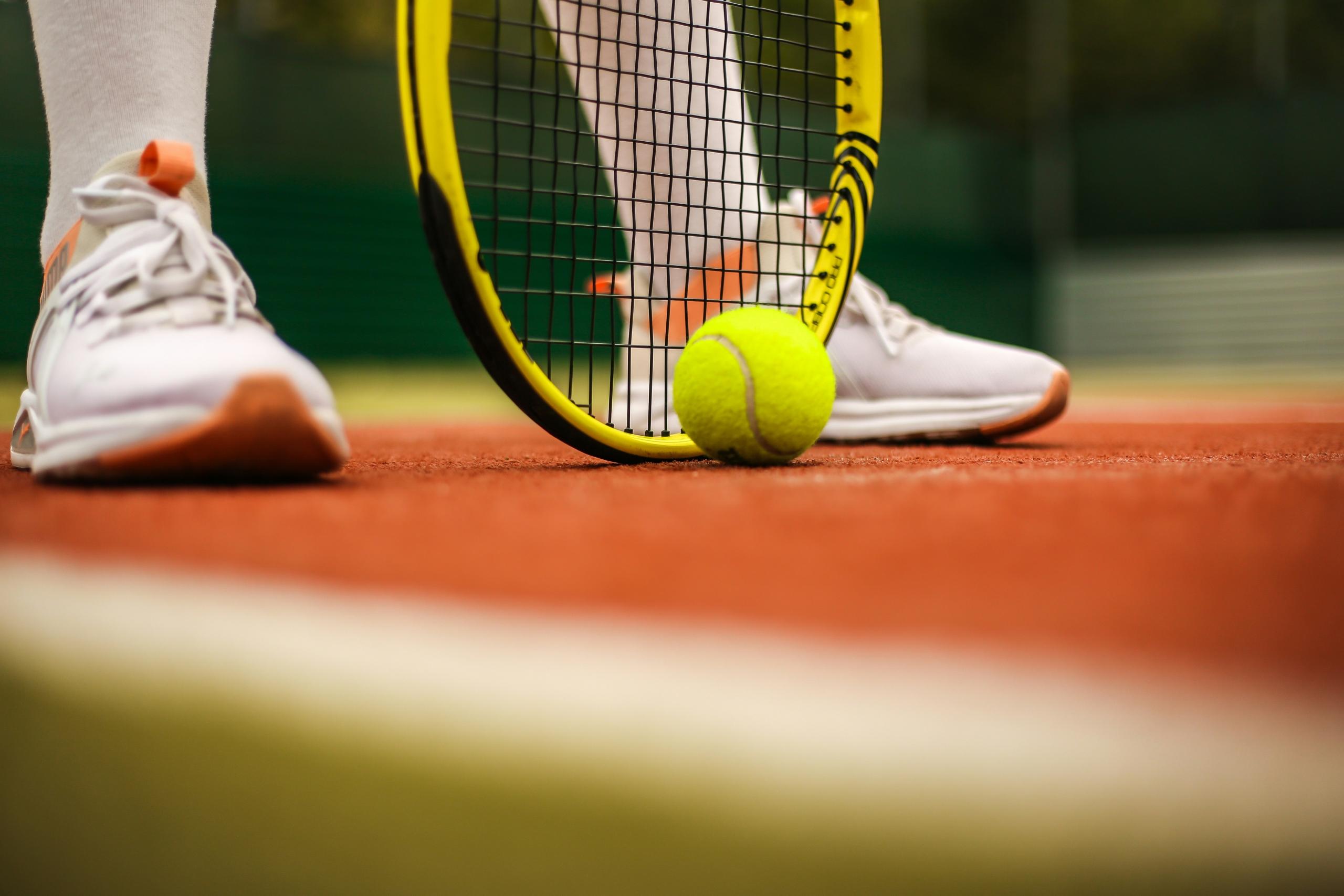
Once you are lunging, running and turning, it will not take you long to realise that the right shoes are crucial in supporting your back, knees, ankles and of course, tennis journey as a whole.
Consider a visor and even suitable, shatter-resistant sunglasses, if necessary, to shield your eyes from the sun. A sweatband and towel are also hand additions to your tennis kit.
The Best Tennis Racket for Beginners
Not only is your tennis racket the most important tool for the game, but having the right one is the first step if you want to know how to improve at tennis.
To select the right racket, a primary factor is to consider its weight. While heavier rackets can add more power to your strokes, they also demand more grip strength and shoulder strength. A heavier tennis racket also requires proper technique as incorrect handling can lead to issues.
If you want to know how to get better at tennis, choose a racket to match your level of skill.
Typically, beginners begin with a medium-weight racket and transition to a heavier one as they become more accustomed to the game.
Racket length is also critical. Longer rackets offer extended reach and more power, but they can be challenging to manoeuvre, especially for close shots. For adolescents and adults, the optimal racket length falls within the range of 68.5cm to 74cm. Shorter rackets tend to serve these players better, as the additional reach of longer rackets doesn't compensate for the loss of control and potential fatigue that occurs.
How Long Will You Need Tennis Lessons?
If you want to know how to get better at tennis, you are probably wondering how long it will take too.
The duration of your tennis lessons for beginners could range from anything from 30 minutes to several years. In fact, many experienced players continue with coaching for life.
As a beginner, your coach might initially opt for shorter 30-minute sessions to gradually build your strength and stamina. These early lessons typically cover basic aspects like proper grip, positioning, and turning during your swing. To help your practice, you could even use a tennis machine to slow down your pace and allow you to become familiar with approaching balls.
If you prefer one-on-one instruction, Superprof offers private tennis lessons at potentially more affordable rates than other sources.
Get Tennis Tournament Ready
So, all the benefits of playing tennis have led you to embark on a journey to learn tennis. You've done your research, perhaps even sought out the expertise of a Superprof tennis coach, and now you eagerly await your scheduled lesson. During this period of anticipation, it's natural to wonder about what to expect from your first tennis lesson.
A proficient tennis coach will begin your learning journey with an insightful conversation. However, this isn't the time to delve into the intricacies of the tennis scoring system or the number of sets in a tennis match. Try to research that beforehand. Instead, your coach will seek to understand key aspects such as your current level of fitness, any medical or physical conditions that might influence your playing ability, and what specific areas they should be attentive to as you engage in the sport.
This initial meeting also paves the way for your coach to scrutinise your tennis equipment, with a particular focus on your tennis racket and footwear.
Once these equipment evaluations and recommendations are complete, it will be time to get into action. Naturally, your coach will guide you through a series of warm-up exercises to avoid injury.
The sequence of your initial lessons can vary among coaches. Some instructors, particularly those teaching tennis to beginners, may prioritise teaching you the correct way to grip the racket before the warm-up session, while others may cover racket maintenance. This could include how to rewrap your grip and identify when it needs restringing before you step onto the court.
You might find yourself itching to swing your racket during the latter part of your first lesson, but take solace in the fact that, with all the talking and preparations now behind you, the only path forward will be how to get better at tennis and even aim for a tennis tournament.
Once you’ve mastered holding and swinging your racket, you'll advance to honing your hand-eye coordination using a tennis ball launching machine. As this contraption sends balls your way, you'll nned to stand your ground and perfect your returns.
Once you've honed your skills with the ball machine, you'll progress to learning how to step, pivot, and move laterally while executing your swings or lining up your shots. And when you've acquired these fundamental moves, the time will come to test your skills against a real opponent on the other side of the net.
Instead of endless internet searching of the internet for nearby tennis facilities, consider turning to Superprof for top-notch tennis lessons. If you want to know how to improve at tennis, there is no doubt that tennis is one of those sports where getting support from a coach will be your best investment.
Finding the right coach will inevitably lead you to the right tennis courts anyway.
Summarise with AI:
Enjoyed this article? Leave a rating!

 Loading...