
When it comes to the different types of poetry, there are so many that it can be hard to remember them all. If you are looking for a general overview of the different styles of poetry out there, then this article is for you. From Shakespeare to Homer, to feminist slam to Milton, this article covers it. Keep reading.


Limericks
Let’s start with the quirky limerick. Of all the forms of poetry, the limerick is probably known as the most light-hearted. It is generally about five lines in length and is characterised by an AABBA type of rhyme. Edward Lear was known for this type of rhyming poetry during the 1800s. Here’s an example:
“There was an Old Person of Dean,
Who dined on one pea and one bean;
For he said, “More than that would make me too fat,”
That cautious Old Person of Dean.”
Limericks are one of the forms of poetry that use accentual verse. This means that the line construction is determined by how many accents there are, rather than how many syllables there are. This makes the limerick a very flexible form of rhyming poetry.
Haiku Poems
Haiku is one of the Japanese styles of poetry and can cover a variety of themes from love to nature and much more.
The Haiku, adopted by many famous English poets generally comprises a total of 17 syllables that are shared over three lines. As one of the forms of poetry that are arranged in a 5-7-5 pattern, the first line has five syllables, the second has seven and the last has five.
Interestingly, when written in Japanese, original Haikus were measured in breaths and not syllables. The English 5-7-5 approach was adopted to achieve approximately the same feel as the Japanese versions. This 5-7-5 is one of the forms of poetry that is very popular with today’s poets.
Examples of famous Haikus include:
From Time to Time by Matsuo Basho
“From time to time
The clouds give rest
To the moon-beholders.”
Haiku by Jack Kerouac
“The low yellow
moon above the
Quiet lamplit house”

Classic Types of Poetry: The Epic Poem
You might remember pouring over epic poems which are the types of poems suited to High School learners. At first, these are quite daunting, but as one of the most classic forms of poetry, everyone should know the basics of the epic poem.
This lengthy narrative is one of the types of poems that uses long character arcs and a formal structure. Themes usually include historical heroes, forces of nature, obstacles, disaster, action, and triumph.
The famous Paradise Lost by John Milton is an excellent example of an epic poem:
"Of man’s first disobedience, and the fruit
Of that forbidden tree, whose mortal taste
Brought death into the world, and all our woe,
With loss of Eden, till one greater man
Restore us, and regain the blissful seat,
Sing Heav’nly Muse, that on the secret top
Of Oreb, or of Sinai, didst inspire
That shepherd, who first taught the chosen seed,
In the beginning how the heavens and earth
Rose out of Chaos: or if Sion hill
Delight thee more, and Siloa’s brook that flowed
Fast by the oracle of God, I thence
Invoke thy aid to my advent’rous song,
That with no middle flight intends to soar
Above th’ Aonian mount, while it pursues
Things unattempted yet in prose or rhyme.
And chiefly thou, O Spirit, that dost prefer
Before all temples th’ upright heart and pure,
Instruct me, for thou know’st; thou from the first
Wast present, and with mighty wings outspread
Dove-like sat’st brooding on the vast abyss
And mad’st it pregnant: what in me is dark
Illumine, what is low raise and support,
That to the highth of this great argument
I may assert eternal providence,
And justify the ways of God to men.
Say first, for Heav’n hides nothing from thy view
Nor the deep tract of Hell, say first what cause
Moved our grand parents in that happy state,
Favored of Heav’n so highly, to fall off
From their Creator, and transgress his will
For one restraint, lords of the world besides?
Who first seduced them to that foul revolt?
Th’ infernal serpent; he it was, whose guile
Stirred up with envy and revenge, deceived
The mother of mankind, what time his pride
Had cast him out from Heav’n, with all his host
Of rebel angels, by whose aid aspiring
To set himself in glory above his peers,
He trusted to have equalled the Most High,
If he opposed; and with ambitious aim
Against the throne and monarchy of God
Raised impious war in Heav’n and battle proud
With vain attempt. Him the Almighty Power
Hurled headlong flaming from th’ ethereal sky
With hideous ruin and combustion down
To bottomless perdition, there to dwell
In adamantine chains and penal fire,
Who durst defy th’ Omnipotent to arms.
Nine times the space that measures day and night
To mortal men, he with his horrid crew"
Shorter Types of Poetry: Sonnets
The sonnet, one of the shorter styles of poetry means ‘little song’ and is derived from the Italian word ‘sonetto’. It is one of those types of poetry, mainly characterised by 14 lines, that adheres to a tight structure and theme.
The sonnet is written in iambic pentameter, can be used in different types of poems and poets because of its ability to adapt even while strictly maintaining its rhythm.
Sonnets are perfect for the types of poems needed to express thoughts and feelings. Using a short length, the poet can focus on a single idea to explore strong emotions in only 14 lines. This makes it one of the more easily digestible styles of poetry to read and study.
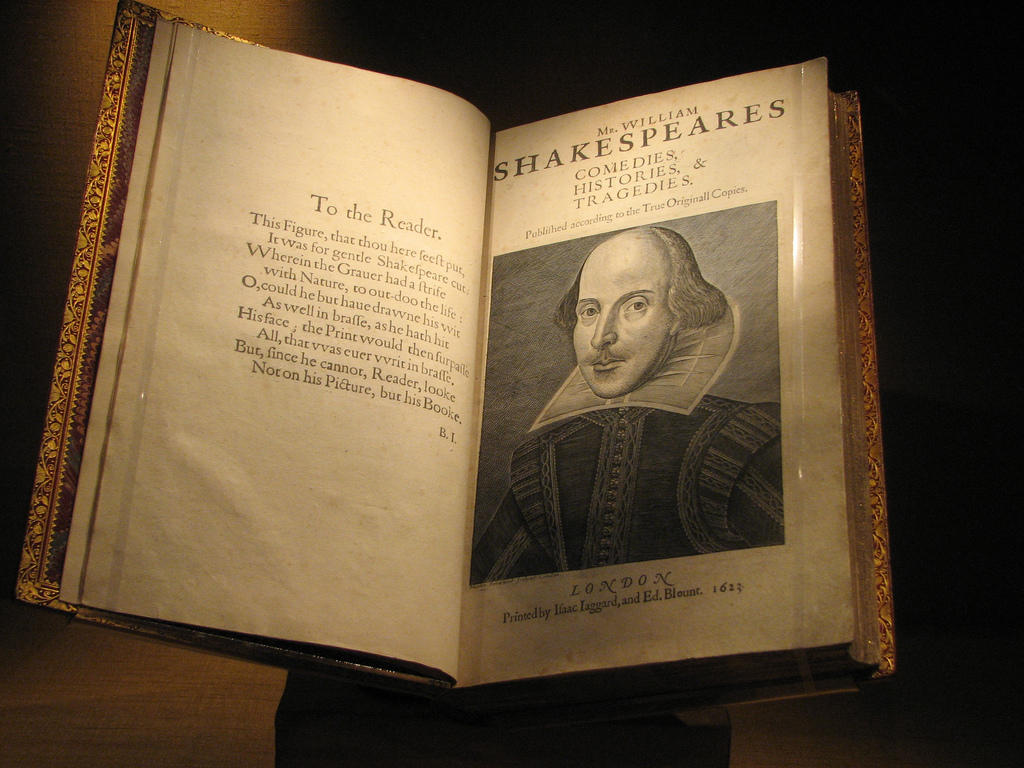
Shakespeare is the most famous sonnet writer of our time. Here is a sample of his work:
Sonnet 3 by William Shakespeare
“Look in thy glass and tell the face thou viewest
Now is the time that face should form another;
Whose fresh repair if now thou not renewest,
Thou dost beguile the world, unbless some mother.
For where is she so fair whose uneared womb
Disdains the tillage of thy husbandry?
Or who is he so fond will be the tomb
Of his self-love, to stop posterity?
Thou art thy mother's glass and she in thee
Calls back the lovely April of her prime;
So thou through windows of thine age shalt see,
Despite of wrinkles, this thy golden time.
But if thou live, remembered not to be,
Die single and thine image dies with thee.”
Musical Types of Poetry: The Ballad
You are probably more familiar with a ballad referring to a love song rather than one of the different types of poems available. While it is certainly one of the types of poetry that are well suited to accompany music, the ballad is also a poem. A typical ballad stanza consists of four poetic lines or a quatrain.
The rhythm or metre of each line is generally iambic. This means that is has an unstressed syllable and then a stressed syllable to make up six to eight syllables per line. For example:
A Western Ballad by Allen Ginsburg
“When I died, love, when I died
my heart was broken in your care;
I never suffered love so fair
as now I suffer and abide
when I died, love, when I died.
When I died, love, when I died
I wearied in an endless maze
that men have walked for centuries,
as endless as the gate was wide
when I died, love, when I died.
When I died, love, when I died
there was a war in the upper air:
all that happens, happens there;
there was an angel by my side
when I died, love, when I died.”
Free Verse Styles of Poetry
Free verse is one of those styles of poetry that can be defined as free from limitations in terms of rhythm and meter. Free verse is also not necessarily rhyming poetry. So even though there are many different types of poems in the free verse genre, many of which will use rhyme, cadence, rhythm, or alliteration, they are mainly characterised by the poet’s individual expression.
Poets give shape to the poem in whichever way they desire and use effects that they personally deem suitable for the piece. Of course, you may think that this really opens up the door for anyone to become a poem, doesn’t it? Perhaps when you consider this excellent example of free verse poetry, you will see that there is still an enormous amount of skill required.
Free Verse by Robert Graves
“I now delight
In spite
Of the might
And the right
Of classic tradition,
In writing
And reciting
Straight ahead,
Without let or omission,
Just any little rhyme
In any little time
That runs in my head;
Because, I’ve said,
My rhymes no longer shall stand arrayed
Like Prussian soldiers on parade
That march,
Stiff as starch,
Foot to foot,
Boot to boot,
Blade to blade,
Button to button,
Cheeks and chops and chins like mutton.
No! No!
My rhymes must go
Turn ’ee, twist ’ee,
Twinkling, frosty,
Will-o’-the-wisp-like, misty;
Rhymes I will make
Like Keats and Blake
And Christina Rossetti,
With run and ripple and shake.
How pretty
To take
A merry little rhyme
In a jolly little time
And poke it,
And choke it,
Change it, arrange it,
Straight-lace it, deface it,
Pleat it with pleats,
Sheet it with sheets
Of empty conceits,
And chop and chew,
And hack and hew,
And weld it into a uniform stanza,
And evolve a neat,
Complacent, complete,
Academic extravaganza!”
The Types of Poems for Performance: Slam Poetry
Slam poetry consists of different types of poems, including rhyming poetry, but not necessarily that is used for performance in front of an audience. Typically, they do not exceed three minutes in duration. Winners from each round progress further into the competition, performing new pieces each time. Finally, the poet with the highest overall score at the end is the winner of the competition.
Slam poetry is one of the popular styles of poetry available today and is often presented through online videos. These different types of poems do an excellent job of artistically conveying powerful messages and bringing attention to important topics to the masses through channels like social media.
Slam poems, whether those include rhyming poetry or not are aimed at getting people’s attention. They are usually dramatic with the intention of evoking emotion or contributing to shed light on an issue of the day.
Feminist slam poets have made an important contribution to this genre, here is are two examples.
Period by Dominique Christina
"So to my daughter / Should any fool mishandle that wild geography of your body, / how it rides a red running current like any good wolf or witch / well then just bleed, boo. / Get that blood a biblical name/something of stone and mortar. / Name it after Eve's first rebellion in that garden/name it after the last little girl to have her genitals mutilated in Kinshasa / that was this morning. / Give it as many syllables as there are unreported rape cases."
#Feminism by Crystal Valentine
"...When I think of feminism / I see a woman, I see a strong woman / I see a strong, white woman and then / I see a subcategory for myself / I see a dark room for me to shove my opinions / And I see a suggestion box that will never be opened..."
So, whether you are interested in rhyming poetry or any of the many other styles of poetry, there is a lot to know if you are interested in learning how to write or analyse different types of poetry.
Finally, be careful not to get stuck in a stereotypical attitude towards poetry because as you can see from all these different types of poems, there is really something for everyone.
Find good guild to slam poetry here on Superprof.
Summarise with AI:
Enjoyed this article? Leave a rating!

 Loading...