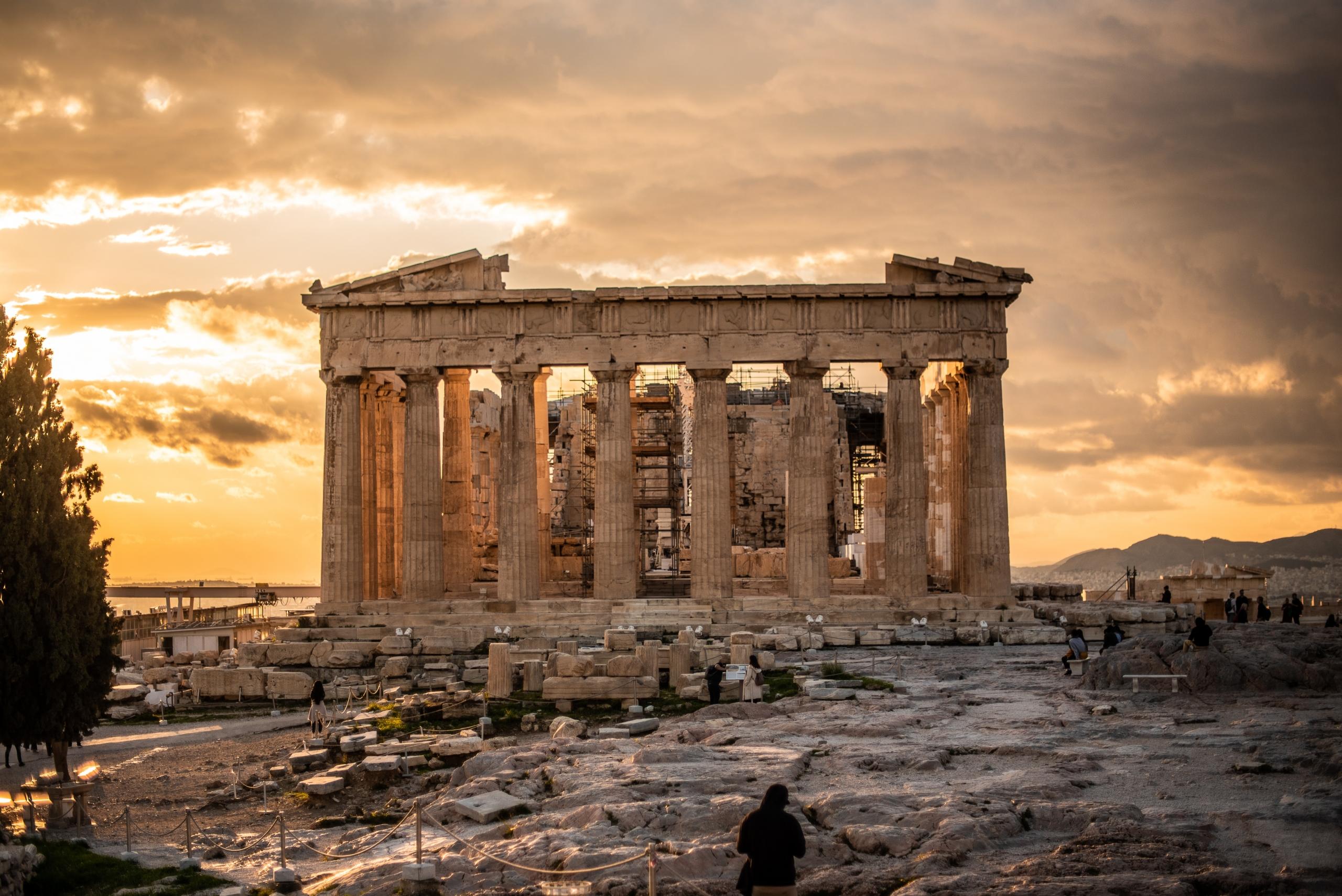

You've surely heard of Greece and its many islands in the Mediterranean Sea.
So now let's explore more about Greek history, ancient Greek cities and how Greek culture developed.


What is Greece Famous For?
Greece has gained worldwide recognition for numerous reasons, particularly within the "Western world." It is thanks to Greek civilisation and even the Greek language that we have many of the ideals, values and traditions in society today. The basic Greek alphabet, for instance, is widely familiar to modern scientists, mathematicians and engineers and it is clear that much of our foundation is thanks to Greek civilisation.
There’s no doubt that the Greek language and civilisation have profoundly shaped our understanding of fields like astronomy, geometry, philosophy, politics, and even linguistics. Thinkers like Aristotle, Plato, Socrates, Diogenes, and many others have become household names, and their contributions have greatly influenced our modern knowledge.
Apart from the famous intellectuals from ancient Greek cities, Greece is also renowned for its cuisine and offers a delightful array of dishes that can be both delicious and nutritious, depending on personal preferences. Greek culinary traditions encompass a wide range of meats, with pork and lamb standing out as particular favourites.
Additionally, cheese holds a significant place in Greek cuisine, with feta cheese featuring as a staple ingredient. Feta, often accompanied by olives, which also feature prominently in many dishes, Greek cuisine is a delightful amalgamation of flavours.
To grasp the essence of Greek cuisine, especially if you're unfamiliar with it, envision a fusion of Western European food that has drawn its influence from countries like France, Italy, and Spain, intertwined with culinary expertise from the Balkans. As a result, it's common to encounter popular dishes in Greek cuisine that are shared by other cultures, albeit sometimes bearing different names. And while we're discussing Greek food, for those who may wonder, the pronunciation of "Gyro" is "yee-ro" which is a word you may want to include in your basic Greek vocabulary.
Greece is also known for its vibrant cultural displays, evident through its contribution to two of the most beloved forms of entertainment in the modern world.
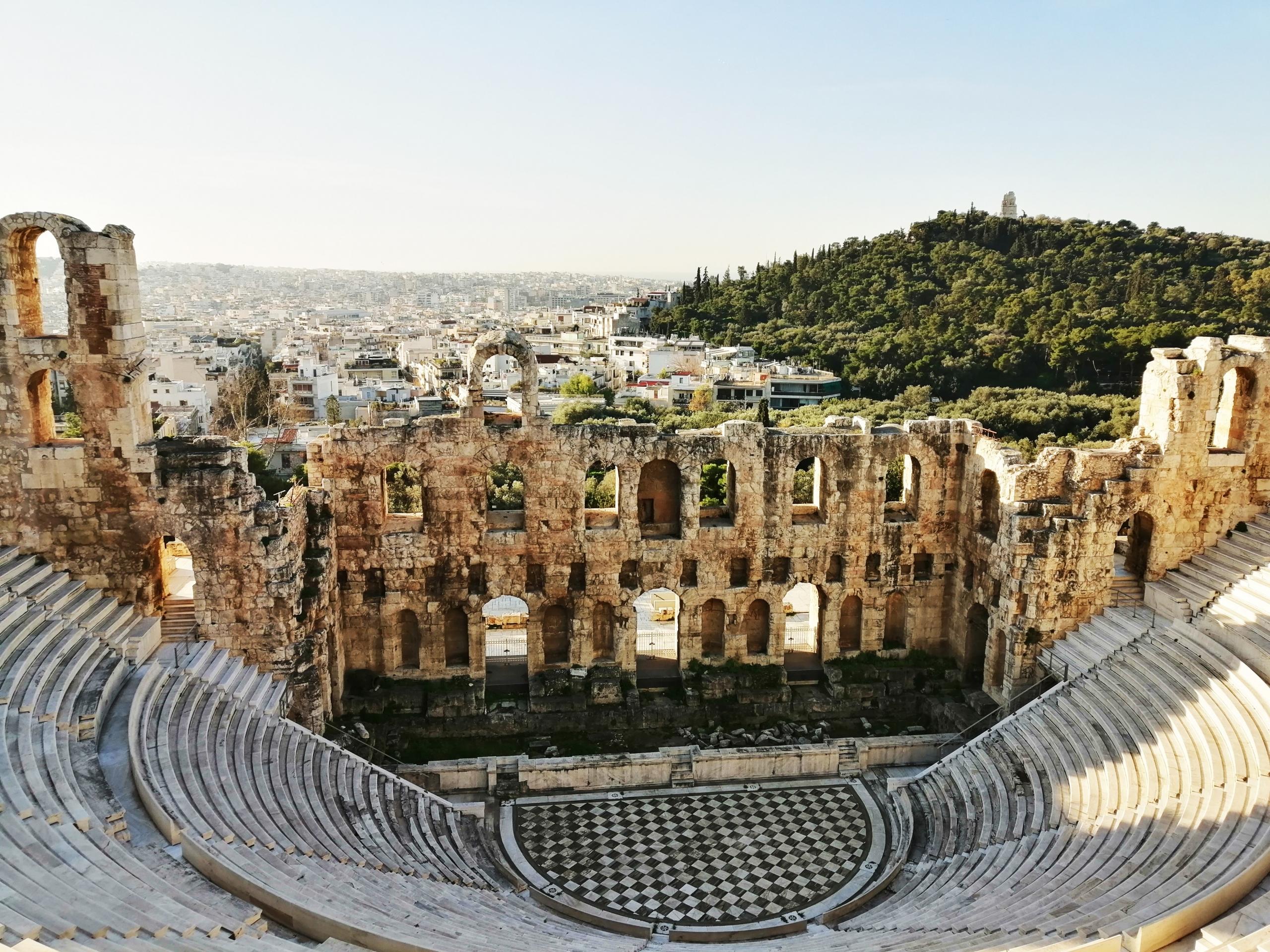
Did you know that the Greeks were the pioneers of theatre, particularly in the classical sense that resonates with Western tradition?
They introduced the concept of amphitheatres, captivating costumes, and the art of crafting engaging plays, whether comedic or tragic.
Another notable contribution from Greek civilisation history is the Olympic Games, a globally recognised sporting event held every four years since 776 BC! Initially established as a means to pay homage to the deities of Greek mythology residing on Mount Olympus, the Olympics have evolved into a platform that honours the world's finest athletes. Participants from various nations showcase their skills and abilities on the grand stage, competing for the coveted bronze, silver, and, most esteemed of all, gold medals.
Greek Lifestyle
Living in Greece offers a unique experience that is undoubtedly shaped by the country's climate. The region, including much of Southern Europe, tends to have a very hot climate, especially during the summer months, which can sometimes be uncomfortably hot. As a result, Greek culture is closely intertwined with the sea and beaches which offer relief from the heat on those scorching hot days.
Having said this, the quest to avoid the intense summer heat has given rise to another Greek cultural tradition known as "volta,” (another word you can add to your basic Greek vocabulary list). Since the high temperatures often drive people indoors during the day, "volta" refers to a cherished communal activity that takes place at sunset.
Friends, family, and neighbours gather together to embark on a leisurely stroll along the beach or the main streets of their town or village. This tradition has been preserved since ancient times and serves as a vital social mechanism allowing friends and family to unwind, reconnect, and catch up after long and demanding days spent indoors at work or home.
In Greece, the significance of "catching up" with others holds a prominent place in daily life and this also sets it apart from other European cities. Following the traditions of its ancient Greek cities, there are still heaps of venues throughout villages and modern urban landscapes that host social interactions. Cafés and similar establishments are in abundance and offer ample opportunity for communities to meet, have coffee and chat.
Of course, socialising in this manner is not exclusive to Greece, but it certainly plays an undeniable role in basic Greek culture. Unlike some other nations where individuals may prefer to spend their leisure time in solitude, the Greek people embrace and cherish the act of connecting with one another.
Such is the popularity of the café scene in Greek culture that it has become common for members of political groups to meet at coffee shops for serious meetings. However, this practice has inadvertently led to a situation where certain cafés are perceived as predominantly male gathering places. Consequently, some women choose to avoid these establishments due to the lingering belief that they are primarily designated for men, even in present times.
Fortunately, times are changing and you will notice that Greece is leaning towards a more unisex and inclusive social culture. Saying this, you will notice this gender separation in smaller villages.
Greek Civilisation History
When discussing Greece, it would be remiss not to delve into its rich history, captivating mythology and even the origin of the Greek language, all of which have greatly contributed to its widespread recognition.
To start, it is important to understand the Greek name for Greece itself, as the country has undergone various transformations while maintaining a consistent name in the basic Greek language.
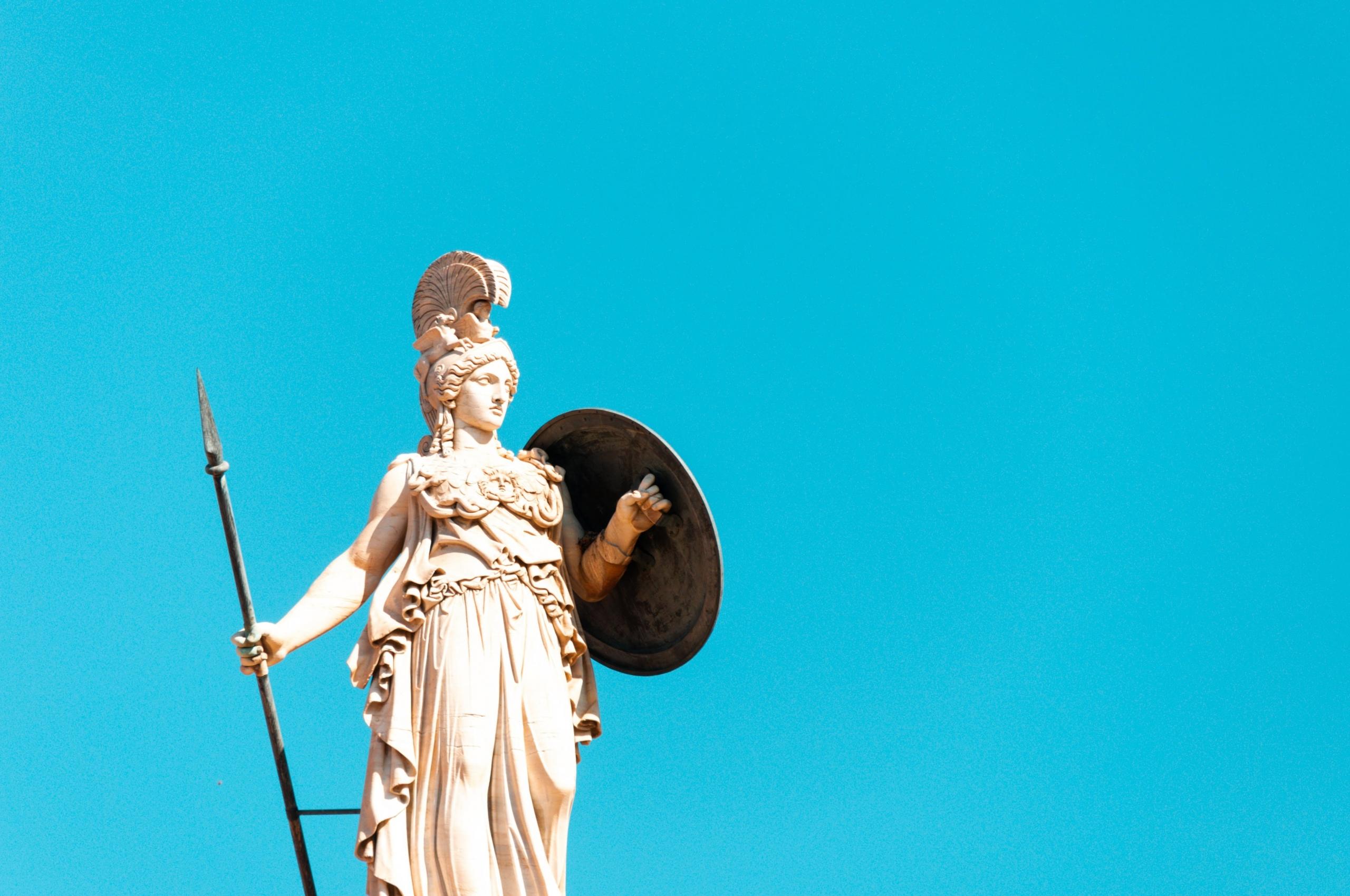
In Greek, Greece is referred to as "Hellas," which is why you might come across references to Greece and Greek culture as "Hellenic." This term boasts a deep-rooted heritage and cultural significance that is associated with the country's history and mythology.
Greek civilisation dates back to the earliest settlements of humans. However, in terms of Greek civilisation's history, the first distinct period widely discussed is the Bronze Age civilisation.
Within this period there were many distinct periods, amongst them were the Cycladic, Minoan, and Mycenaean civilisations. These successive civilisations played a crucial role in constructing and maintaining the first ancient Greek cities. In addition, their architectural and cultural contributions shaped the enduring image associated with Greece, particularly Ancient Greece, as we know it today. This period, spanning from 3200 to 1100 BC precedes the Greek civilisation history that is studied in schools today.
After the extensive collapse of the Bronze Age civilisation, a significant disintegration of cultural uniformity, scientific advancements, and technological achievements marked a transition into a fragmented society. This period, often referred to as the Homeric period or the Greek Dark Ages, serves as the backdrop for the emergence of what we now recognise as Ancient Greek civilisation.
Next came the Classical Period characterised by philosophy, politics, arts, and literature all of which played a pivotal role in shaping Western civilisation. As a consequence of the remarkable legacy of Alexander the Great, it was a time of great significance.
Under his leadership of the Greek army, Alexander the Great embarked on a series of conquests that extended towards the east. These campaigns ultimately led to the destabilisation and conquest of the Achaemenid Persian Empire, which had historically been an oppressor of Greece. This period also marked a golden age for Greek language origin mainly because of its profound influence on our modern way of life.
The death of Alexander the Great saw the beginning of the Hellenistic period where Greece fell under Roman rule. Greek elements like religion, cuisine, philosophy, mathematics, and science were adopted by the Roman Empire, shaping a cultural system that resembled the lifestyle of the ancient Greek cities.
After the Roman conquest of Ancient Greece, began a non-linear transition to the Greece we know today. Following the decline of the Roman Empire, the remaining territories transformed into the Byzantine Empire, with its capital in Constantinople. This meant that the location of power shifted directly to the Greek mainland.
The Byzantine Empire eventually succumbed to the Ottoman Empire, which also gained control over Greece and left its own cultural and culinary influences, including Greek coffee derived from Turkish coffee.
Ottoman rule endured for approximately 400 years until Greek revolutionaries rebelled in 1821, achieving independence and establishing modern Greece as an independent nation that endures to this day. For further exploration of Ancient Greece or Greek language origin, explore our series of articles on Greece here on Superprof!
Summarise with AI:
Enjoyed this article? Leave a rating!

 Loading...